What to Put in a Puppy Crate at Night for a Calm First Week
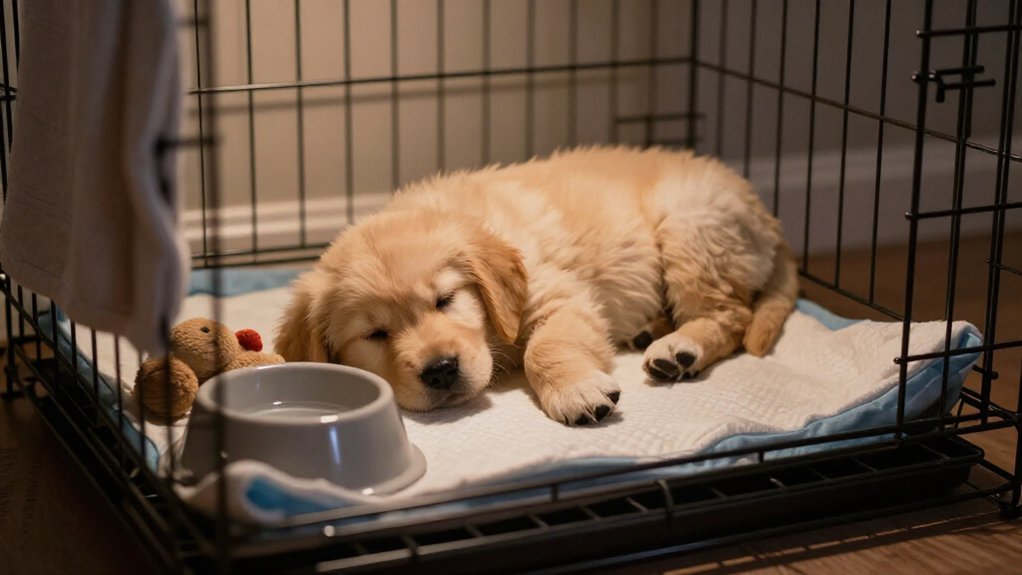
For your puppy’s first week, keep the crate simple: add a washable towel or T-shirt with a familiar scent, but skip fabric if your puppy chews or shreds it.
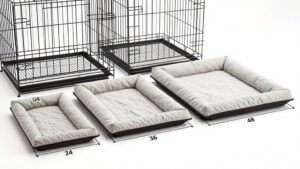
Choose a crate that lets your puppy stand, turn, lie down, and settle, using a divider to limit space. Keep airflow clear and bedding light; remove the collar and tags before bedtime.
A routine and potty breaks can help your puppy settle, and these tips can guide you through the first nights.
Washable Bedding and Chew Toys
Line the crate with washable bedding, such as an old towel or T-shirt; a familiar scent may help your puppy feel more at ease. Choose bedding that fits comfortably without crowding the crate; your puppy should still have room to lie down and change position. If your puppy chews fabric or is likely to shred a pad, start with a simple towel or skip bedding that could become unsafe.
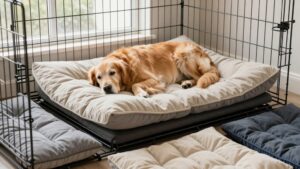
You can add a crate pad later, once destructive chewing is unlikely.
During supervised crate sessions, offer an appropriate chew toy or a longer-lasting chew to give your puppy a calm activity. Check that the item stays intact, and remove it if your puppy can break off pieces or swallow them. When you can’t supervise, keep the crate free of unsafe items. These small choices help create a comfortable, safer space without adding clutter for your puppy each night.
First-Night Crate Setup
For the first few nights, place a hard-sided crate beside your bed so your puppy can sense you nearby; you can move it farther away later if your presence keeps them seeking attention. Choose a crate sized for your puppy’s adult growth, and use a divider to limit extra space while leaving room to lie down comfortably. Line it with an old towel or T-shirt that carries a familiar scent. A sheet over the crate, white noise, or a Snuggle Puppy may add comfort.
Skip crate pads until destructive chewing seems unlikely; a swallowed piece can create a hazard. Never use the crate as punishment. Take your puppy outside to potty just before bed, then make the crate a calm, comfortable place to sleep.
Responding to Overnight Whining
When your puppy whines, wait for 5–10 seconds of quiet before approaching or opening the crate, even if they may need to potty.
If a bathroom break seems needed, take your puppy out after the pause. Keep the trip calm and uneventful, then return them to the crate. This wait avoids making barking the route to freedom.
| Situation | Your response |
|---|---|
| Needs to toilet | Calm trip, then crate |
| Seeks reassurance | Stay close, no attention |
If you offer reassurance, stay nearby or briefly place your fingers through the crate. Don’t talk, hush, or reward barking with attention. Avoid bringing your puppy to your bed or couch after whining; that can teach them fussing earns a new sleeping spot.
Let a sleeping puppy rest unless accidents suggest a scheduled break. When possible, limit overnight potty trips to one or two.
Wire vs. Plastic Crates
Both wire and hard-sided plastic crates can work well for crate training, so choose a sturdy model that suits your puppy’s expected adult size. A wire crate’s divider lets you adjust the sleeping space as your puppy grows, while plastic crates don’t offer the same easy adjustment. Whichever you choose, make sure your puppy can lie down comfortably without excess space, and use familiar towels or T-shirts for comfort.
Wire Crate Benefits
A wire crate can make puppy training easier because its divider lets you limit an adult-sized crate to a comfortable sleeping space as your puppy grows. Choose a crate sized for your puppy’s adult growth, then adjust the divider so your puppy can stand, turn, and lie down comfortably without extra room that may invite toileting. Both wire and hard-sided crates can work, but a wire divider makes gradual sizing straightforward.
| Feature | Nighttime use |
|---|---|
| Divider | Adjust space as puppy grows |
| Bedding | Start with old towel or T-shirt for familiar scent |
| Crate pad | Wait until destructive chewing is unlikely |
Check the fit nightly: your puppy should stretch out comfortably, while the divider prevents excess space; move it as growth changes your puppy’s needs over time.
Plastic Crate Benefits
For nighttime crate training, a hard-sided plastic crate can give your puppy a cozy, sheltered place to settle. Its solid walls create a more enclosed resting space, which may help your puppy feel protected as they learn to relax. You can keep the setup simple and familiar, pairing the crate with calm bedtime routines.
Metal wire crates can work too, though their open sides may feel less sheltered to some puppies. That doesn’t make one style universally better; observe how your puppy settles and choose what supports calm, safe rest. Wire models also make divider adjustments easier as your puppy grows, while plastic crates provide a naturally enclosed feel. Either can suit nighttime training, and your puppy’s comfort matters most during this first week.
Choosing the Right Fit
Which crate suits your puppy best depends on how they settle: hard-sided plastic and wire crates can both work for nighttime training. Choose a crate sized for your puppy’s expected adult growth, then use a divider to make a larger wire crate suitable now. Set the divider so your puppy can stand, turn around, and lie down comfortably, but don’t leave excess room. That smaller sleeping area can help prevent them from toileting in a corner.
Plastic crates may suit puppies who settle in an enclosed space; wire offers airflow and makes divider adjustments easier. Either can work, so choose based on your puppy’s response and keep the setup simple. If they chew bedding, avoid crate pads at first; use a towel or T-shirt instead.
Overnight Potty Breaks
Take your puppy out just before bed, then set an alarm for potty breaks every few hours at first. If your puppy fusses, pause for 5–10 seconds of quiet before a brief, boring trip outside; let a sleeping puppy rest unless accidents suggest otherwise. Track break times and gradually lengthen the interval as your puppy stays dry.
Schedule Timed Breaks
Schedule overnight potty breaks around your puppy’s needs, starting with a trip outside right before bed and an alarm every few hours. An eight-week-old puppy may need more frequent trips than an older puppy; aim for one or two breaks when possible. Let a sleeping puppy sleep unless accidents suggest otherwise.
| Puppy stage | Starting plan | Adjustment |
|---|---|---|
| Before bed | Potty trip | Use cue |
| Young puppy | Alarm every few hours | Shorten if needed |
| After break | Return promptly | Extend gradually |
Keep each outing brief and boring: use your potty cue, give light praise without treats, and return promptly to the crate. If fussing suggests need, wait for five to ten seconds of quiet before going out. Track times; after 1 a.m., try 1:15 a.m. next night.
Respond to Night Whining
When your puppy whines at night, pause for 5–10 seconds of quiet before approaching, even if you suspect they need to go out. That pause helps you avoid rushing to every sound. Keep overnight potty trips to one or two when possible, but don’t wake a sleeping puppy unless accidents suggest they need a break.
When you take them out, keep things quiet and brief. Use your potty cue, offer light praise when they go, and skip treats so the trip stays low-key. If walking outside could lead to an accident, carry your puppy to the potty spot. Give them a few minutes to go; if they don’t, return them to the crate. A response helps your puppy settle without turning nighttime into playtime.
Track Potty Patterns
Keep a simple overnight log of each potty break, noting the time and whether your puppy actually went. Use it to spot patterns and adjust tomorrow’s schedule without guessing. Take your puppy out after a quiet pause of about 5–10 seconds rather than opening the crate during barking or whining.
| Night | Time | Result |
|---|---|---|
| Tonight | 1 a.m. | Went |
| Next night | 1:15 a.m. | Try waiting |
Keep trips brief and uneventful: say your potty cue, give praise, then return your puppy to the crate. Skip treats and play. Aim for one or two breaks, but let a sleeping puppy rest unless accidents point to a trip.
If your puppy went at 1 a.m., try waiting until at least 1:15 the next night. Move the break earlier after an accident.
Heartbeat Plush Toy
A heartbeat plush toy, such as a Snuggle Puppy, may help your new puppy feel more settled in the crate, especially during the first few nights away from littermates.
Place it in the crate as a comfort aid, and introduce it calmly. Pair it with a familiar-smelling towel or T-shirt to make the space feel more reassuring. Check that the toy suits your puppy, then watch how they use it. If they chew or tear it apart, remove it and choose another comfort item.
A plush heartbeat toy may offer comfort, but each puppy responds differently. Let your puppy’s behavior guide you, and keep bedtime calm and predictable. It won’t replace your usual potty breaks or a consistent routine, but may ease the adjustment.
Safe Collar Removal
Before bedtime, remove your puppy’s collar and dangling tags before closing the crate. A collar can catch on crate bars or bedding, creating a strangulation risk even when your puppy settles. Check your puppy each night to confirm no collar or tags remain before you leave them crated unsupervised.
Keep identification on your puppy during supervised outings, then remove the collar again as part of your bedtime routine. Repeating this step throughout the first week makes it easier to remember.
If you’re unsure whether your crate setup or a collar presents a risk, ask your veterinarian or puppy provider for guidance. Until you’ve checked, leave the collar off whenever your puppy is alone in the crate. This precaution helps you keep nighttime crating safer.
Avoiding Overheating at Night
Airflow and light bedding can help your puppy stay comfortable overnight. During the first week, keep the sleeping surface simple; a familiar-smelling towel or T-shirt offers comfort without trapping much heat. Avoid thick pads and blanket piles, particularly if your puppy chews. Use these steps:
- Choose a well-ventilated metal or hard-sided plastic crate, and keep it away from heaters, fireplaces, and sunny spots.
- If a cover helps your puppy settle, drape a sheet loosely over part of the crate. Keep openings clear, and remove it if the inside feels warm.
- Use only enough bedding to make the surface comfortable. Check your puppy periodically for signs of overheating, such as heavy panting or restlessness, and uncover the crate or move it to a cooler area.
Check Crate Spacing Before Bedtime
Check the crate’s spacing at bedtime so your puppy can rest comfortably without extra room that may encourage toileting in one end. Choose a crate sized for your puppy’s adult growth, and use a divider for growing large breeds to keep the sleeping area appropriately snug. Before lights-out tonight, check that your puppy can lie down comfortably, turn around, and settle, while avoiding unused space.
Adjust the divider as your puppy grows; keep enough room for rest without leaving a spare toileting corner.
A hard-sided metal or plastic crate works well; metal models are easier to divide. Line the floor with a clean old towel or T-shirt for a familiar, washable surface. If your puppy chews destructively, wait before adding a crate pad.
Conclusion
For your puppy’s first week, keep the crate simple, comfortable, and safe: add washable bedding and a chew, remove the collar, and leave room to stand, turn, and lie down. Choose a crate with good airflow and watch for overheating. Expect adjustment; respond calmly to whining and take your puppy out for potty breaks.
A heartbeat toy may soothe some pups. With a bedtime routine, you’ll help your puppy settle while building positive crate habits.