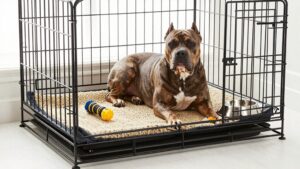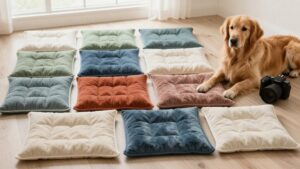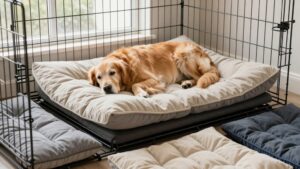
What Size Crate Pad Do I Need? Measure Once, Buy Right
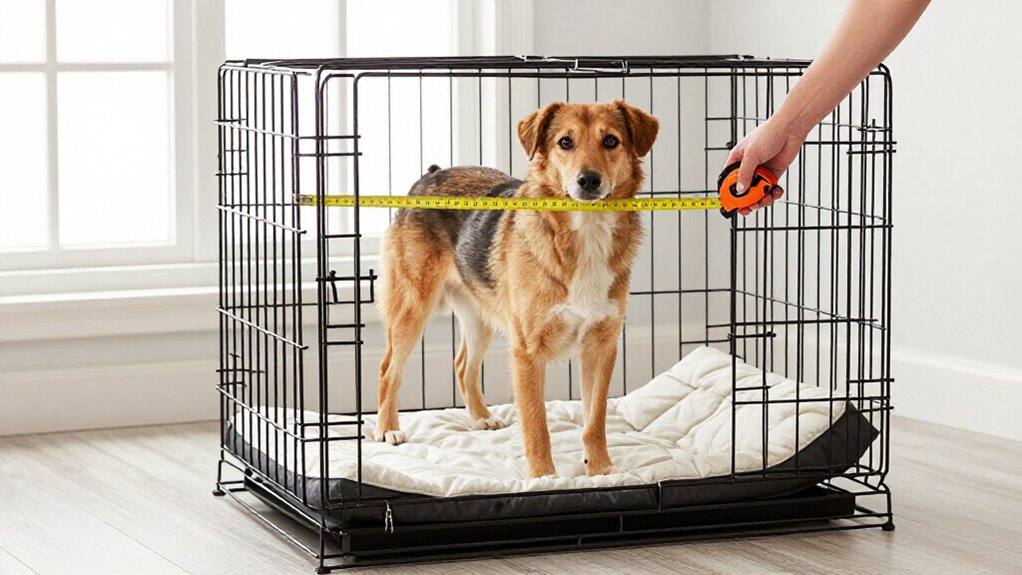
Measure your crate’s interior floor from back wall to just behind the door and side to side, excluding the threshold and hardware. Choose a pad the same size or slightly smaller in both directions, and check that your dog can stand, turn, and lie down with it in place.
Avoid thick bedding that crowds headroom; puppies and chewers need secure, washable pads you can inspect often. More tips can help you choose safely with confidence.
Measure Crate Interior Dimensions
To choose a pad that fits safely, measure the crate’s floor—not its exterior—from the back wall to just behind the door, then from side to side. Use these floor measurements to judge the pad’s length and width; exterior dimensions can mislead you and leave a poor fit. Check thickness as well. A bulky pad can reduce usable height, so your dog should still stand, turn, and lie comfortably without feeling cramped.
Compare your measurements with the pad’s listed dimensions, and account for raised edges or features that take up floor space. Measure twice before you buy; an error can crowd your dog or leave exposed floor. If bedding already sits in the crate, include it in your check so the finished setup feels secure.
Crate Pad Size Matching Chart
Once you’ve measured the crate floor, use those dimensions to find a pad that fits flat and won’t block the door. Measure length from the back wall to just behind the door, then measure width across the floor panel. Choose a pad that’s the same size or slightly smaller in both directions; it should lie flat and leave the doorway clear.
| Crate size | Interior floor (length × width) |
|---|---|
| Small / Medium | 25 × 17.4 / 31.9 × 20.4 in |
| Intermediate | 39 × 25 in |
Treat these Revol figures as references, not guarantees: usable space varies by model, so verify your crate’s interior before buying. Check thickness too; a thick pad can limit your dog’s room to stand and turn comfortably. If the footprint feels tight, size down to preserve safe, usable space.
Pad Thickness and Cushioning
How thick should a crate pad be? Choose enough cushioning to ease pressure on your dog’s joints, but don’t let comfort compromise safe movement. After placing the pad inside, confirm your dog can stand, turn around, and lie down without being cramped.
Bedding may take 1 to 2 extra inches of height; some medium pads need 2 more. Measure the interior height with the pad in place, not just the empty crate.
For a larger dog or one with joint sensitivity, dense orthopedic foam can distribute weight and resist sagging, offering steadier support. Memory foam can contour to your dog and support joints, though it may retain heat. Watch for a pad that compresses excessively or crowds the crate, and adjust thickness to your dog’s needs.
Pad Materials and Washability
Choose memory foam for joint support, but use a washable cover because foam can trap heat; waterproof vinyl wipes clean easily but offers less cushioning and may feel slick. If your dog has accidents, a removable, non-slip liner can protect the pad’s core and simplify cleanup.
Wash covers weekly or after accidents, air out foam, and replace pads with tears, sagging, or stubborn odors.
Foam Versus Waterproof
When comfort is the priority, memory foam conforms to your dog’s body and supports sore joints, making it a helpful option for seniors, large breeds, or dogs recovering from surgery. Foam can retain heat, so choose a pad with a removable, washable cover and air the foam out regularly.
For puppies or dogs prone to accidents, a water-resistant vinyl pad wipes clean with a damp cloth and mild soap. It’s lightweight and durable, but offers less cushioning and can feel slick. A removable, washable liner helps protect the main mat from accidents and often has a breathable, non-slip underside. Inspect the pad for tears, sagging, or lingering odors, and replace it promptly. That keeps cleanup manageable and bedding safer.
Durable Fabric Choices
Durable, washable materials make a crate pad easier to keep clean and safe. Choose a fabric that suits your dog’s habits as well as your cleaning routine. Memory foam cushions joints, but it may hold heat.
Check that you can keep the pad clean regularly, and watch for signs your dog is getting too warm. Vinyl is lightweight, water-resistant, durable, and simple to wipe with a damp cloth and mild soap. It provides less cushioning than foam and can feel slick, so make sure your dog can lie down and rise steadily. If your puppy has accidents or your dog is incontinent, prioritize waterproof materials. Clean bedding weekly and after accidents; replace any pad that tears, sags, or keeps an odor.
Removable Washable Covers
A removable, washable cover makes routine cleanup easier and helps keep your dog’s crate pad fresh.
Choose a cover that matches the pad’s dimensions so it stays secure and comes off easily when it’s time to clean. A loose or poorly fitted cover can bunch beneath your dog, so check the fit before use.
Wash the cover weekly, or sooner after an accident, and check its care instructions first; materials may need different cleaning methods. A water-resistant pad can help limit liquid from reaching the core, while the cover handles routine messes.
Check for tears or odors that remain after cleaning, and replace the cover if either persists. An intact, well-fitting cover helps protect the pad and gives your dog a cleaner place to rest.
Machine-Wash Care
Choose a pad with a removable, machine-washable cover or liner so you can clean it without putting the foam core through the wash. Wash the cover or liner weekly and after accidents, following the care label for water temperature and drying instructions. This helps you clean the washable layer without damaging materials.
If you choose a waterproof vinyl pad, you can usually wipe it with a damp cloth and mild soap. A removable liner can protect the main mat while giving you a washable layer.
Air out foam mats between washes, and don’t machine-wash the foam unless the manufacturer specifically says it’s safe. Before you reassemble the pad, make sure the cover is fully dry; damp fabric can create problems inside the crate.
Odor And Stain Resistance
If your dog is prone to accidents or incontinence, a water-resistant pad or removable, washable liner can make cleanup easier. Vinyl pads resist moisture and wipe clean with a damp cloth and mild soap, though they cushion less than foam.
Memory foam supports your dog’s joints, but it may hold heat; choose a model with a washable cover so you can keep the sleeping surface fresh. A breathable, non-slip liner protects your main mat from stains and helps keep it in place.
Wash liners or covers weekly and after accidents; air out foam mats, and replace any pad with lingering odors, tears, or sagging. Check the fit, too: a secure, flat surface helps your dog rest without shifting or bunching underfoot in the crate.
Choosing a Pad for Puppies
Because puppies grow quickly and may chew or have accidents, pick a pad that fits securely and is easy to clean. Measure the crate floor from side to side and from the back wall to just behind the door. Choose a pad that lies flat without bunching. Check its thickness against the crate’s interior height so your puppy can stand, turn around, and lie down comfortably.
A durable pad or removable, washable liner makes cleanup much simpler after accidents. Recheck the fit as your puppy grows; an adjustable divider can keep the sleeping area appropriately sized. Avoid very plush bedding, and inspect the pad regularly. If you find tears or loose pieces, remove it promptly to reduce the risk of your puppy swallowing material.
Pads for Chewers
For a puppy that chews, a well-fitting pad also needs to withstand wear. Chewing is common, so you’re not alone if your pup tests bedding with their teeth. Skip super-plush surfaces; their texture may invite tearing. Choose a durable, easy-clean pad sized to lie flat inside the crate, without bunching or tempting loose edges.
Check it often for tears or loose pieces, especially after chewing sessions. If your dog pulls off fragments that could be swallowed or cause choking, remove the pad right away. Replace damaged bedding instead of letting your dog keep chewing it. Crate toys can also break into unsafe pieces, so supervise your dog while they use them. These checks help you offer comfort without overlooking a real hazard at home.
Pad Fit for Senior Dogs
As dogs age, joint sensitivity can make a well-fitted crate pad especially important. Measure the crate floor from the back wall to just behind the door, then side to side. Choose a pad that won’t block the door or leave too little room for your dog to stand and turn.
If your senior dog has arthritis or tender hips and elbows, choose orthopedic foam to cushion pressure points and support those joints. Check the pad’s thickness against the crate’s interior height; a thick pad can limit headroom and make standing uncomfortable.
For easier cleanup after accidents or incontinence, choose a waterproof pad or one with a removable, washable liner. Consider how your dog climbs on and off, and prioritize comfort without crowding the crate.
Fixing Slipping Crate Pads
If your crate pad keeps slipping, start by measuring the interior floor from side to side and from the back wall to just behind the door. Choose a pad that fits without buckling; an oversized pad can bunch beneath your dog and make footing unstable.
- Look for a non-slip underside, especially if your dog shifts often.
- Check thickness: your dog should still stand, turn, and lie down comfortably.
- If a liner slides on the mat, use one sized to fit over the core pad.
When you wash the pad, check its fit again; replace it if its underside is damaged. If it bunches or slides, reposition it promptly so your dog has a stable surface for standing, turning, and resting.
Accounting for Door Thresholds
A well-fitting pad should also stay clear of the crate’s entrance. Measure the usable floor from the back wall to just behind the door, not across the threshold. That small adjustment keeps bedding from catching and helps your dog enter safely.
- Check threshold height against pad thickness; a short-legged puppy may struggle with a high lip.
- Choose a pad within interior floor dimensions, allowing for raised edges and entrance hardware.
- Test door movement; leave clearance so the pad won’t overlap the threshold or track.
If your puppy needs help stepping over a high entrance lip, add a small step only if it won’t block the door or shift the pad. Check the setup again after placing everything. A calm, clear entry protects paws and prevents snags.
Conclusion
Before you buy, measure the crate’s floor space—not its outside—and account for the door threshold. Choose a pad that lies flat, fits without bunching, and gives your dog support without blocking airflow or movement. Match thickness and material to your dog’s age, chewing habits, and cleanup needs.
If the pad slips, secure it safely or choose a design that fits better. Check the fit, especially as your puppy grows or your senior dog’s needs change.