What to Put in a Crate for a Dog That Chews (Bedding That Survives)
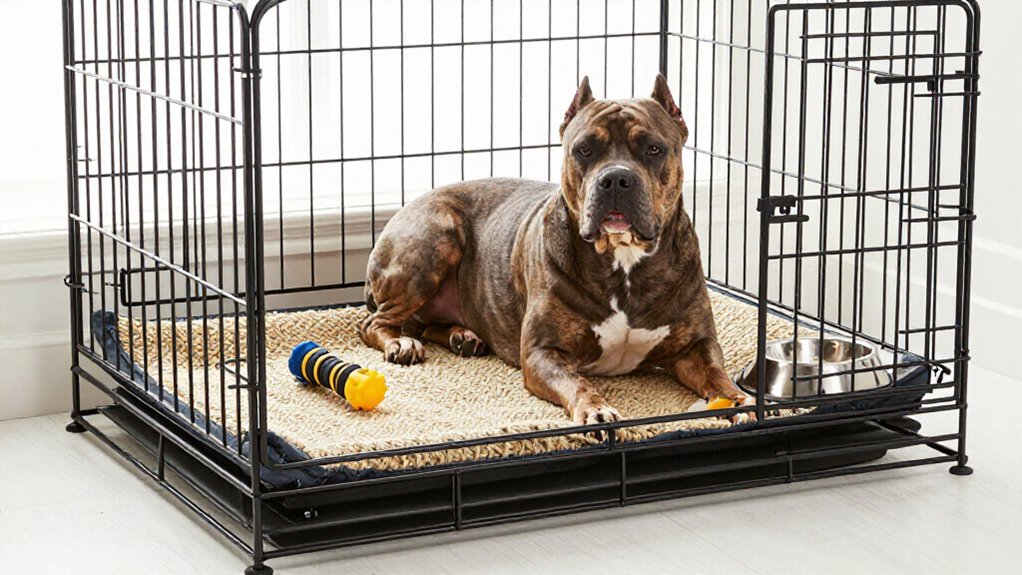
If your dog chews bedding, start with a bare crate or test a snug, durable mat only under supervision. Choose heavy canvas or a close-fitting cot, but remember no bed is chew-proof.
For persistent chewers—or dogs that swallow fabric—skip loose blankets, towels, and plush beds. Measure the crate’s interior floor, secure edges, and remove anything damaged.
If pieces are swallowed, contact your veterinarian.
You’ll also find practical tips for fitting and maintaining bedding safely.
Chew-Safe Bedding Choices
If your dog chews bedding, choose a close-fitting, chew-resistant mat made from durable material, such as heavy canvas or Kuranda’s Heavy Duty 40 oz. vinyl. Check that it lies flat and covers most of the crate floor, with no loose edges, corners, or gaps your dog could grab or trap a paw in. Durable doesn’t mean indestructible, so match the mat to your dog’s chewing strength and inspect it regularly for damage.
Skip plush beds, loose blankets, and towels if your dog shreds or swallows fabric; swallowed pieces can cause a dangerous intestinal blockage. If your dog keeps chewing, remove the mat and use the bare crate floor temporarily. You’re right to prioritize safety while you find another option, with your veterinarian’s guidance if needed.
Mesh Cot Crate Beds
For a dog that tolerates bedding, a mesh cot can lift them off the crate floor and improve airflow in warm or humid conditions. That added airflow may help your dog stay more comfortable, but mesh can tear more readily than durable vinyl, so it may not suit a persistent chewer.
Choose a close-fitting cot that lies flat inside the crate, and check for loose fabric or openings where paws could catch. Before each use, inspect the bed for damage, then supervise your dog to learn whether they chew or pull at it. If they start, remove it promptly; torn material or entrapment can cause harm. For a dog who keeps destroying mesh, choose a more chew-resistant option instead, or leave the crate bare.
Kuranda Bed Components
A Kuranda bed’s components can affect how well it holds up to chewing. If your dog targets frames, choose aluminum rails, corners, and feet; aluminum is Kuranda’s most chew-resistant frame option. For destructive chewers, Kuranda recommends pairing an all-aluminum frame with Heavy Duty 40 oz. vinyl.
Its reinforced bolt-rope edges, patented frame rails, and enclosed fabric edges help secure fabric and conceal edges your dog might tear. Proprietary corners recess screw heads, while plastic feet fit into leg bottoms.
Because the bed has no filling to expose and swallow, it avoids an ingestion hazard. Some fabrics, including pass-through mesh, may be damaged more easily. Check the bed for damage, supervise chewing, and choose a safer option if damage continues.
Crate Bed Attachment Methods
Choose a crate bed that secures inside its frame, leaving no loose edges for your dog to grab. If you use straps or tie-down loops, check that they stay taut and that fasteners are chew-resistant, recessed, or covered. For a cut-to-fit mat, make sure it fits closely so your dog can’t lift an edge or get a paw caught.
Secure Strap Systems
Securely attached crate bedding stays flatter and is less likely to bunch into tempting chewable edges. When you choose a bed, check how its fabric connects to the frame, not just whether it feels. An in-rail design, such as Kuranda’s, encloses fabric edges and spreads your dog’s weight along the rails, helping limit lifted edges. Inspect every strap, buckle, and fastener for chewable loops or exposed hardware that could scratch or injure your dog.
Fit the bed closely to the crate floor, so gaps near attachment points won’t catch paws. Even a secure system can’t stop a determined chewer. Supervise your dog’s sessions and check the bedding regularly. If your dog starts chewing the straps or fabric, remove the bed promptly and choose a safer setup.
Tie-Down Loops
Tie-down loops can help keep a crate bed flat and limit sliding or bunching that may expose chewable edges. They may reduce access to tempting corners, but they don’t make bedding chew-proof. Attach loops only to crate anchors the bed is designed to use, and follow both manufacturers’ instructions; designs and compatible points vary. Before your dog enters, check that straps lie safely and can’t trap paws, snag claws, or invite chewing.
Keep fasteners and loose strap ends out of reach, since a determined dog may pull, gnaw, or swallow them. Inspect loops, straps, and crate attachment points regularly for fraying, looseness, or damage. If anything looks unsafe, remove the bed rather than hoping it holds. Supervise your persistent chewer during every crate session.
Chew-Resistant Fasteners
When you’re choosing a crate bed for a dog who chews, look for fabric secured inside the frame rails and corners, with no exposed edges your dog can grab and pull.
Reinforced bolt-rope edges and enclosed fabric can help keep the bed attached while limiting accessible chewing points. Check that corners recess screw heads and check for exposed hardware or sharp edges that could scratch your dog. Inspect attachment points carefully for small gaps where paws might become trapped. Skip loose ties, straps, or fasteners; your dog could chew them off and swallow pieces.
For a destructive chewer, Kuranda recommends its Slimline Crate Bed with Heavy Duty 40 oz. vinyl. No attachment method is chew-proof, so inspect fasteners regularly and replace damaged parts promptly.
Chewing Style and Intensity
Notice whether your dog only mouths bedding occasionally or persistently shreds and swallows it; swallowed fabric can cause a life-threatening blockage. Track when and where chewing happens, since anxiety, boredom, or long crate stays may contribute. Match bedding to your dog’s actual chewing strength, and remove any item they damage, even if chew toys are available.
Occasional vs. Persistent Chewing
A dog’s chewing style matters as much as the bed’s durability: occasional chewers may do well with a sturdy, chew-resistant bed, but supervise first to check that it stays intact.
| Chewing pattern | Safer choice |
|---|---|
| Occasional | Supervised sturdy bed |
| Persistent | No loose bedding if swallowing |
If your dog tears and swallows fabric, choose a cautious crate setup; chew toys don’t reliably prevent bedding damage. Birdie kept chewing bedding even while chew toys rotated.
After a period without persistent chewing, retry only with a close-fitting, low-profile mat and secured edges; inspect it closely for damage. Match durability to intensity: Kuranda recommends a Heavy Duty 40 oz. vinyl surface and all-aluminum frame for destructive chewers, but no comfortable bed is truly chew-proof. Consider this guidance when deciding what belongs inside.
Chewing Triggers and Patterns
Chewing patterns can reveal both what your dog targets and what may be driving the behavior. If your dog seeks out blankets, covers, or other soft items, fabric may be the attraction; some dogs even swallow pieces, which creates a serious blockage risk. Others chew only when loose material is available, while some damage beds despite having toys.
Rotating chew toys can help meet chewing needs, but it won’t necessarily protect crate items, especially if your dog chews before bedtime. Notice when chewing starts and what your dog targets. More crate chewing can point to anxiety, boredom, or too much time confined, though no single pattern proves a cause. Consider changes in your dog’s routine and behavior, and track chewing around departures, rest, or bedtime.
If your dog swallows fabric or seems distressed, remove access to loose material and call your veterinarian for guidance. You’re not failing your dog by finding a pattern gradually; careful observation helps you respond to the underlying need and reduce risk.
Matching Bedding to Chewing Strength
Match bedding to how intensely your dog chews, and treat shredding or swallowing as a safety signal, not a reason to try thicker blankets. For mild chewers, offer a washable mat or blanket under supervision; remove it if shredding or swallowing starts.
For persistent chewers, choose a low-profile bed with tightly secured, enclosed edges. Close-fitting bedding without loose corners gives your dog less to grab. For destructive chewers, Kuranda recommends Heavy Duty 40 oz. vinyl with an all-aluminum frame; aluminum is its most chew-resistant frame option and is recommended for dogs up to 250 pounds.
If your dog exposes and eats filling, avoid plush beds. A bed without filling removes that ingestion hazard, but no comfortable bed is guaranteed chew-proof. Remove it if chewing continues.
Crate Bed Cleaning Routines
Choose a machine-washable, quick-drying bed or mat that’s easy to remove, and clear away fur and debris daily. Wash pads or liners weekly, and keep a spare nearby so you can use one while the other dries. Regular cleaning limits buildup and makes it easier to spot damage before it becomes a problem.
After an accident or illness, disinfect the crate according to the cleaner’s label directions; allow every surface to dry fully before you replace the bedding. Smooth, non-porous crate surfaces help you wipe away messes more easily. Check seams and corners as you clean, because trapped moisture or residue can linger. Keeping a simple routine can make cleanup manageable; a clean, dry space supports comfort and helps you reset the crate promptly.
Puppy Bed Safety Exceptions
A clean crate still needs to be safe for your puppy: if they chew or shred bedding, leave the crate bare rather than risk them swallowing fabric and developing a potentially life-threatening gut blockage. That choice isn’t a failure; it protects your puppy while their chewing habits change.
Don’t leave piles of blankets or towels with an unsupervised puppy. If you try a lightweight blanket, supervise and remove it at the first sign of chewing or tearing.
A sturdy, chew-resistant bed may work, but inspect it often; take it out if your puppy damages it or can reach filling. Even mats aren’t reliable for every persistent chewer. If your puppy keeps destroying bedding despite safe chew toys, use no bedding for now and reconsider as they mature.
Avoiding Loose Fabric Edges
To reduce the chance your dog grabs and chews the bedding, use a mat that fits the crate closely and lies flat, without loose or curled edges.
Choose beds with fabric enclosed by frame rails and corners; this hides tearable edges and helps keep paws from catching in gaps. In-rail designs secure fabric and spread weight along rails, limiting corner stress.
- Skip blankets, towels, and oversized bedding; bunching exposes edges.
- Remove bedding if chewing starts; swallowed fabric can cause intestinal blockage.
- For persistent chewing, try close-fitting heavy-duty vinyl.
Even careful choices can’t make fabric risk-free. If your dog swallows pieces, contact your veterinarian promptly; swallowed fabric can cause a dangerous intestinal blockage. You’re right to prioritize safety, especially while your dog is learning to settle.
Measure the Crate Floor First
Once you’ve chosen a mat with secure edges, measure the crate’s interior floor length and width so the bedding covers most of the floor without curling or bunching. Measure the empty floor rather than relying on the crate’s listed dimensions, which may not match its usable interior. Choose a close-fitting mat that leaves little excess fabric; oversized bedding can bunch, restrict airflow, and create loose edges your dog can grab.
Bedding that’s too small may slide, exposing hard flooring and leaving your dog less comfortable. For a chew-prone dog, a precisely cut piece of vet bed or thick canvas with secured edges can reduce accessible material. After placing it, check that the mat lies flat, covers most of the floor, and stays put when your dog moves. If it shifts or curls, adjust the fit before leaving your dog unattended. This careful check won’t eliminate chewing, but it can reduce avoidable hazards.
Conclusion
Choose crate bedding to match your dog’s chewing style, not just your décor. Measure the crate floor first, then look for durable, tightly fitted options, such as a chew-resistant mesh cot, with secure attachments and no loose fabric edges. Check the bed often and clean it as directed; replace it if it’s damaged.
If your puppy chews bedding or swallows pieces, leave the crate bare and ask your veterinarian for guidance. Your dog’s safety comes before comfort.