Dog House Size Chart by Breed: Small, Medium, Large and Giant Dogs
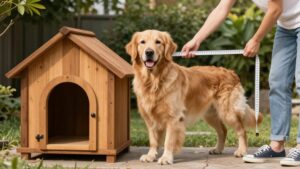
Use breed labels as a starting point, then size the house to your dog’s build. Measure nose to flank, toes to head, and chest width; allow up to 25% extra length and width, and 25–50% extra height.
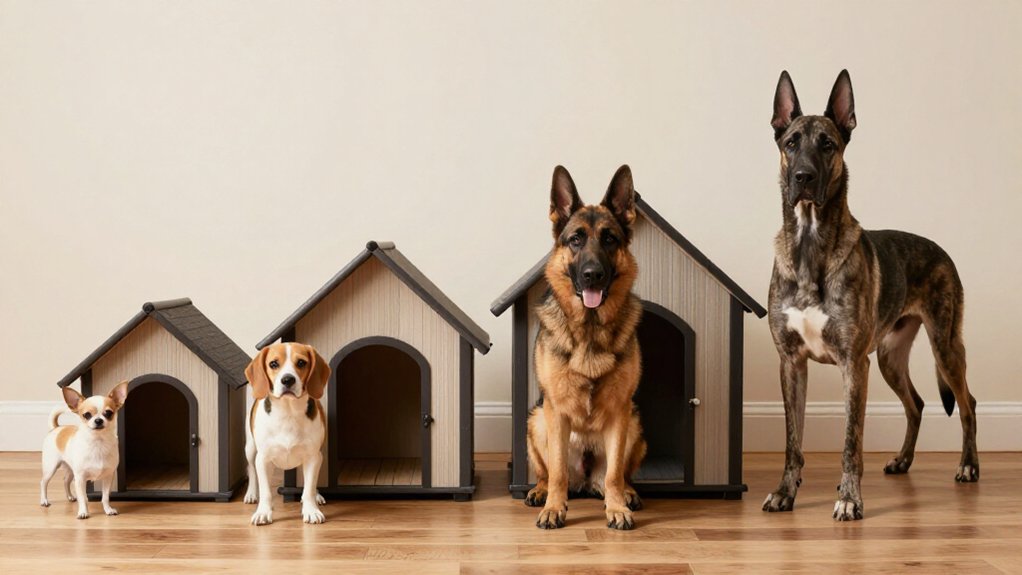
Small dogs include Toy Poodles and Scotties; PET45 suits Beagles and Corgis, while PET67 fits Cocker Spaniels and Border Collies.
Giant breeds need floor space and height. Check doorway, insulation, bedding, and growth; fit guidance follows.
Breed-to-House Size Matches
Match a dog house to your dog’s build, not just its breed label. Toy Poodles, Scottish Terriers, and Miniature Poodles are small, while Beagles, Shetland Sheepdogs, and Cocker Spaniels need more room. For medium dogs, consider a house sized for Beagles, Corgis, French Bulldogs, or Border Collies; the PET45 is a medium option.
The PET67 is recommended for medium to medium-large dogs, including Cocker Spaniels, Bulldogs, and Border Collies. If your dog is tall or broad, such as a larger Australian Shepherd, Boxer mix, or stocky Bulldog, choose a model with height, floor space, or doorway width to suit its build. For a giant breed like a Great Dane, the Goliath offers 24 square feet of floor space and a 5-foot peak, with a removable partition for two dogs.
Breed-Specific Interior Dimensions
Breed labels can suggest a starting point, but your dog’s measurements should determine the house’s interior dimensions. Toy Poodles, Scottish Terriers, and Miniature Poodles usually need less room than Beagles, Shetland Sheepdogs, or Cocker Spaniels, but measure your own dog. For length and width, measure nose to flank, excluding the tail; make each interior dimension at least that long and no more than 25% greater.
| Dog group | Sizing check |
|---|---|
| Small breeds | Use individual measurements |
| Medium breeds | Stand, turn, lie comfortably |
| Large or giant | Compare dog with interior |
| Goliath | 24 sq ft; 5-ft peak |
For height, measure toes to head and allow 25–50% extra: a 22-inch dog needs about 28–33 inches. Compare large dogs’ measurements with available space; choose a fit that supports natural movement without crowding.
Doorway Height and Width
Set the doorway height at least three-fourths of your dog’s shoulder height; for example, a dog with 19-inch shoulders needs an opening at least 14 inches tall. Your dog will usually duck while entering, so you don’t need to match the opening to its full standing height. Use shoulder height as a practical guide, then check width separately.
Measure your dog’s chest or shoulders at the widest point and compare that measurement with the doorway width. Leave enough room for passage without forcing your dog to turn or squeeze through. Stocky breeds, including Bulldogs, French Bulldogs, and Corgis, often need a wider opening and extra clearance on sides.
Watch your dog’s approach: hesitation, excessive crouching, or difficulty entering can signal that the opening is too small. If you see these signs, increase the doorway dimensions before relying on the house for use. A properly sized entrance lets your dog pass naturally and helps you confirm that the house suits its build, not just its breed label.
Climate-Appropriate Insulation Thickness
Choose thinner insulation in mild climates and thicker wall, floor, and roof insulation where winters are severe; keep it dry behind a durable lining. In hot weather, prioritize ventilation, and adjust insulation seasonally if your climate varies. Raise the house above cold or damp ground, and avoid excess interior space that’s harder for your dog to warm.
Mild Climate Insulation
In a mild climate, match insulation to local temperatures rather than using the heavy insulation meant for severe winters. Choose a thickness suited to your area’s typical conditions; excess insulation can make the interior less comfortable when temperatures are moderate.
Measure your dog before choosing a house: it should allow your dog to enter, turn, and lie down comfortably, without so much unused space that body heat disperses. A well-fitted shelter retains warmth yet leaves enough room to stretch in mild weather.
Prefer a wood structure with a wood roof; both provide better insulation and heat control than plastic or an uninsulated asphalt-shingle roof. Where damp ground is a concern, raise the house to limit moisture exposure. If you need extra insulation beneath your dog, add dense, moisture-proof foam bedding and check that it stays dry. Replace it promptly if it becomes wet or damaged.
Cold Climate Thickness
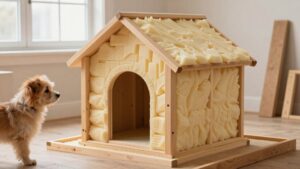
Unlike a mild-climate setup, a cold-weather dog house needs to limit heat loss without excess interior space. Don’t assume a universal insulation thickness: the guidance specifies no inch measurement. Instead, choose a properly sized house; its smaller interior helps your dog’s body heat warm the space.
Build or select a wood structure with a solid wood roof for better insulation and heat control. Where the site exposes the floor to cold, damp ground, raise the house. Fit a cold-weather door barrier and provide dense, moisture-proof foam bedding to retain warmth. Avoid plastic houses and uninsulated asphalt-shingle roofs in cold conditions.
Check that joints close tightly, and keep bedding consistently dry; replace compressed foam because it offers less cushioning and insulation than intact, dense bedding material.
Hot Weather Ventilation
When temperatures rise, how can a dog house stay comfortable? Prioritize cross-ventilation: openings on opposite sides let hot air escape while drawing fresh air through the shelter. Place these openings where shade protects your dog from direct sun and rain, yet airflow remains unobstructed.
Don’t close the doorway or cover vents during hot months; action can restrict cooling circulation. Choose insulation thickness for your climate. Thick insulation may trap heat in warm regions, while thinner walls can suit places with mild winters.
Insulation doesn’t replace ventilation, so assess the house during the hottest part of the day. If it feels stuffy or overheated, increase airflow or adjust its exposure to sun. Your dog should be able to rest comfortably without relying on insulation alone.
Moisture-Resistant Insulation
To keep a dog house warm without trapping dampness, choose dense, moisture-resistant foam and match its thickness to your climate: prioritize moisture protection in damp areas and stronger heat retention in severe winters.
Dense, closed-cell foam resists water absorption, helping insulation retain performance when humidity or splashes persist. Install it behind an interior lining, and seal joints so moisture can’t reach the floor layer.
Where ground moisture or cold is a concern, elevate the house and protect floor insulation from water. Choose a wood structure with a solid wood roof; plastic walls and an uninsulated asphalt-shingle roof provide weaker protection. In severe cold, size the interior enough to help your dog’s body heat warm it, while preserving room to stand, turn, and lie comfortably.
Seasonal Insulation Adjustments
Insulation thickness should match your local winter conditions and the house’s design; there’s no single measurement that suits every climate.
In cold climates, choose a properly sized dog house rather than an oversized model; a closer fit helps retain your dog’s body heat. Build around insulated wood walls and a solid wood roof, and avoid plastic houses or uninsulated asphalt-shingle roofs. Guidance doesn’t specify a universal insulation thickness, so base your choice on typical winter temperatures, exposure, and the house’s construction instead of copying a fixed number. Add dense, moisture-proof foam bedding to limit heat loss at floor level.
Raise the house when ground moisture or severe cold makes contact with the ground a concern. In cold months, fit a removable door barrier to reduce drafts. Remove or open it in hot weather so you don’t trap heat inside. Check your dog’s comfort seasonally.
Raised Bed Clearance
For a raised bed, add its height to your dog’s standing height to check interior headroom, then confirm your dog can stand naturally, turn, enter, and lie down comfortably.
Measure the house’s usable interior length, width, and height; exterior dimensions don’t show the space your dog can actually use. Check that the bed doesn’t block the doorway, which should measure at least three-fourths of your dog’s shoulder height. Leave room beside the bed for turning, with extra side clearance for a broad-chested dog.
If your dog must duck, squeeze past the bed, or cannot turn without contact, choose a lower or smaller bed, or a larger house. Recheck clearance with the bed in its intended position, since its frame and bedding also occupy space. Use these measurements alongside your dog’s body size, not breed labels alone, when selecting a house. Test the setup before purchase, using your dog’s usual posture and typical movement patterns.
Senior Dog Accessibility
A raised bed can affect clearance, and an older dog may need extra room to move comfortably. Measure your senior dog standing: record body length, height, and chest width. Use those measurements to choose a house with enough room for your dog to enter, turn, and lie down without strain.
Check the doorway. The A-B-C guide recommends an opening at least three-fourths of your dog’s shoulder height, helping your dog enter without excessive crouching. If stiffness or limited mobility makes turning or settling difficult, consider sizing up. Don’t choose a needlessly oversized house, particularly in cold climates, where extra interior space can be harder to keep warm.
Select a stable model with a raised floor and smooth, pet-safe edges for comfortable entry and movement.
Multi-Dog House Sharing
Two dogs from the Giant or Godzilla breed ranges can share the Goliath, which offers 24 square feet of floor space and a 5-foot peak. Its partition lets you choose one shared space or separate resting areas. An optional porch adds lounging space but doesn’t replace indoor floor area.
Measure each dog individually. Check height, body length, chest width, and whether both can turn comfortably. Compare their needs with available space, not breed labels alone. If either dog is growing or you’re unsure about fit, choose a larger option. Use the A-B-C sizing guide or call 800-928-9951 for help.
Preventing Doorway Drafts
Once you’ve confirmed the house fits, position its doorway off-center to create a windbreak and limit drafts in the sleeping area. Then check the entrance and surroundings:
- Size the doorway to your dog: make it at least three-fourths of shoulder height, not oversized. Dogs typically duck to enter, so a larger opening can admit more wind.
- In cold months, fit a flexible door barrier that blocks wind but still lets your dog pass in and out.
- Add a porch or awning to shield the entrance from weather; raise the house when needed to keep ground-level cold air from flowing underneath.
After installation, observe your dog entering and resting; adjust the barrier if it snags, blocks access, or leaves the space exposed.
Puppy Growth Allowance
Because puppies grow quickly, choose a dog house based on your dog’s expected adult size, not just its current measurements. Allow extra room, especially if your puppy may become medium-large or giant.
A slightly oversized house can still serve; a cramped one won’t. Recheck fit as your dog grows.
At each growth stage, confirm your puppy can:
- Stand naturally without touching the roof.
- Turn around without squeezing against the walls.
- Enter, lie down comfortably, and stretch out.
Use measurements to judge whether the house remains usable, not to select a permanently small model. Compare your puppy’s height and body length with the interior dimensions as it grows. If movement becomes restricted, upgrade. Keep the opening accessible so growth doesn’t make entry awkward.
Conclusion
Choose a house that lets your dog stand, turn, and lie down without crowding. Match interior and doorway dimensions to your dog’s breed and body measurements, then account for bedding, insulation, and local weather. If you’re choosing for a senior dog, prioritize easy entry and a stable raised bed.
For puppies, allow for expected growth. If several dogs will share the house, size it for their combined space needs. Check the fit before you buy.