Do Freestanding Dog Gates Work? Which Dogs They Stop (and Which They Don’t)
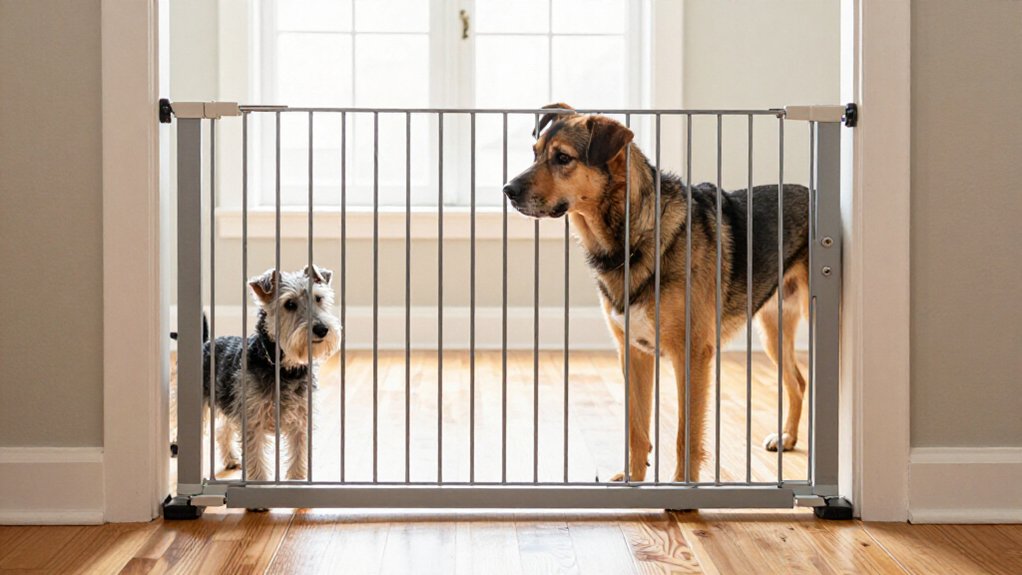
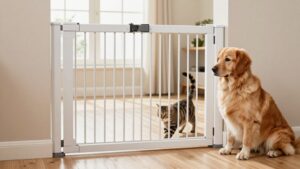
Freestanding gates work best when your dog respects boundaries and doesn’t push, climb, jump, or chew. A sturdy, well-positioned gate may contain larger dogs, but size alone won’t predict your dog’s behavior.
Check floor gaps, bar spacing, height, and stability, especially on slick floors or outdoors. Supervise your dog and switch to a securely mounted gate if the barrier shifts or gets tested.
Keep going to see how fit, setup, and gate type affect safety.
Which Dogs They Stop
Freestanding gates are best suited to calm, smaller dogs that won’t test the barrier. If your dog respects boundaries and doesn’t push, a properly sized gate may provide a way to limit access. Lightweight models can shift when larger or more determined dogs lean against them, so choose a heavier, sturdier design.
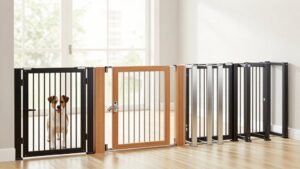
You can arrange a gate in a V or W shape to improve stability, though this won’t make it escape-proof. For an opening, a model with a hinged walk-through panel may be convenient, but it may fail if your dog pushes hard. Chewers and persistent escape artists need a sturdier solution: a securely installed metal gate. Even if your dog obeys a shorter barrier, match its height to your dog’s size and jumping ability.
Floor-Level Gap Width
Height isn’t the only fit to check: a small dog or puppy may squeeze beneath a freestanding gate. Check the floor-level opening, since a gate can be tall enough yet leave room for your dog to crawl through. Product height doesn’t tell you the clearance underneath. For example, the Richell Wood Freestanding Pet Gate stands 20 inches high, but its floor-gap measurement isn’t provided; verify clearance before buying.
Place the gate on a flat surface, then supervise your dog as you test whether the opening is passable. Don’t assume rubber feet or wide footings close the gap; they may support the gate without blocking the floor-level space. If your dog slips beneath or pushes the gate aside, choose a better-fitting barrier rather than relying on height alone.
Stability on Slick Floors
On slick floors, rubber feet can improve a freestanding gate’s grip, but they won’t guarantee that a determined dog can’t push it aside. Look for wide foot braces, which tend to keep the panel more secure. A model without braces may need a zigzag or V-shaped setup to resist shifting.
You can also place the gate’s ends against sturdy furniture to limit sliding, provided the furniture won’t move or create a climbing route. Heavier, bulkier gates are generally harder to shift than lightweight ones, though you’ll trade portability and easier storage for added mass. Before relying on any setup, check its stability on your actual floor; surfaces vary, and a gate that grips in one room may slide in another. Supervise your dog and reassess the barrier regularly. If it shifts, choose a more secure arrangement or a different barrier when you cannot watch it closely.
How Dogs Test Barriers
Watch how your dog tests a gate by pushing, pawing, jumping, or climbing; lightweight panels can shift or tip under pressure. Check for weak spots, and use a zigzag or V-shaped setup, sturdy panels, or furniture to help limit movement. Even if your dog respects the barrier during practice, keep supervising: freestanding gates aren’t as secure as hardware-mounted ones.
Pushing Against Barriers
When a dog leans into a freestanding gate, it can shift or tip, especially if it’s lightweight or has narrow footings. Watch how your dog tests the barrier before relying on it. If you see repeated shoulder pressure or pawing that moves the panels, treat the gate as unstable. Heavier-footed models generally resist tipping better than light designs; hinged gates may need furniture at their ends for support.
You can also arrange panels in a zigzag or V shape to help the gate stand and make it harder to push aside. Wire exercise pens are easy to reposition, but a determined dog can push them around; heavier-gauge wire offers more sturdiness. If your dog is large or strongly motivated, don’t assume a freestanding barrier will hold. Choose a sturdier model or secure it when pushing is a concern. Check stability and supervise each use.
Jumping and Climbing
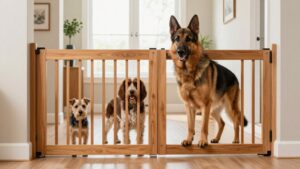
A gate that resists pushing may still fail if your dog can jump or climb over it. Choose a height suited to your dog’s size and jumping ability; a very tall gate may be unnecessary, while small dogs can slip through bars spaced for larger pets. Size alone won’t predict behavior: reported examples include a 100-pound Great Pyrenees mix and a 75-pound German Shepherd that respected shorter gates.
| Challenge | Practical response |
|---|---|
| Jumping | Match gate height to ability |
| Climbing | Use a securely installed permanent gate |
| Scaling | Train against climbing; consider a slight inward angle |
Freestanding gates may shift when challenged, especially without wide foot braces; zigzag placement or furniture bracing improves stability. Heavy-gauge wire pens resist tipping better than lighter ones, but can still move. Supervise.
Testing Weak Spots
How does your dog test a barrier? Dogs often start with pressure: a determined dog may shove a lightweight gate aside. Before relying on it, test whether it shifts when nudged, and see whether furniture can secure its ends.
Check the feet, too. Without wide foot braces, a gate may tip or slide; a zigzag or V-shaped layout can improve stability. Ex-pens are light and movable, so your dog may push them around. Choose heavier-gauge wire for sturdier panels, and arrange them in a V or W to block a doorway temporarily.
With hinged panels, test the joints and gaps between sections. Under supervision, watch for pushing, climbing, chewing, or squeezing between bars. Very small dogs may slip through openings designed for larger dogs.
Gate Height and Jumping
Measure how high your dog can jump, then choose a gate that accounts for its size and adult growth. A 20-inch gate may suit a small dog, but it likely won’t stop a capable jumper; size alone doesn’t predict whether a dog will respect a barrier. Watch for footholds or nearby furniture that give your dog leverage to climb.
Measure Your Dog’s Jump
Before choosing a gate, watch how high your dog can comfortably jump and pick a barrier taller than that; for a puppy, allow for its expected adult size. Observe your dog around barriers or in ordinary play; don’t provoke a risky jump near stairs or edges. Note the highest point cleared.
Richell’s freestanding gate is 28.1 inches high in medium and 36.2 in large; its 20-inch wood version may suit only dogs unlikely to jump. Still, height and size don’t predict behavior: a 100-pound Great Pyrenees mix and a 75-pound German Shepherd reportedly respected shorter gates. A dog that jumps or pushes a gate can defeat a taller barrier, so reinforce staying behind it with training and prevent access to hazards if it gets over.
Choose the Right Height
Choose a freestanding gate taller than your dog can comfortably jump, and account for a puppy’s expected adult size. Compare the barrier with your dog’s demonstrated ability, not just its weight or breed. A 20-inch Richell may suit a small dog, but a capable jumper could clear it.
Richell Deluxe models measure 28.1 inches in medium and 36.2 in large. Some large dogs respect shorter gates: reports include a 100-pound Great Pyrenees mix and 75-pound German Shepherd. These aren’t guarantees; observe your dog and choose conservatively. If your dog jumps gates, select a taller, sturdier model and use reinforcement training.
| Dog | Example height | Guidance |
|---|---|---|
| Small dog | 20-inch | May suit |
| Jumper | 28.1–36.2 inches | Choose taller |
| Large dog | Short gate | Individual response |
Watch for Climbing Leverage
If your dog can climb or gain leverage on a freestanding gate, height alone may not keep them contained. Choose a gate taller than your dog can comfortably jump, and consider how much your puppy may grow. But don’t assume every large dog needs a tall barrier: owners have reported that a 100-pound Great Pyrenees mix and a 75-pound German Shepherd respected shorter gates.
Jumping isn’t the only risk. A large, motivated dog may push a freestanding gate aside, even if it can’t clear the top. If your dog climbs, jumps, or repeatedly tests barriers, skip freestanding designs and consider a securely hardware-mounted gate.
Whatever you choose, pair the barrier with training: reward calm behavior near it and practice respecting the boundary. Supervise until you know the setup is reliable.
Blocking Kitchen Access
A freestanding gate can block kitchen access without drilling, and hinged panels can span a wide opening or separate the kitchen from the family room. To steady it, arrange panels in a zigzag or V, or brace the ends against furniture. A lightweight gate is easy to move, but a determined dog may shove it aside; don’t rely on one for a strong dog or escape artist.
Choose a height your dog can’t jump, and check that the bars won’t let a small dog squeeze through. Introduce the boundary gradually: reward your dog for staying calm near it, then reinforce the rule consistently. Keep supervising. The gate can manage access, but it can’t replace your attention or guarantee that your dog will stay out.
Outdoor Wind Shifts Gates
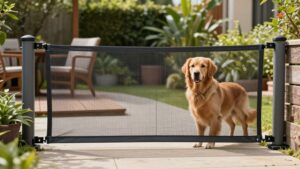
Outdoors, wind can shift a freestanding gate, especially a lightweight model with narrow feet. You can reduce movement by choosing a heavier gate with stable feet, though it’ll take more effort to move and store. If you’re using hinged panels, arrange them in a zigzag or V rather than a straight line; that shape helps the gate stand and resist being pushed out of position.
When the layout allows, place the ends against furniture or another secure surface. Check the barrier after gusts and watch whether your dog can push it aside. A freestanding gate is a temporary barrier, not a dependable option where wind or a determined dog could dislodge it. Don’t rely on it to protect your dog near hazards or keep them contained.
Securing Gate Panels Properly
To secure hinged panels, fold them to fit the space in a zigzag or V/W shape, and check that the feet sit firmly without blocking the opening. Use the panels’ angles to resist a shove, but don’t treat shape alone as a lock; a determined dog may still move a freestanding barrier.
- Set both ends against sturdy furniture when possible, keeping the furniture stable and the route clear.
- Fold hinged sections to match the opening; confirm each joint holds its position before your dog approaches.
- Secure the walk-through panel and latch, then test them gently from both sides.
- For an exercise pen, join its end panels with metal snaps or carabiners, then arrange a V or W.
Recheck stability whenever you reposition the gate.
Choose the Right Gate Type
Once you’ve secured the panels, choose a gate that suits both the opening and your dog. A freestanding model works well when you need portability, can’t drill, or must shape panels around an irregular space. Measure wide openings carefully; choose multiple hinged panels with a walk-through door when convenient.
| Dog or opening | Gate check |
|---|---|
| Tiny dog | Narrow bar spacing |
| Jumper | Height to deter leaps |
| Determined pusher | Heavy frame, wide braces, zigzag setup |
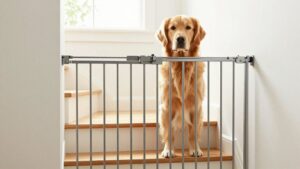
| Chewer or escape artist | Hardware-mounted metal; especially stair tops |
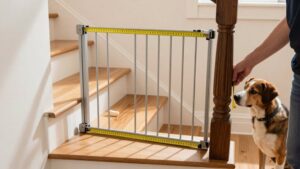
Secure ends against furniture if needed, but don’t rely on a freestanding gate for strong chewers or escape artists. At stairs, choose a sturdy, hardware-mounted metal gate; it offers greater security. Recheck fit and stability after your dog tests it. Never assume weight alone prevents tipping.
Conclusion
A freestanding dog gate works when its height, floor gap, and stability match your dog’s size and behavior. Check whether your dog squeezes underneath, pushes panels, jumps, or tests slick floors before relying on it. Secure the panels as directed, and don’t assume a gate will hold outdoors in shifting wind. If your dog can move or clear it, choose a more secure gate. Supervise introductions, and never use a barrier as a substitute for safe confinement.