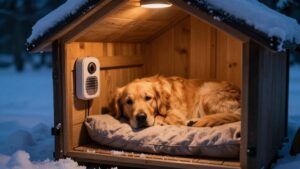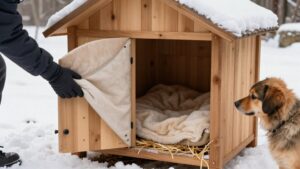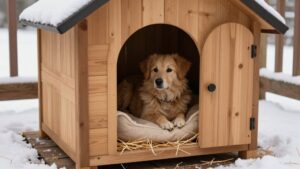
How to Keep a Dog House Warm in Winter Without Risky Heat Sources
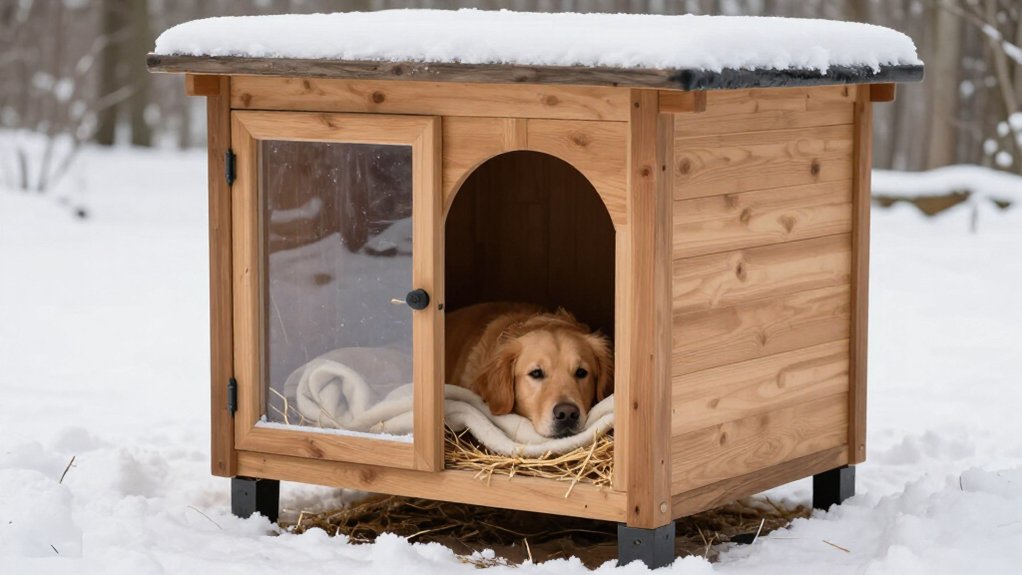
Keep your doghouse compact, dry, and draft-free so your dog can stand, turn, and lie down comfortably. Face the entrance away from prevailing winds, and use a solid windbreak.
Raise and insulate the floor, then cover any foam securely so your dog can’t chew it.
Choose deep, dry straw instead of blankets, and replace damp bedding promptly.
Check for roof leaks and condensation, keep ventilation open, and provide fresh, unfrozen water. More tips can help.
Winter Warmth Goals
To help your dog stay warm without risky heat sources, keep the doghouse dry, draft-free, and sized just large enough for your dog to stand and turn around.
A raised shelter protects your dog from cold ground; lift it at least a few inches and insulate the floor to limit heat loss through paws and belly. Insulate the walls and ceiling, too, so your dog’s body heat stays inside. Face the entrance away from prevailing winds, and add a door flap to reduce drafts without introducing a burn or fire hazard.
Keep the interior compact but comfortable: a smaller space warms more readily, while your dog still needs room to stand and turn. Check the shelter regularly for moisture and damage, and make repairs promptly.
Choose Straw, Not Blankets
Choose deep, long-stemmed straw for your dog’s bedding: it traps insulating air, holds its shape, and lets your dog burrow into a warm nest. Keep the nest deep enough for your dog to burrow, and fluff it as needed. Inspect it every day; replace wet straw promptly because damp bedding conducts heat much faster than dry material.
Blankets can absorb moisture and freeze into cold, heat-drawing sheets unless you change them daily.
- Choose straw, not hay: hay absorbs water, mats down, and may mold or freeze into hard clumps.
- If you use cedar shavings, place only a thin layer beneath thick straw; they insulate less but may repel fleas and reduce odors.
- Keep bedding dry so your dog can rest comfortably all winter safely.
Step 1: Face the Door Away From Wind
Even good bedding can’t keep a dog warm if cold wind blows through the entrance. Turn the doghouse doorway away from prevailing winds; this reduces drafts and helps the shelter retain your dog’s body heat. Position it behind a solid windbreak, such as a garage wall or solid fence, for added protection.
Choose a sheltered location that still receives winter sunlight, while keeping the entrance out of cold winds’ direct path. You can add a door flap to block moving air. Clear vinyl strips mounted at the top of the entrance stay flexible in cold weather, allowing your dog to pass through. For extra protection, build a front vestibule with a plywood divider to create an airlock between the doorway and sleeping area.
Step 2: Seal Drafty Cracks
Cold drafts can slip through small gaps, so check the wall joints, floor, and doorway for openings. Seal narrow seams and small cracks with silicone caulk to keep wind out. For wider gaps, use expanding spray foam, then firmly cover exposed foam with protective plywood. This barrier helps prevent your dog from chewing the insulation, which could cause harm.
Keep ventilation ports open while you seal unintended openings; fresh airflow lets moisture escape and helps limit dampness inside. To reduce drafts at the entrance, add a flexible flap, such as clear vinyl strips cut with vertical slits. Check that your dog can pass through comfortably and that the flap doesn’t trap or startle them. Recheck seals after cold weather or wear loosens the material.
Step 3: Elevate the Doghouse Floor
Raise the doghouse floor at least a few inches above the ground to reduce heat loss to frozen soil and keep your dog’s sleeping area warmer. A raised base also limits direct contact with cold ground. Leave an air gap beneath the floor, and insulate it in winter to help block heat carried away by wind.
Fit rigid foam board between the ground runners and floor deck, then cover it with plywood so your dog can’t reach or damage the insulation. Check that the floor stays stable and that no sharp edges or loose pieces could injure your dog. If you can’t lift the structure, place an elevated dog bed, such as a Kuranda bed, inside to separate your dog from the cold floor.
Step 4: Add a Vinyl Door Flap
A heavy-duty vinyl door flap blocks drafts and helps keep warmth and bedding inside the doghouse. Choose clear strips that stay flexible in cold weather, so your dog can see through them; they’ll swing aside and fall back into place after each pass. Mount them at the top of the doorway, then cut vertical sections your dog can push through.
If your dog chews vinyl, use a vertically slit heavy-rubber flap; it’s more durable and chew-resistant. A magnetic strip along its bottom can help seal the opening. Introduce the flap gently if your dog hesitates: raise it at first, lower it gradually, and reward each brave step with treats. Don’t force your dog through; let them approach at their own pace. Check that it hangs freely and doesn’t snag or obstruct your dog’s entry or exit.
Step 5: Keep the Doghouse Compact
To help your dog’s body heat warm the shelter, size the sleeping area so they can stand, turn around, and lie comfortably, while keeping the walls close enough to limit excess space. A compact interior warms faster because your dog’s body heat has less space to warm. Avoid a high ceiling: warm air can rise away from your dog, leaving the sleeping level colder.
You can fit a plywood divider near the back to make a smaller sleeping chamber and a front vestibule that helps block drafts. If you add a false ceiling, leave about three inches above your standing dog; measure first so the space doesn’t restrict movement or force a crouch. Check the fit seasonally as your dog grows or changes weight.
Step 6: Remove Loose Insulation Scraps
Once the sleeping area is sized, check that insulation is secure and out of your dog’s reach. Dogs may chew or swallow loose scraps, so inspect the shelter for exposed or damaged material. Pick up each fragment and dispose of it safely; don’t leave debris where your dog can reach it.
If you’ve used rigid foam, cover it with protective plywood so your dog can’t access the material. Seal gaps with silicone caulk or expanding foam, following directions and allowing repairs to cure before your dog re-enters. Then confirm the insulation remains covered and inaccessible.
Keep ventilation ports clear as you remove debris and finish repairs; blocking airflow can compromise the shelter’s ventilation. Check regularly for wear or damage, and repair exposed areas promptly.
Verify Water Stays Liquid
Check your dog’s water often in cold weather, because an outdoor bowl can freeze quickly. Make checking it part of your routine, especially overnight and after temperature drops. If you find ice, replace it with fresh water rather than assuming your dog can get enough by licking snow.
Snow isn’t a safe substitute for drinking water; your dog needs reliable access to fresh, unfrozen water to stay hydrated.
Keep two thick rubber bowls in rotation: leave one indoors while the other is outside, then swap them as needed. This way, you can offer liquid water while a frozen bowl thaws. Rubber also lets you knock out ice more easily than you can from a rigid bowl, reducing the effort of keeping the supply usable.
Check for Condensation
Keeping fresh water available is only part of winter care; moisture inside the doghouse can chill your dog, too. Check walls and ceiling daily for condensation; droplets can fall onto your dog and chill them as they evaporate. Cold surfaces encourage moisture to collect, so keep ventilation ports open to release humid air. Seal cracks and seams against drafts, but preserve ventilation so damp air doesn’t become trapped.
| Check | Your action |
|---|---|
| Walls and ceiling | Look daily for droplets |
| Bedding | Remove damp; add dry |
Wet bedding conducts heat about twenty times faster than dry bedding, making a damp bed a chilling risk. Replace it promptly and add fresh, dry bedding regularly.
After rain or snow, check that the shelter remains dry inside. If condensation keeps returning, reassess ventilation and moisture control while maintaining protection from drafts for your dog.
Inspect the Roof for Leaks
Because even a small roof leak can leave bedding cold and wet, inspect the roof for cracks, loose shingles, damaged seams, and gaps where rain or melting snow could seep in. Check the interior ceiling and walls for damp patches or drips; these can signal a leak. Moisture can soak bedding, and wet insulation loses effectiveness, leaving your dog colder.
Seal small roof or seam gaps with weather-resistant caulk, and repair or replace damaged roofing promptly. Keep insulation dry and covered, and change wet bedding. Recheck the roof after storms and during winter. Remove snow buildup if it strains or damages the structure; don’t risk climbing onto an unsafe roof. Get help if access is hazardous; recheck indoors for dampness before your dog returns.
Conclusion
You don’t need risky heaters to help your dog stay warm. Keep the shelter dry, draft-protected, insulated with straw, and raised off cold ground; then check it often for dampness, leaks, and frozen water.
Watch your dog, too: shivering, weakness, or unusual sleepiness can signal dangerous cold. Bring your dog indoors when temperatures drop sharply or conditions turn wet and windy. A well-maintained doghouse helps, but it can’t replace safe indoor shelter during severe winter weather.