
Crate Pad vs Dog Bed: Which One Belongs Inside the Crate?
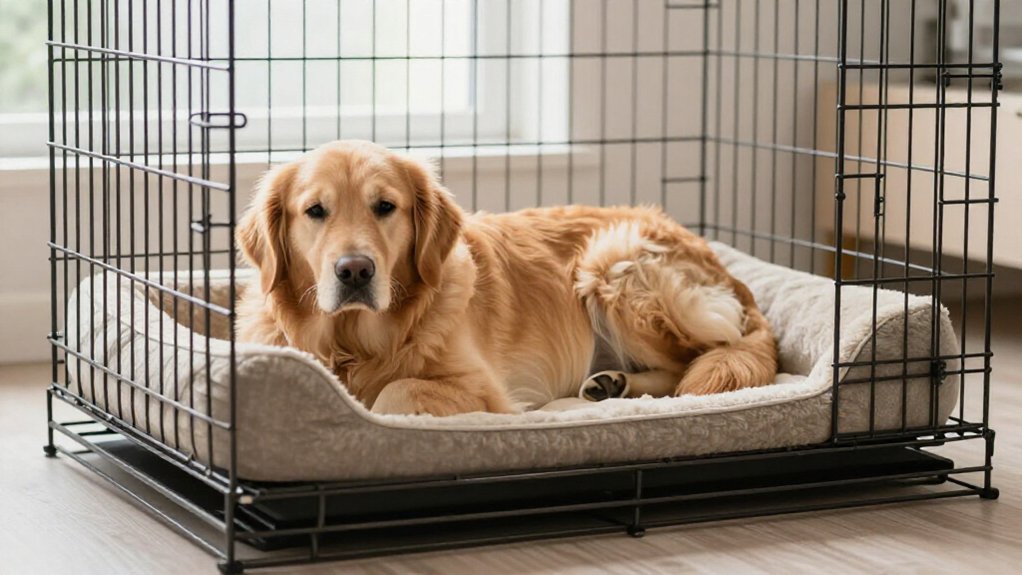
A low-profile crate pad usually belongs inside the crate because it fits snugly, preserves room to stand and turn, and is less likely to bunch than a regular dog bed. Choose one 1–3 inches thick with waterproof backing and a washable, chew-resistant cover, especially for puppies, accidents, or travel.
A stable pad can cushion joints without trapping as much heat as plush bedding.
The sections below explain how fit, comfort, cleaning, and safety shape your choice.
Crate Fit and Sizing
For a secure fit, measure your crate’s interior floor and choose a pad that matches its length and width. Crate pads match standard crate sizes: 24, 30, 36, 42, or 48 inches, and fit the footprint. Regular beds can leave gaps, restrict airflow, or obstruct the door.
Choose a flat, 1–3-inch pad; bolsters can restrict movement, standing room, or door clearance. A shifting or bunched pad can unsettle your dog while turning or rising. For extra comfort, keep a crate-sized pad inside and offer a fuller bed outside the crate.
| Crate size | Common length | Fit check |
|---|---|---|
| 24-inch | 24 in | Fits flush |
| 30-inch | 30 in | Fits flush |
If you want a thicker comfort layer, use the fuller bed when your dog isn’t crated.
Orthopedic Support Differences
Once the pad fits the crate, its shape and stability matter for joint support.
A flatter, lower-profile crate pad, often 1–3 inches thick, can spread your dog’s weight evenly compared with a bed that shifts or collapses. That consistency helps limit pressure points and stress on hips and shoulders. If your dog has arthritis or hip dysplasia, an orthopedic pad can cushion those areas while preserving room to move.
Temperature Regulation Benefits
Because a crate is an enclosed space, bedding can make it feel warmer or cooler. You’ll notice temperature differences in a small crate, where trapped warmth can leave your dog restless. Sheepskin and wool liners offer insulation when the room is cold, yet wick moisture when conditions are warm.
Their fibers can help your dog stay comfortable across changing temperatures. By contrast, memory-foam-style bedding may hold heat, making the crate feel hotter than it would with a more breathable material. If you choose sheepskin, look for a crate liner or insert sized for your crate.
A fit helps it regulate temperature without bunching or blocking airflow. Sheepskin’s lanolin may help your dog settle, though comfort depends on your dog’s preferences and the room’s conditions.
Cleaning and Setup Time
Beyond temperature, a crate pad can save time during setup and cleanup. A pad sized to your crate’s measured length and width lies flush, stays put, and goes in faster than a loose dog bed. Choose waterproof backing and a fully machine-washable cover for puppy accidents and wet paws. Thick fills can absorb messes and take longer to dry, while low-profile pads are easier to launder and reuse.
- Measure the crate floor before you buy; avoid oversized pads that fold or bunch.
- Check that the pad won’t block airflow or interfere with door closure.
- For temporary training, choose chew-resistant, washable bedding to limit replacements.
- Replace damaged bedding promptly to keep your dog comfortable and crate routine predictable.
That makes cleanup less stressful for both.
Crate Cover Compatibility
A crate cover or pad should fit the tray flush, without bunching, blocking the door, or leaving gaps that could catch paws or teeth. Most dogs do better with a flat, low-profile liner than a raised or bolster-style bed. Thick edges can restrict airflow and keep the crate door from closing, even when the bed seems comfortable. Measure the tray and check the product dimensions, then confirm the liner stays inside the tray when your dog shifts position.
If you use a cover, choose one that’s machine-washable and has a waterproof backing to manage accidents during puppy house training. Wool-style liners can help regulate temperature and manage moisture and odors. Check fit after washing since a cover that shrinks may no longer sit flat.
Chew Resistance and Durability
Choose bedding built for the rougher reality of crate time: scratching, chewing, and mess. Standard dog beds often have seams, zippers, and fluffy fill that can shred faster in tight quarters. For puppies or strong chewers, choose a chew-resistant crate pad with a removable cover and preferably waterproof backing; this can reduce mess and the risk of swallowing torn fill.
- Pick a low-profile pad; it stays flatter and puts less strain on corners and seams.
- Consider chew-proof models designed for repeated gnawing and scratching.
- Check that machine-washable construction can handle regular cleaning without weakening materials.
- Replace bedding when it breaks down quickly or seams tear; repeated damage signals poor crate fit.
Inspect it routinely and choose materials suited to your dog’s chewing habits.
Bedding During Unsupervised Crate Time
During unsupervised crate time, a purpose-built pad is usually safer than a regular dog bed.
A flush-fitting, waterproof, chew-resistant crate pad, about 1 to 3 inches thick, can handle accidents and reduce bunching, tearing, and gaps near the door. A regular bed may slip or restrict airflow, so choose bedding made for the crate rather than forcing a bulky bed inside.
For puppies or dogs still learning house training, a thin, machine-washable waterproof pad is often more practical than an orthopedic bed that absorbs mess. Keep unsupervised crate sessions reasonable; after about eight hours, boredom or stress can fuel destructive chewing. If a previously housebroken dog starts having repeated accidents, don’t just change the bedding. Ask your vet to check for a medical or anxiety-related cause.
Crate Cleaning Convenience
Wet paws, drool, dirt, and accidents make washable materials a practical priority for crate bedding. You’ll usually clean up faster with a waterproof, machine-washable pad than with a bulky bed that can hold odors.
If messes keep happening, easy-clean bedding can help while you look into the cause.
Washable Materials
Because crate time can lead to accidents, drool, shedding, and odor, washable bedding is essential for keeping the space hygienic.
A fully machine-washable crate pad, ideally with waterproof backing, helps you manage wet paws and accidents while protecting its fill. For puppies or dogs with incontinence, that barrier can reduce moisture trapped inside, lowering mold and mildew risk.
Choose materials that can tolerate repeated laundering without losing structure; your dog still needs comfortable, reliable support after each wash.
- Tightly woven, chew-resistant covers often withstand repeated washes better than loose plush.
- Removable covers make routine machine laundering practical.
- Avoid fabrics that shed, mat, or shred under scratching.
- Check care label for machine-wash instructions and drying needs.
This keeps the crate fresh while preserving dependable comfort.
Easy Cleanup
A crate pad can make cleanup faster by keeping urine and other messes from spreading into the cushion, especially when it has a waterproof backing.
During crate training, wet paws, drool, shedding, and tracked dirt are common, so choose a machine-washable pad you can clean often. These pads resist scratching and chewing, reducing torn seams where debris can collect.
Look for one that stays flat instead of bunching; contained messes make washing quicker and more consistent. A regular dog bed may be less convenient: its thicker, absorbent fill can hold odors and take longer to dry after an accident. Your dog deserves a clean, comfortable resting place, and a manageable routine helps you provide one without turning every small spill into a lengthy cleanup.
Puppy Potty-Training Bedding Choices
During potty training, choose a 1–3-inch waterproof, chew-resistant crate pad with machine-washable materials to manage accidents and simplify cleanup. Skip thick beds that can trap odors, bunch up, or expose stuffing your puppy might chew.
Once accidents and chewing ease, you can add a properly sized, flat, more comfortable bed.
Accident-Resistant Bedding
When your puppy’s still learning where to go, choose a low-profile crate pad with waterproof backing and a chew-resistant, machine-washable cover. A snug fit keeps the pad from bunching into soft folds that can trap urine and leave your puppy lying on a damp surface. Skip beds with loose inserts or thick, detachable parts; a bored puppy may rip them open and swallow filling.
- Choose a pad that fits the crate without gaps or bunching.
- Check seams and zippers; sturdy construction resists shredding.
- Replace a damaged pad promptly to prevent access to filling.
- Keep daytime crate sessions realistic, about three to six hours, and offer breaks.
Comfort matters, too: pair the pad with calm supervision and age-appropriate potty breaks, not longer confinement when possible.
Easy-Clean Materials
For easier cleanup during potty training, choose a crate pad with waterproof backing and fully machine-washable construction so accidents and wet paws don’t soak into the cushioning. Choose a stain-resistant cover you can wash often; drool, tracked dirt, and shedding can build up quickly in a crate, trapping odors. A washable pad lets you clean messes thoroughly, helping keep your puppy’s space hygienic.
In early house training, consider a chew-resistant design, since some puppies mouth seams or edges as well as soil their bedding. Skip loose-fill beds and removable inserts: once torn open, they take longer to clean and may expose stuffing your puppy could swallow. Check care instructions before buying, and wash promptly after accidents. Some chew-proof pads resist mildew and mold after repeated moisture exposure and washing.
When to Add Bedding
While your puppy’s potty habits are still developing, start with a low-profile, waterproof, chew-resistant crate pad about 1–3 inches thick. Accidents and wet paws are common, so this pad controls mess while preserving standing room. Skip plush beds with removable inserts; bored puppies may swallow torn stuffing. Clean the fitted pad promptly.
As training improves and chewing fades, move to a thicker supportive bed or add a flat, fitted option for comfort. Thicker beds can bunch, hold smells, and complicate cleanup, so wait until accidents are less frequent before upgrading for your puppy.
- Check the pad for damage or odor.
- Preserve room to stand and turn.
- Wash accidents promptly.
- Sudden crate accidents in a previously housebroken dog may signal illness or anxiety, not bedding needs.
Best Choice for Travel
On the road, a low-profile crate pad is usually the safer, more practical choice than a dog bed.
A flat pad, 1–3 inches thick, sits flush on the crate floor and adds cushioning without crowding your dog. It’s less likely than a 3–7-inch bed to bunch, block door clearance, or create pressure points during transport. Choose a machine-washable cover and waterproof backing to manage wet paws, drool, and accidents.
If your dog chews, consider a chew-resistant pad; loose-fill beds can tear quickly. You still want enough padding for comfort: a supportive crate mat works well for short trips, while an orthopedic bed is better for longer rests at home. Check that the pad fits securely and leaves your dog room to stand, turn, and lie down comfortably.
Conclusion
Choose bedding based on your dog’s needs and how you use the crate. A properly fitted crate pad is often the practical choice for travel, easy cleaning, and unsupervised time, especially while your puppy is learning.
If your dog needs extra cushioning, a crate-safe orthopedic bed may offer better support, provided it fits without blocking airflow or making the space cramped. Watch how your dog rests, check bedding regularly, and remove anything they chew or soil. Comfort and safety should guide your choice.