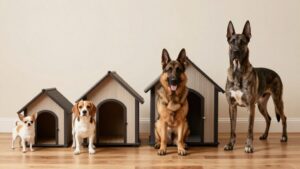
How Big Should a Dog House Be? The Measure-Your-Dog Sizing Rule
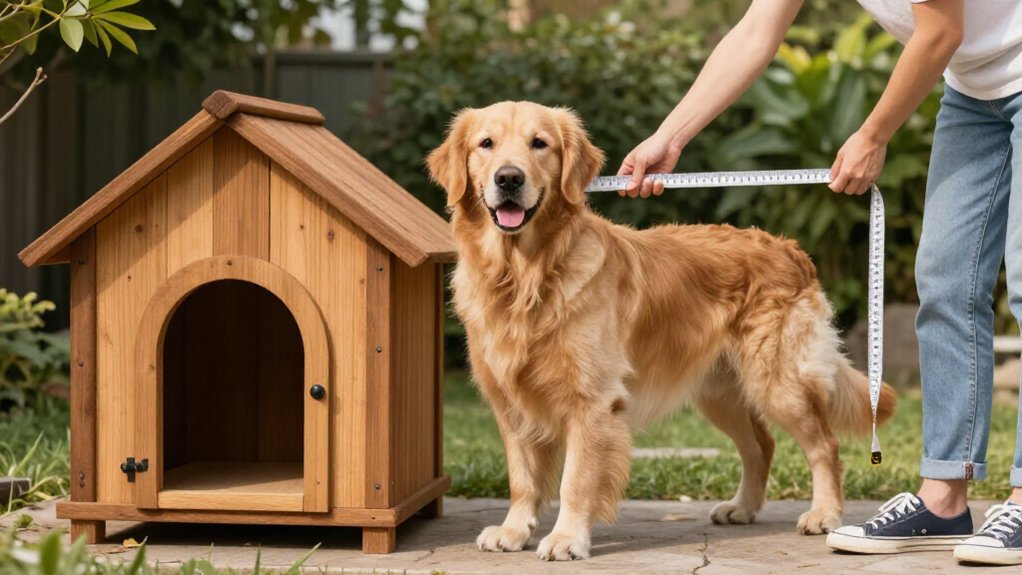
Measure your dog standing with a flexible tape, then compare the house’s usable interior dimensions. For length, measure nose to tail base and add four inches for small dogs, five for medium dogs, or six or more for large dogs.
Make width and depth at least nose-to-flank measurement, peak height 1.25–1.5 times standing height, and the doorway tall enough for entry. Choose a snug space that still allows turning; continue for climate, growth, and placement.
Measure Nose to Tail
Measure your dog from the tip of the nose to the base of the tail, leaving the tail out; this gives you a starting point for the dog house’s interior length. Use a flexible tape and keep your dog standing naturally; measure along the body rather than around it. This nose-to-tail-base distance estimates the minimum interior length, not a reason to restrict movement. Your dog should be able to lie down comfortably and change position without pressing against the walls.
Add modest clearance to the measurement: about 4 inches for a small dog, 5 for a medium dog, and 6 or more for a large dog. For instance, if your dog measures 36 inches, a shelter with at least 42 inches of interior length provides 6 inches of extra room. Check the finished usable space, since thick walls or insulation can reduce the interior. Don’t count exterior dimensions when evaluating your dog’s available resting space.
Dog House Size Chart
A dog house size chart can turn three body measurements into practical minimum dimensions. Use your measurements to size thoughtfully.
| Measure | Minimum sizing rule |
|---|---|
| B: nose to flank, tail excluded | Width and depth: at least B |
| C: head top to toes | Peak height: 1.25–1.5 × C |
| A: shoulder to chest bottom | Door opening: at least A + 3 inches |
If your dog’s A is 10 inches, B is 30 inches, and C is 23 inches, choose a house at least 30 inches wide and deep, with a 28¾-inch peak and a 13-inch door opening. These figures are minimum guidance, not a requirement to fit tightly. You can go larger, but extra interior space may make warmth harder to retain in extreme cold. Protect comfort and warmth.
Dog House Doorway Dimensions
Once you’ve chosen the house’s overall size, size the doorway for easy, comfortable entry. Measure from floor to your dog’s shoulders for opening height. One rule sets the doorway at least three-quarters of shoulder height: for a dog with 19-inch shoulders, choose an opening at least 14 inches high.
You can also use the A-B-C method, which bases the opening on measurement A: the distance from your dog’s shoulder to the bottom of the chest. Make the doorway at least 3 inches taller than A. If A measures 8½ inches, the opening should be at least 11½ inches high. These are sizing guides, not reasons to make the entrance oversized.
Your dog ducks when entering, so choose the smallest opening that allows comfortable passage.
Climate-Based Insulation Needs
Match insulation to your climate: in severe cold, choose a snug house that lets your dog stand, turn, and lie down without excess space, and use insulated roofing and dry bedding. Raise the house to limit dampness, and control condensation so moisture doesn’t undermine warmth. In hot weather, provide ventilation and shade rather than trapping heat with excessive insulation.
Match Insulation To Climate
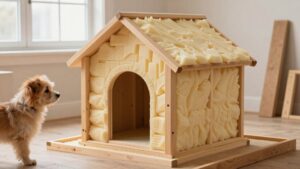
In cold climates, size the dog house so your dog can turn around and lie down comfortably without leaving excess space that’s hard to warm with body heat. Choose materials and roof construction that limit heat loss: wood provides natural insulation, and a solid wood roof can help retain winter warmth. If you select asphalt shingles, place an insulation barrier beneath them to reduce heat escaping through the roof.
In extreme cold, an oversized interior may need an electric dog-house heater to stay warm; use one only if it’s designed for safe pet use. In milder or warmer climates, a little extra room is less concerning. You can leave the doorway open during hot weather to improve ventilation and provide shade for your dog.
Cold-Weather Insulation Needs
Cold-weather insulation starts with a snug fit: your dog should be able to stand, turn around, and lie down, but extra space can make it harder to retain body heat.
A wood house with a solid wood roof generally insulates and controls heat better than plastic. If you add asphalt shingles, place an insulation barrier beneath them to limit heat loss. Raise the house above ground to reduce contact with cold and moisture, and use moisture-proof bedding, such as dense foam or cedar shavings.
Fit a door barrier during cold months to reduce drafts. In extreme cold, consider an electric dog-house heater if the interior has extra space. Check bedding; replace damp material promptly, since moisture undermines insulation and can chill your dog.
Hot-Weather Ventilation Needs
How can you improve airflow without exposing your dog to harsh sun? In hot weather, leave the doorway open so air can move through the house. Add an awning or doorway cover to shade the entrance without blocking airflow. A porch cover can provide protection from intense sun and severe weather.
Raise the house off the ground to help limit heat. In warm climates, you don’t need to size the interior as tightly as you would for severe cold. Extra room is less concerning because your dog doesn’t rely on a snug enclosure to retain body heat. Still, choose a house that lets your dog enter, turn around, and lie down comfortably. Ventilation and shade support comfort, but don’t replace sufficient space.
Moisture And Condensation Control
To limit dampness and reduce the risk of flea infestations, raise the dog house off the ground and use moisture-resistant bedding, such as dense foam or cedar shavings. Choose bedding that doesn’t readily hold water, and check it often; replace it if it feels damp or develops odor.
A slanted floor directs rain toward the doorway, helping prevent water from pooling where your dog rests. An awning or porch cover shields the entrance from rain and reduces water carried inside.
In hot or humid weather, leave the doorway open to support ventilation and limit trapped moisture; in cold months, use a door barrier when retaining warmth matters. Inspect the interior regularly, since persistent dampness can compromise comfort and create conditions that encourage pests there.
Insulation Without Oversizing
In cold climates, an oversized dog house can be harder to warm with your dog’s body heat. Measure your dog and choose a shelter that lets them stand, turn around, and lie down comfortably, without unnecessary interior volume. A close, suitable fit helps retain warmth while preserving movement and rest.
Wood offers insulation, and a solid wood roof can help hold heat. If you add asphalt shingles, place an insulation barrier beneath them. Raise the house off the ground to limit exposure to cold and moisture. Use moisture-proof bedding, such as dense foam or cedar shavings, and check it regularly so your dog stays dry.
In warmer weather, extra space matters less. Keep the doorway open for ventilation, and provide shade with an awning or porch cover. Adjust the setup to your climate and your dog’s comfort.
Allow Room to Turn
Your dog needs enough room to turn around comfortably, so make the house’s width and depth at least as long as the nose-to-flank measurement, excluding the tail.
Use this A-B-C measurement to set both dimensions; don’t use your dog’s full length with the tail included. That minimum should let your dog pivot without squeezing or scraping against the walls. Add a little extra space if your dog can’t turn easily, then check that they can stand and lie down comfortably inside.
Don’t oversize the house, especially in cold weather, when excess interior space can make body heat harder to retain. Choose a fit that allows movement yet keeps the shelter snug. Test the dimensions with your dog inside before making your final choice.
Puppy Growth Adjustments
Because puppies grow quickly, size a dog house for the adult dog you expect, not the puppy you have now. If your puppy’s under 18 months old, use projected adult measurements to check the minimum dimensions. Breed-based estimates can help you anticipate full-grown size, though individual dogs may vary.
Measure shoulder-to-chest depth (A), nose-to-flank length (B), and head-to-toes height (C). Then use the expected adult measurements—not today’s smaller ones—to confirm that the house meets the minimum sizing rule. This helps prevent a house your dog outgrows before adulthood.
You can choose a house larger than the calculated minimum, but don’t add excessive space. In extreme cold, too much extra room can make it harder for your dog to stay warm. Recheck fit as your puppy grows.
Cold-Weather Dog House Sizing
Cold-weather sizing calls for a snug fit so your dog’s body heat can warm the shelter. In cold climates, avoid an oversized house: excess interior space can make warming harder. Measure your dog before you build or buy.
Set the interior width and depth at least equal to your dog’s nose-to-flank length, and make peak height at least 1.25 times the head-to-toes measurement. Make the doorway at least three inches taller than the shoulder-to-chest measurement, but no larger than needed for comfortable entry.
Choose insulating wood construction and raise the house off the ground to limit heat loss and moisture. Add moisture-proof bedding, such as dense foam or cedar shavings. In extreme cold, you can consider a dog-house heater, while monitoring your dog.
Doorway Placement Mistakes
Where you place the doorway affects how well the house protects your dog: avoid a centered opening, which can let wind blow straight in, and position it off-center to provide more shelter and shade.
- Keep the entrance modest: dogs duck, and a smaller opening can reduce cold drafts.
- Size it to your dog: make it 3 inches taller than the A measurement.
- Check that your dog can enter and exit comfortably without squeezing or awkwardly crouching.
- In exposed or severe weather, add a flap, awning, or covered porch for protection.
- Recheck access after installation; shelter shouldn’t come at the cost of easy, safe movement.
These checks help you balance weather protection with usable access; observe your dog’s approach and adjust the opening if needed.
Measure Standing Height
With your dog standing naturally on a level floor, measure from the floor to the top of the head or ear tips. Keep the posture relaxed; don’t stretch your dog or measure while it sits. This standing-height figure helps you choose a house peak that allows comfortable movement and a less cramped interior.
- Record the measurement in inches or centimeters.
- Use the same unit when comparing house dimensions.
- Aim for a peak 25% to 50% taller than your dog’s standing height.
- For a 24-inch dog, choose a peak about 30–36 inches high.
- If your dog’s still growing, estimate its adult standing height before buying.
Also check that your dog can enter, turn, and rest comfortably inside without feeling restricted by the house’s dimensions.
Conclusion
Choose a dog house by measuring your dog, not by guessing from breed. Give your dog enough room to stand, turn, and lie comfortably, while avoiding excess space that makes warmth harder to retain in cold weather. Size the doorway for easy entry, and account for insulation, placement, and seasonal conditions.
If your dog’s still growing, plan for size and reassess fit. Check the house: comfort, dryness, and temperatures matter more than a chart.