Dog Crate vs Kennel: What’s the Difference and Which Do You Need?
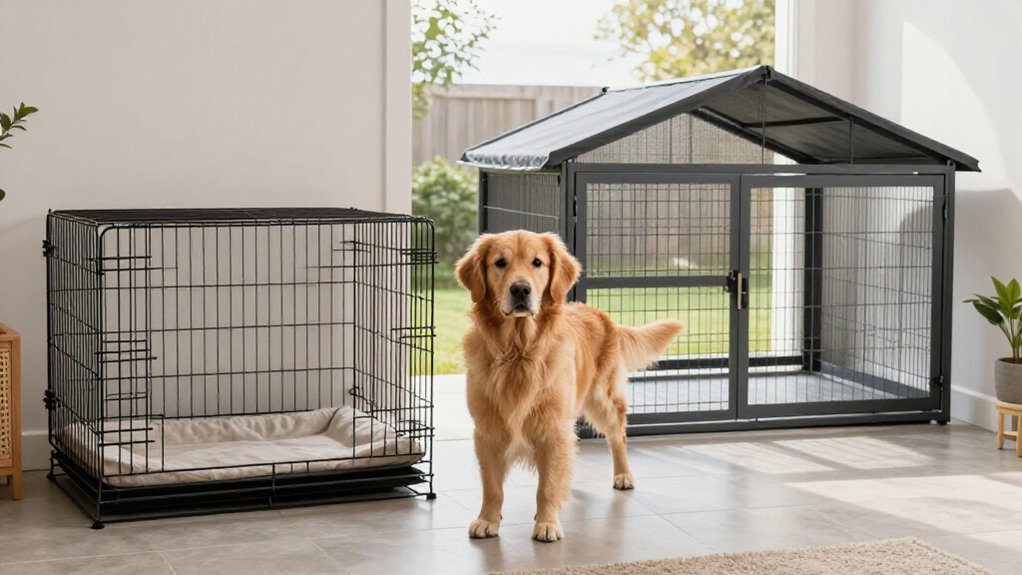
A crate is usually a portable, enclosed space for indoor rest, travel, or brief confinement. A kennel offers more room and may be permanent or semi-permanent, often with sheltered outdoor access. Choose based on your dog’s size, temperament, routine, and space.
Your dog should stand, turn, and lie down comfortably, with frequent breaks, exercise, and supervision. For car trips, verify crash testing and secure the crate. The sections ahead will help you choose wisely.
Airline Travel Restrictions
Before booking your dog’s flight, check the airline’s rules for pet carriers; each airline sets its own requirements.
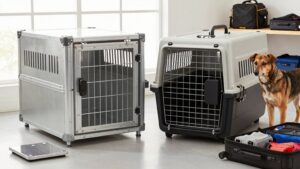
Choose a carrier that meets those rules and lets your dog stand, turn around, and lie down comfortably. A familiar kennel may work, but its label alone doesn’t prove it qualifies. Confirm dimensions, ventilation, and secure latches against the airline’s specifications before travel.
| Check | Why it matters | Your dog’s comfort |
|---|---|---|
| Size | Meets airline limits | Room to stretch |
| Ventilation | Meets airflow rules | Easier breathing |
| Latches | Stay securely closed | Safer, calmer trip |
Ask the airline about route-specific limits, including whether your dog may travel in the cabin or must go as cargo. Requirements can differ by aircraft, so verify them rather than relying on a retailer’s description or experience. Review the carrier early, so you can replace it if needed. Your dog depends on you to make this unfamiliar journey safe and comfortable.
Crate and Kennel Definitions
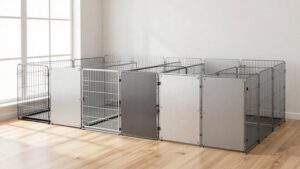
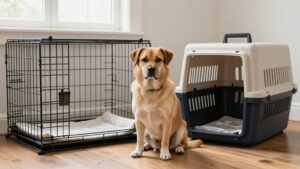
Once you’ve checked travel rules, it helps to know what the terms mean: a dog crate is usually a portable or foldable enclosed space made of wire or plastic, while a kennel generally offers more room and may be a permanent or semi-permanent structure.
You’ll use crates indoors for rest, training, short-term confinement, or travel. Kennels offer more room; outdoor versions may combine shelter with an open or chain-link area. Some travel crates are called “kennels,” so compare size, portability, and intended use—not labels—to choose what suits your dog and how long they’ll stay inside at a time.
- Choose a crate for portable, short-term indoor use.
- Consider a kennel when your dog needs more room.
- Check the actual design, not just the product name.
Kennel Ventilation and Weatherproofing
For an outdoor kennel, plan for airflow and shelter so your dog can stay comfortable as the weather changes. Adequate ventilation helps lower the risk of overheating, suffocation, and respiratory problems, especially in warm conditions. Check that air can move freely through the kennel, without blocking openings with covers or stored items.
Give your dog shade and protection from wind and rain, so they can retreat when conditions shift. A roof or canopy can shield the resting area while leaving the open space usable. Plan drainage and choose suitable flooring to keep the kennel dry and comfortable; standing water can make resting unpleasant. For outdoor use, select durable, rust-resistant materials such as heavy-duty chain-link or powder-coated steel. Check conditions and adjust shelter as needed.
Setup and Assembly Time
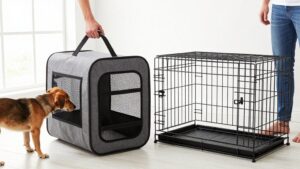
Setup time depends on whether you’re choosing a portable crate or an outdoor kennel. A foldable crate takes time to open and can be packed away just as quickly. Wire models collapse for transport; plastic crates are less collapsible, so you may need to assemble or secure their sections.
Before you begin, consider what each setup involves:
- Choose a level spot for an outdoor kennel.
- Allow time to anchor its frame and fit panels, shade cloth, raised flooring, or a roof.
- Plan drainage, weather protection, water, and shade before your dog uses the space.
A kennel’s semi-permanent structure takes more planning than a crate. Check instructions and gather tools, then test the setup for stability. Preparation helps you provide a safe space from the start.
Breed and Temperament Fit
After you’ve considered setup, match the enclosure to your dog’s adult size, build, and temperament. Your dog should be able to stand, turn around, and lie down comfortably. A larger kennel may suit a big or active dog that needs room to move, while a crate can offer a quiet, den-like retreat for a dog who enjoys resting in a snug space.
Consider your dog’s bathroom needs, too. Toy and small breeds may need breaks more often, sometimes about twice as frequently as medium or large dogs, so base confinement time on your individual dog, not size alone. If your dog chews or tries to escape, choose sturdy, escape-resistant construction; lightweight models may not hold up. If confinement causes marked distress or separation anxiety, a crate may worsen it. Consider a gated room or playpen instead.
Indoor Space Requirements
If indoor floor space is limited, a crate is often easier to fit than a kennel. Crates suit apartments, condos, and smaller homes, but measure before you buy: large indoor models can reach about four feet in length. Allow room around the enclosure for safe setup and for you and your dog to move comfortably.
- Check the footprint against your available floor area.
- Choose a size that lets your dog stand, turn, and lie down comfortably.
- Avoid excessive extra room, especially for a puppy learning house-training.
Kennels need substantially more space; some measure ten feet wide or more, making them impractical in typical homes. Compare the enclosure’s footprint and clearance needs, so your dog fits without crowding your household, with room to move safely.
Long-Term Confinement Concerns
Even when a crate fits your space, it shouldn’t become your dog’s main living area. Crates serve for temporary confinement, and stretches of six to eight hours may cause stress. Eight or more hours daily can contribute to anxiety, destructive behavior, hyperactivity, or bladder infections.
Your dog needs potty breaks, exercise, social interaction, and stimulation. No single time limit suits every dog; consider age, size, house-training, crate-training experience, time of day, and comfort. Puppies and small breeds need frequent breaks. During early crate acclimation, avoid confining a puppy for more than two hours at a stretch, except overnight.
A kennel gives your dog more room, but it doesn’t replace care or supervision. Don’t use an outdoor kennel as your dog’s full-time home.
Chew Resistance and Durability
If your dog chews or pushes against an enclosure, lightweight wire or fabric may not hold up. Choose sturdy metal or anchored, heavy-duty panels to better resist damage and escapes. Check the frame and latches regularly, since wear can compromise your dog’s safety.
Chew-Resistant Materials
When choosing between a dog crate and a kennel, match the construction to your dog’s size and chewing habits. If your dog chews persistently, a sturdy metal crate is safer than a lightweight model; soft-sided fabric crates aren’t secure for chewers or escape-prone dogs. For outdoor use or determined escape attempts, heavy-duty chain-link or powder-coated steel kennels offer greater resistance to escape and rust than lightweight options.
Before buying, check the parts your dog will rely on most:
- Look for sturdy latches and doors that stay securely closed.
- Check frame connections; weak hardware can compromise the enclosure.
- Choose materials suited to your dog, then inspect regularly for damage.
Chewing reflects stress or boredom, so pair secure housing with compassionate attention to your dog’s needs.
Durability By Design
Durability depends on matching the enclosure to your dog and its surroundings: metal crates can better withstand chewing than lightweight wire or soft-sided models, while outdoor dogs may need a securely anchored, heavy-duty kennel built to resist escape and local weather.
Wire crates offer ventilation and are easy to clean, but a lightweight frame may fail when your dog chews or pushes against it. If your dog tests barriers, choose a sturdy metal crate and skip soft-sided cloth models; they can’t provide reliable security. For outdoor use, look for heavy-duty chain-link or powder-coated steel, which can resist escape and rust.
Large, powerful dogs need strong joints and enough room to stand, turn, and move comfortably. Anchor the kennel securely, then match its finish and construction to your climate: rain, wind, and snow can expose weak materials. Check latches and connections regularly, too. A durable enclosure protects your dog best when its size, build, and placement fit their behavior and conditions. Recheck fit as your dog grows.
Best for Road Trips
For road trips, a travel crate is usually more practical than a kennel, but don’t assume a wire crate will protect your dog in a crash. Choose a properly sized, crash-tested crate and secure it with vehicle restraints according to the manufacturer’s instructions. Help your dog get comfortable with the crate before traveling, and plan regular breaks for water, movement, and rest.
Crash-Tested Travel Crates
A crash-tested travel crate can offer better protection on road trips than an ordinary wire crate, which isn’t recommended for car travel because it performs poorly in crash tests.
Before you buy, check the manufacturer’s crash-test results and confirm they cover the exact model and size you plan to use. Choose a crate that fits your vehicle setup and lets your dog stand, turn around, and lie down comfortably without excess room. Then:
- Follow the manufacturer’s instructions so the crate can’t slide or shift during the drive.
- Measure your dog and check sizing guidance; fit should support comfort and safe travel.
- Practice gradually with short sessions and treats or praise before your trip.
A calm introduction helps your dog feel safer and lets you address hesitation before departure.
Secure Vehicle Restraints
When you travel by car, secure your dog in a properly sized vehicle restraint rather than letting them roam freely. Choose a restraint suited to your dog’s size, and follow the manufacturer’s installation instructions. A suitable restraint helps limit movement and distraction in sudden stops.
If you use a crate, fasten it so it can’t slide or tip during sudden stops. Don’t assume a wire crate is crash-safe; wire models aren’t recommended for car travel because they perform poorly in crash tests. Even a sturdy crate needs secure placement.
Introduce the restraint gradually before a long drive. Pair short, calm practice sessions with praise or treats so your dog can build comfort with the setup. A little preparation helps you travel more safely together.
Road-Trip Comfort and Breaks
During a road trip, a properly sized, familiar crate can give your dog a secure, den-like place to rest. Introduce the crate gradually before departure, pairing it with treats or meals so your dog builds a positive association. Secure it appropriately in your vehicle, and check that your dog can stand, turn around, and lie down comfortably. Avoid wire crates for car travel; their crash-test performance is poor.
Plan regular stops. At each break, give your dog time for:
- a bathroom break, fresh water, and a chance to stretch and exercise.
- calm social interaction and a chance to check in with you.
- rest outside the crate before you resume the drive.
The crate is for temporary confinement, not uninterrupted travel.
Choosing the Right Option
To choose the right option, consider your dog’s size, temperament, activity level, routine, and the space available at home.
Choose a crate for indoor use, travel, or brief containment. It should let your dog stand, turn, and lie down comfortably. Choose a kennel when your dog needs more room, especially for supervised outdoor access or a longer stay.
Match the enclosure to your dog’s temperament, activity level, routine, and available space. For outdoor use, provide shade, water, wind and rain protection, secure anchoring, and good drainage. Some owners use both: a crate for indoor rest and travel, and a kennel for supervised outdoor time.
Watch for stress or discomfort, and adjust the setup rather than forcing your dog to tolerate a poor fit over time.
Conclusion
Ultimately, choose the enclosure that fits your dog’s size and temperament, your travel plans, and how long they’ll be inside. For flights, check your airline’s current rules before booking. A sturdy, well-ventilated kennel may suit travel and outdoor conditions, while a crate may work better for home use.
Whichever you choose, secure it properly, introduce it gradually, and give your dog regular breaks. No enclosure replaces supervision, exercise, companionship, and attention to stress signals.