How to Stop a Puppy From Peeing in the Crate During Potty Training
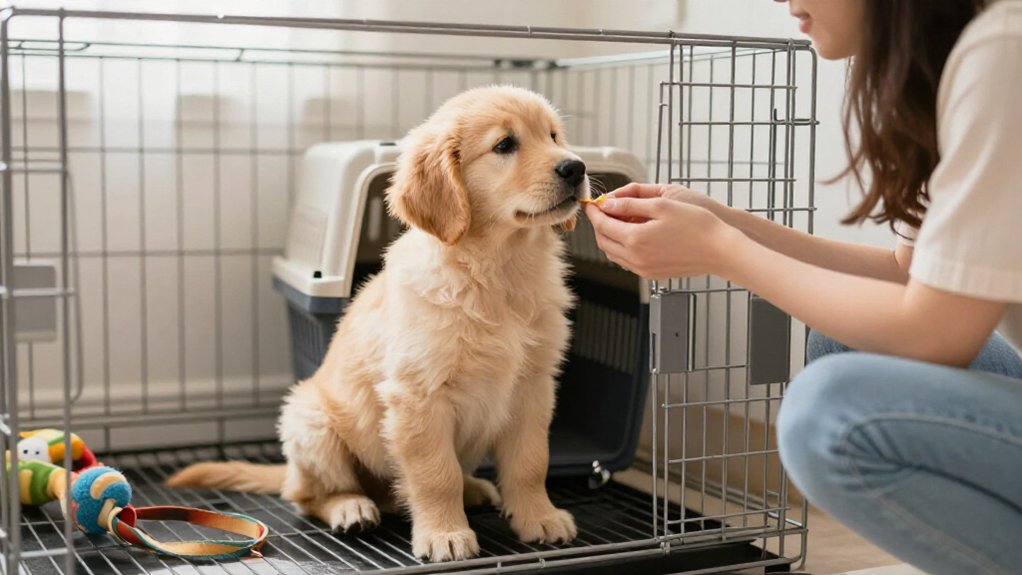
To stop your puppy from peeing in the crate, set potty breaks before their shortest reliable dry interval; age-based estimates are only rough guides. Take them out after waking, meals, and play, and confirm they pee before crating. Reward each outdoor pee immediately with praise and a small treat.
Keep the crate properly sized, clean urine with enzymatic cleaner, and wash bedding. If accidents persist or start suddenly, consult your veterinarian. More practical tips follow below.
Puppy Bladder-Holding Limits
A puppy’s bladder-holding time depends on age and individual needs, so treat the common guideline of about one hour per month of age, plus one hour, as a rough estimate—not a promise. For example, a 3-month-old puppy might manage roughly four hours, but yours may need to go sooner. Set your initial limit at the shortest interval before an accident.
Take your puppy outside before crating and offer frequent breaks; during a hard reset, try every 15 to 20 minutes while awake. Praise or treat outdoor success to reinforce the behavior you want. Gradually lengthen intervals only after accident-free stretches. Don’t expect adult-length crate periods; bladder control takes time, and overnight breaks may remain necessary. Arrange a sitter or dog walker if you can’t provide timely outings as your puppy grows.
Gather Crate Cleaning Supplies
Keep a pet-safe enzymatic cleaner on hand for crate accidents. It breaks down urine odor markers that ordinary cleaners may leave behind, helping reduce cues that could draw your puppy back to the same spot. Gather supplies before you need them:
- Blot fresh urine with absorbent cloths before applying cleaner.
- Choose a product labeled safe for pets and suitable for your crate’s material.
- Follow the label directions and allow the recommended contact time; don’t wipe it away early.
- Wash soiled bedding thoroughly, and keep spare clean bedding nearby.
If accidents continue, temporarily remove bedding rather than letting lingering odors persist. Clean calmly and promptly; your puppy needs no scolding for an accident. Once you’ve cleaned, let the crate dry fully before your puppy returns.
Step 1: Install a Crate Divider
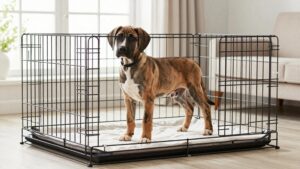
A crate divider can help your puppy settle in a space that’s just large enough to stand, turn around, and lie down comfortably. Use the divider to limit the crate so your puppy can move naturally without extra room to soil one corner and sleep in another. Adjust it as your puppy grows, checking the fit while they’re standing and lying down.
The space shouldn’t feel cramped; your puppy needs room to stretch out and rest comfortably. If the crate still seems too large, reposition the divider and check again in both positions. A well-fitted crate can support potty training, but it can’t prevent accidents if your puppy stays inside longer than they can hold their bladder. Secure the divider before crate use.
Step 2: Note Pre-Crate Potty Timing
Before every crate session, take your puppy outside and wait until you’ve confirmed they’ve peed. That simple check lowers the chance your puppy will need to go while confined. If they don’t pee, keep them with you under close supervision and try again shortly; don’t use the crate as a way to prevent an accident.
Track how long your puppy stays dry after each potty break. Use the shortest interval you’ve observed to set an initial schedule, then lengthen it gradually after successful outings. Young puppies may need trips as often as every 15–20 minutes, but let your notes guide adjustments. Plan extra outings after your puppy wakes, eats, or plays, since those events often prompt bladder emptying before crate rest.
Step 3: Reward Outdoor Potty Immediately
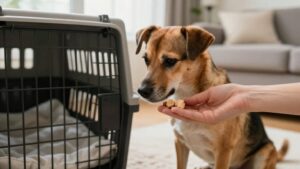
Whenever your puppy finishes peeing outdoors, praise them and give a treat right there so they connect the reward with the behavior. Build this reward into each potty trip. Take your puppy to the designated spot after waking, meals, and play, and again just before crate time.
Keep treats by the door so you can deliver one promptly without searching or delaying. Consistency helps your puppy learn that peeing outdoors earns something worthwhile; the close timing makes the connection clearer than a treat given later. Reward every successful outdoor pee, even when your puppy has already gone outside many times that day. Afterward, calmly guide them back indoors or into the crate. This predictable routine reinforces the habit and makes outdoor toileting a rewarding choice.
Step 4: Interrupt Accidents Calmly
If you catch your puppy starting to pee in the crate, calmly interrupt and take them straight to their designated potty spot. Use a gentle cue; avoid startling them. Once outside, give your puppy time to finish. As soon as they do, praise them and offer a small treat. This reinforces toileting in the right place, rather than the crate accident.
If you find a wet crate later, stay matter-of-fact. Scolding or punishment can raise anxiety and may worsen accidents, so focus on cleanup. Wash soiled bedding, and clean the crate with a pet-safe enzymatic cleaner to remove urine odors that could invite repeat accidents. If your puppy keeps peeing on soft bedding, remove it temporarily and provide a comfortable crate.
Step 5: Track Accident Timing
A simple log can reveal when your puppy is most likely to need a potty break. Record when your puppy drinks, urinates, and has crate accidents, along with the time and approximate amount. Note how long your puppy stays dry in the crate; the shortest interval before an accident gives you a starting limit.
Plan to offer a potty break before that interval ends. During the day, you need to go out every 15 to 20 minutes. After successful trips outside, gradually extend the time between breaks. Note whether accidents follow meals, naps, or routine events. These patterns help you schedule outings before your puppy is uncomfortable. Praise and reward your puppy for going outside, and update your log as their habits change.
Step 6: Enzyme-Clean the Crate Tray
Your log helps you anticipate accidents, but cleaning them thoroughly can help prevent repeat messes. When an accident happens, blot up as much urine as you can, then apply a pet-safe enzymatic cleaner to the crate tray. Follow the product label, and give the cleaner its full recommended contact time before you wipe or rinse it away.
Treat the whole soiled area, not just the visible spot, because lingering scent may encourage your puppy to pee there again. Once you’ve finished, let the tray dry completely before returning it to the crate. Praise your puppy for using the appropriate potty spot, and continue tracking accident timing alongside regular potty breaks.
Wash Removable Crate Bedding
Remove soiled bedding promptly and wash it with a pet-safe detergent, following the label directions. Rinse as directed and let the bedding dry completely before you return it to the crate; damp fabric can hold odors and may irritate your puppy’s skin. Wash thoroughly to remove urine scent, then clean the crate surfaces with an enzymatic pet-odor cleaner.
Bedding alone won’t remove odor trapped on the crate, and lingering smells can encourage repeat soiling. If accidents continue, remove soft bedding temporarily, since some puppies pee on absorbent materials or revisit spots that still smell. Keep the crate comfortable and reward your puppy for settling calmly. After a week without accidents, reintroduce bedding gradually: start with a small towel, then increase the amount over time. If your puppy soils it again, return to the simpler setup and try again later.
Nighttime Potty Breaks
Even with clean bedding and an odor-free crate, your puppy may need a nighttime potty break while bladder control develops. Take your puppy outside just before bed, and wait until they pee before crating them. Young puppies may not manage until morning, so watch for restlessness or whining and respond promptly.
| Moment | Your move | Keep in mind |
|---|---|---|
| Before bed | Offer a final trip | Confirm they pee |
| Overnight | Take them out briefly | Return calmly |
A simple routine helps you prevent discomfort and learn your puppy’s individual overnight needs. Keep outings quiet and brief, then guide your puppy back to the crate; praise toileting calmly. If accidents persist, schedule more frequent trips and track the time between them. Don’t limit water unless your veterinarian advises it.
Replace the [Placeholder] With: Check for Recurring Health Issues
Check for Recurring Health Issues****
If crate accidents happen frequently or start suddenly, schedule a veterinary check to rule out a urinary tract infection or another health problem. Frequent urination in small amounts can signal a UTI, which needs veterinary diagnosis and treatment; don’t assume your puppy is being stubborn or failing at training.
Contact your veterinarian promptly if accidents come with diarrhea, lethargy, or other changes in your puppy’s health. Your vet may examine a urine sample and, when appropriate, run bloodwork to investigate recurring accidents.
Before the appointment, note when accidents happen, how often and how much your puppy urinates, and how much water they drink. These details can help your veterinarian spot patterns and choose suitable tests. Keep crate outings calm and reward your puppy for peeing outdoors, but don’t punish accidents. Addressing a medical cause can make house-training more comfortable and help your puppy succeed with consistent support.
Conclusion
A dry crate starts with realistic expectations: puppies can’t hold their bladders indefinitely. Give your puppy a properly sized, clean space, take them out before and after crating, and reward outdoor potty right away. Keep nighttime breaks age-appropriate, and watch for recurring accidents despite a consistent routine.
If they continue, check with your veterinarian for possible health issues. With patience, positive reinforcement, and a dependable schedule, you’ll help your puppy build lasting potty habits.