How to Choose a Dog Crate: Size, Material and Purpose Made Simple
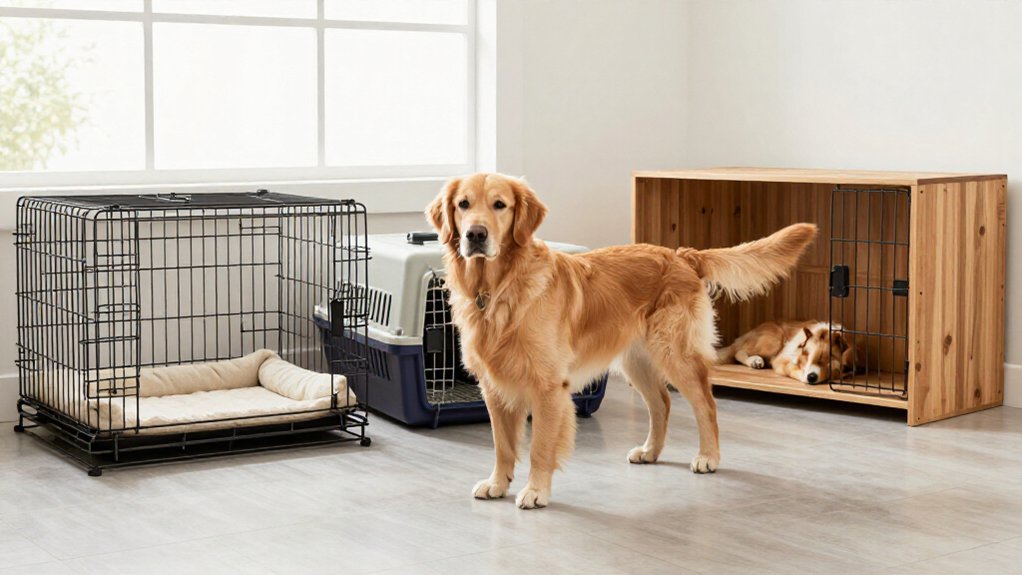
Choose a crate by measuring your dog from floor to head and nose to tail base, then add about 3–4 inches to each measurement.
For a growing puppy, use a snug-fit divider and adjust it as your dog grows. Consider escape tendencies: sturdy metal with secure latches suits determined chewers, while wire or plastic may fit calmer dogs’ needs.
For air travel, confirm current airline rules before buying. Check placement, door access, and ventilation, too. The details below can help you choose confidently.
Snug-Fit Divider Panel
A divider panel lets you adjust the crate as your puppy grows. Fit it snugly across the crate’s width, not along its length, so it stays in place and creates a smaller resting area. As your puppy develops, move the panel gradually to expand the available space. Your dog should always be able to stand without ducking, turn around, and lie down comfortably.
Too much extra room can make crate training harder and may encourage accidents, so review the setup regularly and reposition the panel when needed. Make adjustments calmly; your puppy is learning, and comfort matters. Most MidWest Homes for Pets crates include a divider panel. If you need help choosing the right setup, contact Customer Service at 800-428-8560 for sizing assistance anytime.
Dog’s Current Measurements
Once you’ve set the divider, measure your dog while standing to find the right crate size. Measure from the floor to the top of your dog’s head, then from the nose to the base of the tail; leave out the tail tip. Choose a crate about three to four inches taller than your dog’s standing height and three to four inches longer than its body length. Your dog should enter without ducking, turn around, and lie down comfortably inside.
Keep treats handy if your dog wiggles; a brief pause helps you measure accurately. Weigh your dog at home or at a veterinary clinic, too, to help confirm your crate choice. A tape measure and handling will keep this simple for both of you.
Dog’s Escape Tendencies
If your dog chews or tries to escape, choose a sturdy crate with multiple secure latches, such as heavy-duty coated metal or high-grade steel. Avoid soft-sided fabric if your dog chews; determined dogs can bite through it. Secure confinement should prevent escape without trapping distress, because frantic attempts can break teeth or toenails.
| Cue | What it may mean | Your kind response |
|---|---|---|
| Excessive barking | Your dog feels unsettled | Stay nearby; build trust |
| Pacing, panting | Stress is rising | Pause; reward calm |
| Drooling, escape attempts | Confinement feels frightening | Don’t leave your dog alone |
| Chewing | Escape risk is real | Choose secure latches |
If you notice these signs, don’t force your dog to stay crated alone. Introduce the crate gradually with treats and praise. If stress persists, use a pet-proof exercise pen or arrange a pet sitter; your dog’s safety and security matter most.
Wire Versus Plastic Crates
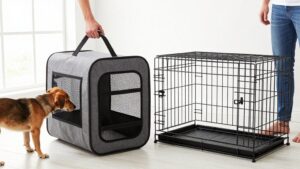
When choosing between wire and plastic, consider how much airflow and visibility your dog needs, along with each crate’s durability and security. Wire crates often fold for transport and storage, while plastic models can be sturdy and easier to clean but less portable. If you’re considering air travel, check airline size requirements before you buy a plastic crate.
Airflow and Visibility
Wire crates offer plenty of airflow and an open view, which can suit dogs who like to see what’s happening around them. If your dog settles better when they can watch the room, this design may feel comfortable. Plastic crates have more enclosed sides, creating a quieter, more private space for dogs who feel anxious when exposed. Neither style suits every dog, so notice how yours responds.
You can cover a wire crate to make it feel more den-like, but don’t block too much airflow or visibility. Leave enough space for your dog to breathe comfortably and see out if that helps them relax. Whichever crate you choose, check that ventilation is adequate and watch for signs of stress, such as restlessness or reluctance to settle. Adjust the setup to support your dog’s comfort.
Durability and Security
Beyond comfort, consider how well a crate will hold up and keep your dog safely contained.
Wire crates are sturdy and durable, with open construction that supports airflow and visibility. If your dog chews, a metal crate may offer a stronger barrier; heavy-duty models with multiple latches add security for strong or escape-prone dogs. Check that doors latch firmly and the frame feels stable.
Plastic crates can also withstand regular use and clean easily, making them practical at home and for travel. Soft-sided options provide less protection because dogs can chew through them, so choose one only if your dog doesn’t chew or try to escape. Whatever material you choose, watch your dog’s response. If they show distress, don’t force them to remain confined.
Travel and Portability
If you travel with your dog, choose a crate that’s easy to move without compromising comfort or safety. A folding wire crate offers sturdy support, good airflow, and clear visibility; it also packs more easily than a fixed furniture-style model. Plastic crates can suit both home use and travel, but choose durable construction and generous ventilation.
Either option should let your dog stand without ducking, turn around, and lie down comfortably.
If your dog chews or pushes at barriers, favor the sturdier structure you can secure properly. Soft-sided crates weigh less and fold quickly, making them handy for calm dogs that don’t chew or escape. For air travel, check your airline’s crate size and approval rules before you buy; requirements vary widely.
Choose for your route and your dog’s needs, so travel feels safer and less stressful for both of you.
Cleaning and Maintenance
After travel, easy cleanup can make daily crate care less of a chore. With a wire crate, you can often slide out the floor tray to clean spills, muddy paws, and housetraining accidents. Some manufacturers offer replacement trays for selected wire-crate models.
Plastic crates are generally easy to clean, too, but choose a well-ventilated model and make sure you can reach every interior surface. After an accident, clean the crate promptly. Fabric bedding and accessories may take more effort to wash or sanitize than a removable tray or plastic shell. Before you decide, check whether the tray or shell comes out easily for cleaning, since designs vary. A little attention to cleanup can help you keep your dog’s space fresh and comfortable.
Airline Travel Requirements
Before you buy or travel, check your airline’s crate rules and required documents, since requirements vary by carrier. Choose an approved, secure, well-ventilated crate that lets your dog stand, turn around, and lie down comfortably. Confirm that any soft-sided crate meets size limits, and help your dog get comfortable in it before the trip.
Check Airline Rules
When planning air travel, check your airline’s current crate requirements before you buy, since size limits and carrier rules vary. Measure your dog and compare the crate’s length, height, and width with the airline’s limits; don’t rely on a sizing chart. Ask whether the carrier must meet airline approval, particularly if you’re considering a plastic travel crate.
If you prefer a soft-sided option, confirm that your airline permits it and note any dimension limits. Requirements may differ by route, aircraft, or travel arrangement, so contact the airline before departure and confirm the details for your specific trip. Getting answers early helps you avoid last-minute changes and gives you time to plan a journey that’s less stressful for your dog. Keep the airline’s guidance handy as you prepare.
Choose an Approved Crate
Because airline rules vary, check your carrier’s current requirements before buying a crate. Ask the airline about its rules for crate dimensions and construction before you book; requirements can differ between flights. Choose a crate the airline explicitly approves rather than assuming one that works at home will qualify. That check can prevent last-minute changes and reduce stress for you and your dog.
A plastic crate may suit air travel, but don’t rely on material alone. Confirm that the model meets your carrier’s requirements and provides adequate ventilation. If you’re unsure whether a crate is accepted, contact the airline with the model details before purchasing or booking. Keep the carrier’s guidance handy as you prepare; rules may change, so recheck before travel.
Meet Crate Size Requirements
Measure your dog standing and from nose to the base of the tail, then choose a crate about 3–4 inches taller and longer so your dog can stand, turn around, and lie down comfortably.
Before you buy, check the airline’s current crate-size and carrier rules for your specific flight; requirements can vary by airline and aircraft. Confirm the crate also fits any applicable carrier or aircraft limits, since a comfortable home crate may not be allowed onboard. Soft-sided models can work for some trips, but don’t assume yours will be accepted: verify the rules for your route and carrier.
If you’re choosing for a growing puppy, estimate adult size and use a divider at home to keep the space manageable. For travel, though, size the crate to your puppy now and meet the airline’s limits. A little checking helps protect your dog’s comfort and prevents a last-minute crate change. Check again before departure in case policies change unexpectedly.
Prepare Required Documents
Once you’ve checked the crate’s size, review your airline’s current pet-travel rules before booking.
Determine whether your dog will travel in the cabin or as checked or cargo baggage, since each option may require different paperwork. Ask the airline which health, vaccination, identification, or veterinary certificates you’ll need, and record every submission deadline.
Requirements can change, so verify them directly rather than relying on old advice.
Also confirm that your crate meets the carrier’s size and construction rules. Some journeys require a well-ventilated plastic crate, even if another style works for your dog at home. If you’re unsure whether your crate or documents qualify, contact the airline before booking. Sorting out these details early helps prevent last-minute stress and gives you more time to prepare your dog for a safe, comfortable trip from the outset of your journey.
Room Layout and Placement
Choose a spot where your dog can rest near family activity without blocking walkways or doors. Your dog can feel included while resting. Before you shop, measure the intended location and account for the crate’s footprint. Leave room for the door to swing open and for your dog to enter and exit comfortably.
If furniture or a narrow layout makes one entrance awkward, consider a crate with multiple doors so you can position it more easily.
Think about how you’ll use the crate, too. A collapsible model can save space when you’re not using it or make moves between rooms simpler. If you choose a wire crate and want to reposition it, locking casters let you move it, then secure it in place.
Crate Door Replacement Availability
Need a replacement crate door? Check with the manufacturer or retailer before ordering; replacement doors aren’t universal, and availability depends on your crate’s model. Confirm the brand, model, size, and door configuration so you can ask for a compatible part. A clear photo of the crate and its identification label may help the seller verify a match.
Don’t assume every listed replacement part fits your crate. For example, a Frisco replacement tray is specified for one crate model; that listing doesn’t confirm whether replacement doors are available. If you can’t find a door, ask about repairs before using the damaged crate safely. Share the crate’s identifying details when you contact them, and keep your dog in an alternative space while you wait temporarily.
Door Latch Quality
How secure is your crate’s latch, really? A dependable latch protects your dog when you can’t supervise directly, so test it before you buy. Close the door, then push and pull it; the latch should stay engaged without shifting.
Check these three points:
- Choose a mechanism you can operate easily, but your dog can’t nudge open.
- If your dog is strong or crafty, look for a heavy-duty crate with multiple latches.
- Inspect each latch regularly for looseness, damage, or wear, and replace a faulty part promptly.
Don’t assume a closed door means a secure one. A check can prevent an unexpected escape and help you feel more confident when your dog needs to spend time in the crate. Prioritize reliable action over design.
Ventilation Needs During Travel
During travel, your dog needs steady airflow to stay comfortable and safe. Choose a crate with generous openings: a ventilated plastic model or soft-sided crate with mesh panels can work well. Wire crates offer open airflow and visibility, but check that their frame and latches stay secure while you travel.
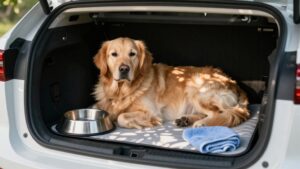
- For road trips, keep vents clear of covers, luggage, and other items so air can circulate.
- For outdoor outings, consider water-resistant soft-sided fabric, and make sure mesh openings remain unobstructed.
- Before flying, confirm your airline’s crate and ventilation rules; requirements vary by carrier.
Watch your dog for overheating or distress, and adjust the setup if needed. Check airflow again after stops, especially if luggage shifts or weather changes. Your dog depends on you, too.
Conclusion
Choose a crate that fits your dog now, with enough room to stand, turn around, and lie down comfortably. A divider can adjust the space as your dog grows. Consider your dog’s escape habits, your room layout, and whether you’ll travel by air before choosing wire or plastic. Check that the latch is secure, replacement doors are available, and ventilation meets travel rules.
When the crate feels safe and comfortable, your dog’s more likely to settle in.
Outdoor Kennel Run Planner & Materials Estimator
Enter your run size and panel width to estimate panel count, roof/shade area, wall area, surface material volume and floor area per dog.
Wire Crate Size Lookup & Divider Setter
Compare your dog's weight with maker-stated ranges for each wire crate size, and work out puppy divider spacing from your crate's interior length.
Dog Gate Opening Calculator with Extension Finder
Enter your opening width to see which dog gates cover it as stated, how many inches of extension you need, and how many extension kits that takes.
Dog Crate Price Estimator by Size and Type
Look up the median listing price, price range and sample size for dog crates by type and inch length, from a dated Amazon shelf snapshot.
Kennel Run Flooring & Ground Cover Estimator
Estimate gravel volume (cu ft, cu yd) or the tile and paver count for a dog run from its length, width, depth or tile size, and waste allowance.