Playpen vs Crate for a Puppy: When to Use Each (and Why You Want Both)
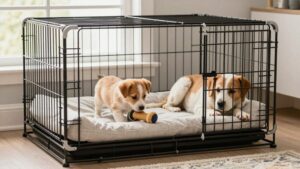
Use a crate when your puppy needs a calm place to nap or rest; choose one large enough to stand, turn, and stretch.
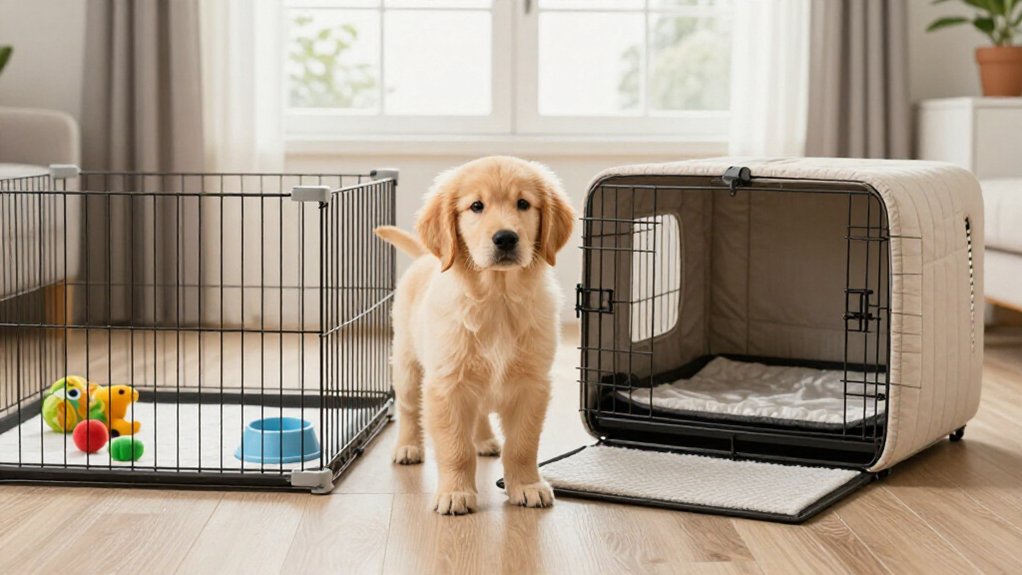
Use a playpen for supervised daytime movement, play, and exploration, especially when you can’t puppy-proof a room. Most puppies benefit from both: place a crate inside the pen for choice and comfort.
Keep confinement brief, offer frequent potty breaks, and introduce each space gradually with rewards. Here’s how to use both well.
Puppy Confinement Time Limits
A crate offers a young puppy a safe resting space, but it shouldn’t replace regular breaks: aim for no more than about two hours at a time during the day. While you learn your puppy’s toileting pattern, take them out every 15–30 minutes; then adjust for age, size, and history. The often-cited month-of-age rule estimates bladder capacity, but it’s only a starting point, never a substitute for breaks.
| Situation | Practical limit |
|---|---|
| Young puppy | About two hours |
| Older puppy/adult | Up to 3–4 hours |
| Over two hours | Playpen plus toilet breaks |
For longer stretches, choose a playpen for movement, while still planning breaks; more room doesn’t remove toileting needs. Don’t leave your puppy confined until they may soil their space; accidents can make crate training harder. Watch cues closely; offer toilet trips after waking, eating, and play, and shorten intervals when needed.
Playpen vs Crate Design
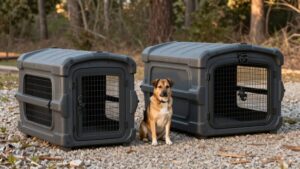
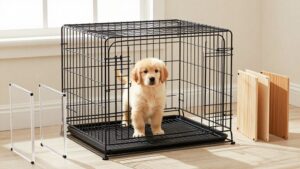
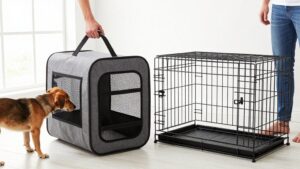
Although both contain a puppy, a crate and a playpen serve different needs: a crate is a fully enclosed space with a floor, four sides, and a top, while a playpen is a roomier, open-topped enclosure made of panels that you can reconfigure or expand. Choose a crate that lets your puppy stand, turn around, sit, lie down, and stretch fully. A divider can limit usable space as your puppy grows; upgrade if needed to preserve a comfortable fit.
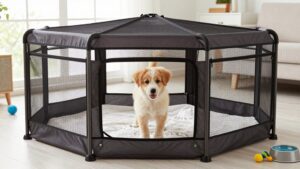
For a pen, choose secure panels tall enough to deter jumping or climbing out, with room to move and separate resting and feeding areas. You can place the crate inside the pen as a quiet retreat, or attach the pen to the crate opening for extra room. Therefore, your setup can offer both a snug den and space to move without treating them as interchangeable.
Cleanup and Odor Control
Frequent potty breaks are your best defense against messes and lingering odors: take your puppy out every 15 to 30 minutes while they’re learning their routine, and clean accidents promptly.
In a crate, don’t rely on confinement to keep things clean: prolonged stretches can leave your puppy no choice but to soil their space, which may complicate future crate training. Choose a crate that lets them stand, turn around, and lie down, and schedule breaks rather than extending confinement.
- In a playpen, keep any designated potty area separate from your puppy’s sleeping and resting spot.
- If you use pee pads, they may reinforce indoor toileting habits beyond the pen.
- After an accident, clean and refresh the area so your puppy has a clean place to settle.
Setup and Folding Time
Setup time depends on the design: a crate is a compact, enclosed box, while a playpen uses panels you can arrange to fit your space. The crate’s enclosed structure keeps footprint compact, while arranging panels to fit may take longer. A sturdy crate shouldn’t collapse and should let your puppy stand, turn, sit, lie down, and stretch. A divider adjusts usable space as your puppy grows.
Removable or add-on pen panels change the size and shape, though you’ll secure their connections at setup. Folding exercise pens suit portable use; check panels and connections whenever you unfold one. Set either option in a calm spot, and secure the crate door open during early introductions. You can place the crate inside the pen, or attach the pen at its opening, to give your puppy a resting place and room to move. Choose a pen tall and stable enough for your puppy.
Escape and Chewing Tendencies
If your puppy climbs or leaps out of a playpen, choose a taller, more secure model or use a sturdy, correctly secured crate with a top. Because most pens lack tops, check height and stability before leaving your puppy inside. Use these steps:
- If your puppy chews bedding, swap a plush bed for folded towels or blankets, and supervise so they don’t swallow fabric.
- Move wires, chemicals, shoes, batteries, and other hazards beyond reach; a pen or crate limits access but can’t make them safe.
- If escape attempts or chewing continue, adjust the setup and build comfort through short, gradual, positive sessions instead of forcing longer confinement.
Watch behavior, and end sessions promptly; repeated distress means the space needs safer design or gentler introduction.
Warranty and Replacement Policies
Before choosing a crate or playpen, check the manufacturer’s warranty because coverage varies by brand and model.
Confirm what the policy covers rather than assuming every kind of damage qualifies. Ask whether it includes broken panels, faulty latches, or other replaceable parts, and check how the manufacturer handles repair or replacement requests.
Normal wear and puppy chewing may fall outside coverage, so read exclusions before you buy. Policies can differ; review the specific terms for your chosen product carefully. Keep your receipt, model name, and product details somewhere accessible. If a part fails, those records can help you explain the issue and make a claim.
A clear policy won’t prevent damage, but it can help you plan costs and maintain your puppy’s equipment safely.
Isolation Anxiety During Confinement
A crate or playpen won’t automatically teach your puppy to cope with being alone; confinement or separation can make some puppies anxious.
Build comfort gradually; the space alone won’t solve distress.
- Start with the door open; reward voluntary entry and keep early visits short and positive.
- When relaxed inside, close the door briefly while you stay nearby; then increase time and distance gradually.
- Step out only when your puppy’s occupied with a meal, chew, or food toy. Return before distress builds, then extend absences gradually.
If your puppy whines or scrabbles to escape, don’t push through it. Return to an easier stage where they feel comfortable, and progress at their pace.
Potty Training and Naps
A correctly sized crate can support potty training because puppies tend not to soil their sleeping space, but you’ll need to offer frequent breaks, every 15-30 minutes while you learn your new puppy’s routine. For longer daytime confinement, a playpen gives your puppy room to move and can include a designated potty area, though pads may encourage ongoing pad use. Use the crate as a quiet nap spot, take your puppy out as soon as they wake, and consider placing an open crate inside the pen for rest and room to stretch.
Potty Training Setup
How long your puppy can wait between potty breaks should guide whether you use a crate or a playpen. Your crate can support housetraining because puppies avoid soiling where they sleep, but choose a size that lets your puppy lie down—not use one end as a toilet.
Pair it with outdoor trips. While you learn your puppy’s pattern, start with a break every 15–30 minutes; age, size, and history change the timing.
- Use the crate when you can offer outdoor breaks; keep young puppies’ daytime confinement to two hours or less.
- Choose a pen for stays beyond two hours, with a bed and a toilet spot.
- Pee pads can simplify cleanup, but your puppy may learn to use them elsewhere in your home.
Crate Nap Routine
After setting up potty breaks, build a calm crate-nap routine: offer a treat or safe chew, keep naps short as your puppy learns, and take them outside as soon as they wake. While your puppy is learning, take them out frequently, about every 15 to 30 minutes when awake is a useful starting point. Adjust the timing for their age, size, and potty history; watch for signals rather than relying on the clock alone.
Choose a crate that lets them stand, turn around, and lie down comfortably. Keep daytime confinement brief: young puppies generally shouldn’t stay crated longer than two hours at a time. Build duration gradually, and use the crate for rest, never punishment. If your puppy fusses, check their needs and help them settle calmly.
Traveling With Your Puppy
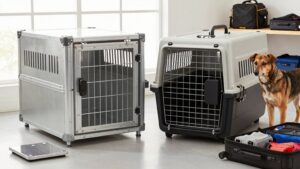
Before traveling, crate-train your puppy gradually and choose a crate that lets them stand, turn, lie down, and stretch comfortably. If a crate isn’t practical, use a secure portable playpen, and plan safe breaks so your puppy can rest and move.
Choosing a Travel Crate
A sturdy travel crate should give your puppy room to stand, turn around, sit, lie down, and stretch fully; secure it so it can’t collapse or shift.
Before travel, help your puppy learn that the crate predicts good things. At home, leave it open and offer treats or meals inside, then build comfort with brief, positive practice sessions. Don’t wait until departure day to introduce confinement; gradual familiarity can make car rides and visits to veterinary clinics or unfamiliar places less stressful.
- Add familiar bedding or a safe chew toy to support settling.
- Secure the crate against movement and check that it stays stable throughout the trip.
- Plan regular stops for water and toilet breaks; comfort includes pauses, not just containment, along your route.
Using a Travel Playpen
When you visit friends or family, a travel playpen can give your puppy a safe place to rest or play if you can’t puppy-proof the room. Choose a sturdy pen with enough height to discourage jumping or climbing out, and enough room for your puppy to move, stretch, and settle. Set it up in a calm spot, then add familiar bedding, toys, and fresh water to help your puppy feel comfortable in a new setting.
Before your trip, introduce the pen at home through short, positive sessions. Offer treats or a chew, and gradually increase the time your puppy spends inside. A playpen offers more room than a crate, but it doesn’t replace supervision or exercise; avoid leaving your puppy confined for long stretches.
Safe Travel Breaks
For car travel, secure your puppy in a properly fitted crate, which is the safest way to transport dogs.
Before a trip, introduce the crate at home in short, positive sessions so it feels familiar. At each break, give your puppy a toilet opportunity and time to move; don’t leave them confined for an extended stretch.
- Bring the familiar crate when practical; its familiar scent and routine may help your puppy settle in a new place.
- Keep crate stays brief and matched to your puppy’s age; young puppies need frequent toilet breaks.
- During daytime, generally limit crating to two hours at a time, and shorten that interval if your puppy needs to go sooner.
Let your puppy’s cues guide each stop, not your schedule.
Crate Naps, Pen Play
Use the crate as a calm spot for naps and the playpen for supervised daytime play, movement, and exploration. Choose a crate that lets your puppy stand, turn around, lie down, and stretch comfortably. Its smaller, secure space can help your puppy settle, but introduce it gradually. Offer treats, meals, or a long-lasting chew so the crate becomes a positive resting place.
Set up the pen with a bed, toys, and fresh water, and supervise your puppy while they play. For longer stretches, a pen generally gives more room than a crate, but neither replaces regular outdoor potty breaks or time with you. Avoid excessive confinement. If you attach the pen to an open crate, your puppy can nap in the crate and move around in the pen.
Conclusion
You don’t have to choose between a playpen and a crate: each helps in different situations. Use the crate for short, supervised naps and travel practice; use the pen when your puppy needs room to play, stretch, or access a safe potty area. Keep confinement age-appropriate, build comfort gradually, and never use either as punishment.
Watch your puppy’s signals, clean accidents promptly, and adjust the setup as they grow. With both tools, you can support rest, safety, and learning.