Ruff Land vs Gunner Kennel: Which Rotomolded Crate Fits Your Dog?
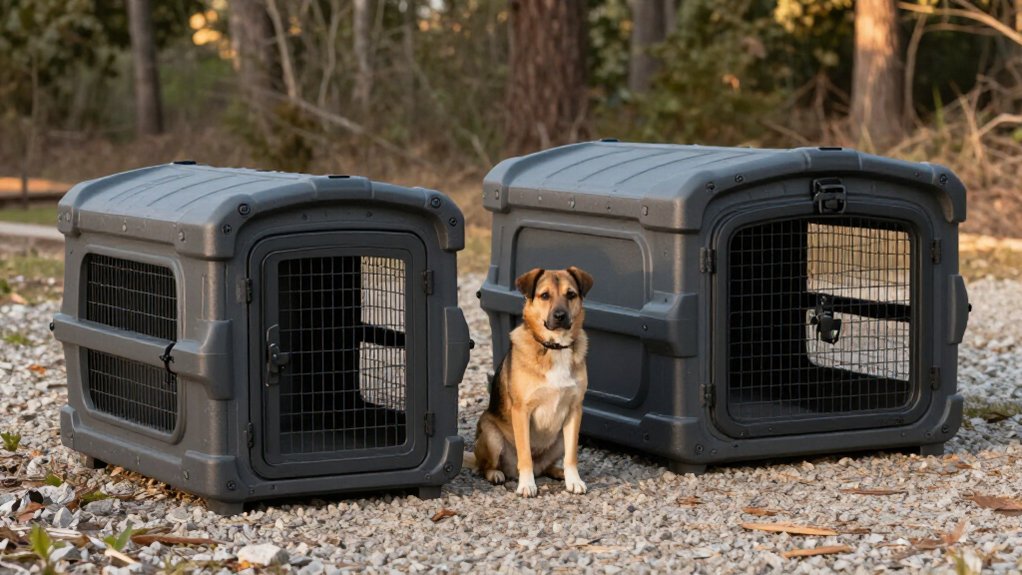
Choose based on your dog’s posture, vehicle fit, and restraint needs.
The Intermediate Ruff Land measures 30⅛ × 19½ inches at the base, with 22 inches of interior height; Gunner measures 30 × 18 inches and stands 25 inches tall inside.
Gunner’s five-star Center for Pet Safety rating supports its crash-protection case, while Ruff Land’s roughly 20-pound weight and adjustable doors and vents ease handling.
Confirm fit, airflow, and compatible tie-downs before travel; differences follow.
Gunner and Ruff Land Dimensions
How do Ruff Land and Gunner compare in the space they provide? In Intermediate, compare dimensions. Ruff Land’s base measures about 30⅛ × 19½ inches; Gunner’s measures 30 × 18 inches. Their floor areas are similar, though Ruff Land is 1½ inches wider.
| Kennel | Base (inches) | Interior height |
|---|---|---|
| Ruff Land | 30⅛ × 19½ | 22 inches |
| Gunner | 30 × 18 | 25 inches |
Gunner’s extra height lets a dog like Zulu sit fully upright. Dogs typically travel lying down, so assess your dog’s posture and clearance needs.
Gunner weighs about 48 pounds, compared with roughly 20 pounds for Ruff Land. Consider weight when positioning or transporting the kennel. Check vehicle fit before travel. Confirm your dog can lie comfortably inside, and secure the kennel appropriately for each trip to reduce avoidable movement and support safer transport.
Double-Wall vs. Single-Wall Shells
Although both kennels use roto-molded plastic, their shell designs differ: Gunner G1 has a double wall, while Ruff Land uses a single-wall shell. Gunner’s double-wall construction adds bulk and insulation. Its Intermediate model weighs about 48 pounds; Ruff Land’s weighs roughly 20 pounds. That difference can affect how easily you lift or reposition a kennel. Added insulation may help in some conditions, but it can slow temperature changes when your vehicle’s heating or air conditioning runs. Monitor cabin temperature regularly.
Crash-test evidence differs. Gunner Small, Medium, and Intermediate models have five-star Center for Pet Safety ratings. Ruff Land Gen 2 hasn’t been crash tested, so you can’t infer equivalent crash performance from its shell design or lower weight. Consider fit, installation, and tested evidence when choosing.
Ventilation and Visibility
For airflow and visibility, Ruff Land offers customizable vents and optional side or rear doors, while Gunner has one metal door and its double-wall shell limits airflow and can slow temperature changes when the vehicle’s heating or air conditioning is running.
This matters when you assess ventilation. You can select Ruff Land openings to suit your dog and improve sightlines, but openings don’t replace monitoring for heat or distress.
Gunner’s insulation may reduce temperature shifts, yet can delay warming or cooling as cabin controls change; check kennel conditions rather than assuming they match the vehicle. Gunner’s Intermediate has 25 inches of interior height, versus Ruff Land’s 22. That overhead room may help air circulate around your dog, but doesn’t guarantee ventilation. Consider your dog’s size, trip duration, and vehicle climate when comparing air exchange and visibility.
Door Latch Operation
A secure door depends on its latch, not just its material or configuration. The Gunner G1 uses a single metal door with a sturdy, lockable design, but available information doesn’t describe its latch’s operating steps or hardware. That limitation means you can’t infer how quickly or consistently it engages from the product description alone.
Ruff Land offers single- and double-door layouts, with side- and rear-door options, but its latch operation isn’t specified either. Compare documented fit and configuration, then inspect each latch in person: confirm full engagement, resistance to accidental release, and repeatable closure before use. Gunner’s prior Gen 1 door and tie-downs failed testing; its Small, Medium, and Intermediate sizes now hold five-star Center for Pet Safety ratings today.
Airline Cargo Approval
The available information doesn’t confirm airline-cargo approval for either Ruff Land or Gunner kennels. You shouldn’t treat either model as accepted for transport without confirmation from your carrier. Cargo acceptance depends on the airline’s current crate requirements; contact the airline before booking and request its specifications.
Confirm the permitted kennel dimensions and required features with the carrier, then compare those requirements with the model you plan to use. The intermediate interior bases measure 30 × 19.5 inches for Ruff Land and 30 × 18 inches for Gunner. Airlines may assess additional dimensions or features. Don’t assume crash testing or sturdy construction guarantees cargo approval. Obtain confirmation for your itinerary before travel, and follow the airline’s instructions to reduce transport risks.
Warranty and Replacement Parts
Warranty coverage differs: Ruff Land covers the kennel body for life but excludes the door and handles, while Gunner’s warranty lasts for the original owner’s lifetime and excludes chew damage.
That distinction matters when you assess damage after transport or routine use: a failed door or handle may not qualify for Ruff Land coverage, and chewing may void Gunner coverage. The available information doesn’t establish whether either company sells replacement parts or how you obtain them.
If a Ruff Land door or handle needs replacement, contact the manufacturer or retailer to verify parts, fit, and coverage before you use the kennel again. A secure door and intact handles support reliable containment and handling; don’t assume a substitute part will fit or perform safely. Before buying either model, confirm the current written warranty, exclusions, claims process, and replacement-part availability directly with the seller or manufacturer. Keep that information with your purchase records for future reference.
Cleaning and Odor Control
For cleaning and odor control, Ruff Land’s one-piece rotomolded construction is described as sanitary; its optional raised floor cushions your dog and lets liquids drain, while customizable ventilation may help odors clear. That doesn’t establish cleaning instructions. The available information doesn’t specify approved cleaners or odor-control treatments for either kennel; check manufacturer guidance before using chemicals or abrasive tools.
Remove waste, inspect for residue, and clean and dry the kennel before reuse. Gunner’s double-wall design limits airflow, so odors may clear more slowly than in a more ventilated crate. Ventilation doesn’t replace removing soil, and you should address contamination before your dog returns. Ruff Land’s lifetime warranty covers the kennel body but excludes doors and handles; check terms before assuming cleaning-related damage qualifies.
Weight and Portability
You’ll notice a substantial weight difference: the intermediate Ruff Land weighs about 20 pounds, while the Gunner weighs roughly 48. That lighter, more compact design can make the Ruff Land easier to move between vehicles, hotels, and training events. Consider your crate’s weight and fit when choosing a setup you can transport and secure safely.
Crate Weight
When frequent lifting matters, the Intermediate Ruff Land is easier to handle: it weighs about 20 pounds, compared with roughly 48 pounds for the Gunner.
That’s a substantial difference: the Ruff Land weighs less than half as much, reducing the load you must raise when placing or removing the crate. If you lift alone, that lower weight may make handling more manageable and help you avoid straining while controlling a bulky kennel.
The Gunner’s approximately 48-pound weight calls for more effort; assess your ability to lift it safely, especially when positioning it in a vehicle or home. If you move crates or manage dogs, weight may be decisive. Choose Ruff Land when frequent lifting matters; choose Gunner if you can accommodate a heavier kennel.
Ease of Transport
If you regularly move a crate between cars, hotels, and training events, the Ruff Land Intermediate is easier to transport: it weighs about 20 pounds, compared with roughly 48 pounds for the Gunner.
That difference can matter when you lift the kennel alone, carry it through a hotel, or load it repeatedly; less mass may reduce handling effort, but you should still use controlled lifting and ask for help if needed. Ruff Land’s compact exterior can also fit sedans and smaller cargo areas, including some multiple-dog arrangements. Check dimensions and access before purchase, then secure the crate in your vehicle according to its instructions.
Gunner’s added weight and bulk may complicate solo handling and transport through tight spaces. If you change vehicles or locations often, or drive a smaller vehicle, Ruff Land is generally the more portable choice. Still, compare interior dimensions with your dog’s size and confirm the crate fits without obstructing safe loading or restraints.
Truck-Bed Tie-Down Compatibility
Before installing either kennel, check that its tie-downs and straps fit your truck-bed anchors and can prevent shifting. Gunner G1 has four metal tie-down points and heavy-duty hardware. Gunner’s mounting details are better documented, but you’ll still need to verify a secure fit in your truck bed.
Tie-Down Anchor Compatibility
For truck-bed transport, the Gunner G1 provides four metal tie-down points and includes heavy-duty straps and stainless-steel hardware. Its double-wall design is intended for secure car and truck-bed use, but you should still confirm that each strap connects properly to a kennel point and a compatible bed anchor. Ruff Land’s single-piece rotomolded body weighs about 20 pounds in the Intermediate size, which can make positioning easier; available details don’t identify its anchor locations or confirm compatibility with specific truck-bed systems.
Before travel, inspect the crate’s tie-down points, your straps, and the bed anchors for a secure fit. Follow each manufacturer’s instructions, and don’t assume that an anchor arrangement suitable for one kennel will work with the other. If you can’t verify the connection, don’t rely on it to restrain the kennel during vehicle travel. Recheck all connections before every trip and routinely.
Mounting Hardware Options
Mounting hardware determines whether a kennel stays aligned with your truck-bed anchors. Gunner G1 provides four metal tie-down points and includes heavy-duty tie-downs, giving you specified hardware for truck-bed mounting. Its welded aluminum door frame and stainless-steel hardware support its lockable design, but they don’t confirm that its tie-down points match your truck’s anchor locations.
Compare those locations before choosing a setup; a mismatch may require different suitable fasteners. Ruff Land weighs about 20 pounds in Intermediate size, but available specifications don’t identify its tie-down hardware or confirm truck-bed compatibility. Don’t assume optional configurations or accessories include mounting straps. Check the exact model and retailer for compatible hardware, then use fasteners suited to your truck’s designated anchors. Request model-specific details before buying compatible hardware.
Secure Bed Installation
A secure truck-bed installation depends on restraints that fit the kennel and the truck’s designated anchors. Before you travel, use compatible, manufacturer-approved restraints and verify that the kennel can’t shift. Compare the available information carefully:
- Gunner G1 has four metal tie-down points. Its heavy-duty tie-downs and stainless-steel hardware support secure vehicle installation; connect them to suitable truck anchors as directed by the manufacturer.
- Ruff Land’s Intermediate kennel weighs about 20 pounds, so you can position it more easily. However, the available specifications don’t identify its tie-down-point design, so confirm approved attachment options before loading it.
- Don’t assume the optional Lucky Ratchet Strap Kit fits Ruff Land. It’s specified for the separate Lucky Kennel, not Ruff Land.
Check connections and test for movement before travel.
Best Kennel for Hunting Trips
When hunting trips involve frequent loading, hotel stays, or switching vehicles, Ruff Land’s roughly 20-pound Intermediate is easier to handle than Gunner’s approximately 48-pound model. That advantage matters when you move the crate between a truck and lodging. Ruff Land offers single- or double-door layouts, optional side or rear doors, and customizable vents, so you can match access and airflow to your vehicle.
For crash protection on the drive to and from hunting grounds, Gunner’s Intermediate is the stronger choice: it holds a five-star Center for Pet Safety rating. Both models provide similar floor space, but Gunner’s 25-inch interior height exceeds Ruff Land’s 22 inches. At about $700 versus Ruff Land’s $350-$425, Gunner costs more; choose based on restraint, fit, and handling demands.
Conclusion
Choose a Gunner if its dimensions fit your dog and you’re prioritizing a double-wall shell for demanding travel; choose Ruff Land if its size and single-wall design better match your vehicle and trip. Before buying, verify usable interior space, door operation, ventilation, airline acceptance, and tie-down compatibility for your exact model. Secure the kennel as directed, monitor your dog, and never assume a product is crash-tested or airline-approved without current documentation for that specific use.