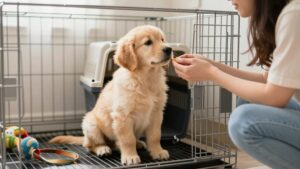
How to Keep a Dog Cool in a Crate at Home, in the Car and on Trips
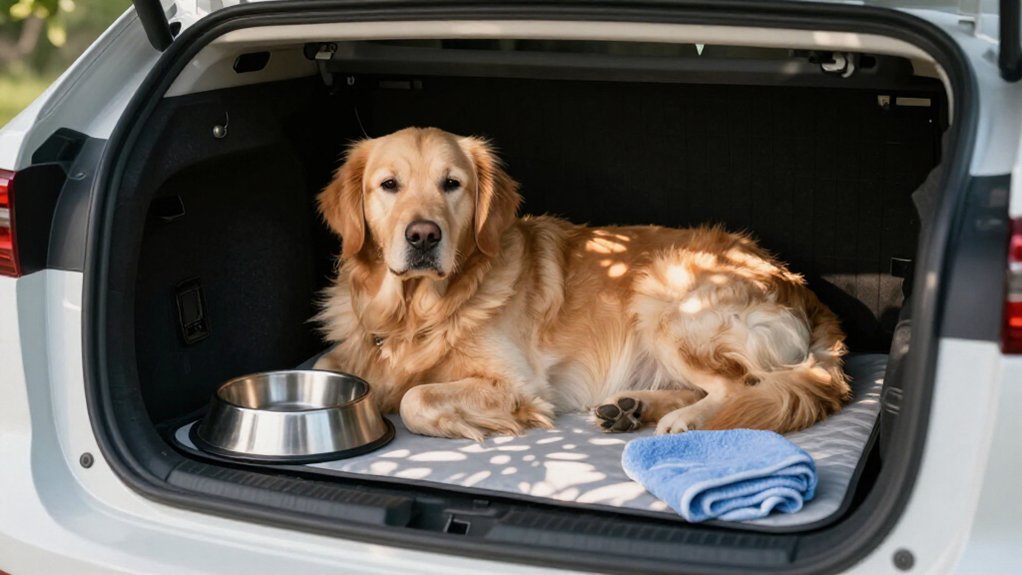
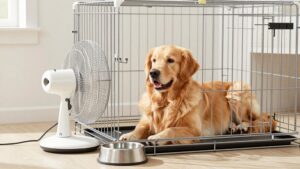
Keep your dog’s crate in a shaded, well-ventilated spot, and clear its vents. Use a cotton sheet or mesh bed, fresh water in a no-spill bowl, and a fan that doesn’t blow directly on your dog.
Secure the crate during travel, but never leave your dog unattended in a parked car. Offer frozen chews under supervision, inspect cooling mats for damage, and don’t force your dog to use one.
Watch for heavy panting or weakness; more guidance can help.
Keep Crate Cooling Gear Handy
Keep cooling supplies within easy reach so you can respond quickly as your dog warms up. Set out a crate-designed, no-spill bowl and refill it often with cool, fresh water. Store a cooling mat nearby; if your dog chews, choose an insulated, water-based ice mat instead of a gel mat that could be punctured and swallowed.
You can prepare frozen water bottles wrapped in towels and rotate them as they thaw. Don’t let your dog lie directly against ice, which can irritate or injure skin. Keep a stable clip-on fan ready, and secure its cord beyond your dog’s reach.
Have a lightweight, breathable crate or mesh cover available, too. Avoid heavy covers, which can hold heat. Check your dog during each cooling session.
Check Crate Ventilation
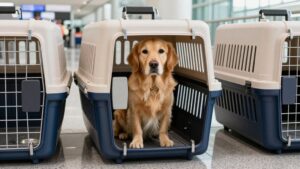
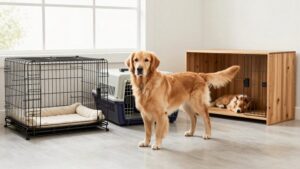
Because airflow helps limit heat buildup, choose a wire or ventilated aluminum crate when possible; plastic airline crates can trap heat.
Then check how air moves through your setup:
- Open windows to create cross-ventilation, but keep your dog securely contained.
- Elevate the crate a few inches so cooler air can circulate underneath.
- Set a small fan nearby to move air; don’t aim a strong, direct blast at your dog.
- Choose only a lightweight, breathable cover; heavy fabric can trap heat and restrict airflow.
Check your dog often, especially for panting, restlessness, or weakness, and move them to a cooler space if you notice distress. Good airflow supports comfort, but it can’t replace supervision or prompt action when your dog seems unwell in warm weather.
Step 1: Position Crate Away From Sunlight
Good airflow helps, but sunlight can still heat a crate quickly.
At home, choose a shaded, well-ventilated spot away from windows that receive direct sun and from heat-trapping rooms such as attics or sunrooms. Outdoors, set the crate beneath a tree, canopy, or covered patio. Check its position throughout the day; the sun moves, and a shady place can become exposed later.
Direct sunlight can warm the crate and surrounding air, making it harder for your dog to stay comfortable.
In a car, keep the crate out of direct sun, too, and use sunshades to reduce sunlight entering the vehicle. These steps can help keep the crate from trapping heat like a greenhouse, but they don’t replace checking the temperature and your dog’s comfort. Recheck often, especially during warm weather, and respond promptly if your dog seems distressed or unusually restless.
Step 2: Secure the Crate in Transit
Before driving, secure the crate so it can’t slide or tip during sudden stops or turns. Choose a properly sized travel crate with sturdy, secure latches. It can help contain your dog and keep them away from open windows, food outside the crate, and tangled seat belts.
Place the crate where air can circulate, and check that your dog can sit upright comfortably. Interior height varies by model; for example, Gunner G1 offers 25 inches, compared with Ruffland’s 22 inches. Keep the door and ventilation openings unobstructed so airflow isn’t restricted. If you use a fan, secure it firmly and keep cords from dangling or shifting.
A secured crate doesn’t make a parked car safe. Cars can heat up quickly, even in shade or with windows open, so don’t leave your dog unattended.
Step 3: Offer a Frozen Chew Toy
Offer your dog a frozen chew toy before bedtime to add a soothing activity and help them settle comfortably. A Kong stuffed with peanut butter and frozen can provide a cool chew. Use peanut butter without xylitol, which is toxic to dogs, and choose a portion that fits your dog’s diet.
Stay while your dog chews, especially if they tend to break off pieces or swallow toys. Remove the toy if it cracks, frays, or becomes small enough to choke on. For variety, try a frozen rope toy or a silicone mold filled with broth, using dog-safe ingredients and a size suited to your dog.
A frozen chew may support comfort, but it won’t keep your dog cool by itself. Keep fresh water available.
Step 4: Use a Cooling Mat
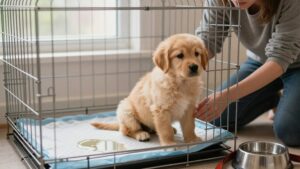
A cooling mat can give your dog a cooler surface to rest on inside the crate. Some gel mats need freezing. Even if a gel is labeled non-toxic, chewing or swallowing it can be dangerous, so don’t leave a mat within reach if your dog might bite it.
For a chewer, consider a water-filled ice mat with insulation or padding. Check its surface and make sure it feels cool, not uncomfortably cold. The Cooler Dog Hydro Cooling Mat uses a FlexiFreeze® sheet containing only water, with separate ice cubes you can replace individually if one punctures.
As a simple alternative, freeze a damp towel for 15–20 minutes, then place it in the crate. Watch your dog’s comfort and remove it if needed.
Step 5: Limit Bedding in Hot Weather
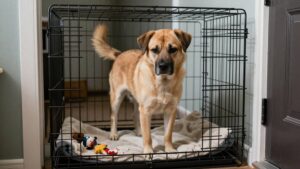
When temperatures rise, replace thick crate bedding with a thin cotton blanket or sheet, or use a raised mesh bed that lets air circulate.
Skip fleece, memory foam, and thick cushions; these materials can hold heat around your dog and make crate less comfortable. Choose only enough padding to give your dog a comfortable surface, and watch for signs that they’re too warm, such as panting or restlessness. Avoid heavy crate covers, which can restrict airflow.
If you cover part of the crate, use lightweight, breathable fabric or mesh, and leave open space. A cooling mat may offer a cooler spot, but make sure its surface feels comfortable, not uncomfortably cold. Wrap ice or frozen bottles in an insulating layer and keep them from touching your dog’s skin.
Step 6: Inspect for Damaged Cooling Mats
Even a cooling mat needs regular safety checks before it goes in your dog’s crate. Before each use, inspect for punctures, tears, and leaks, since damage can expose your dog to unsafe materials or leave the surface unreliable. If you’re using a gel mat, remember that even non-toxic gel can harm your dog if swallowed.
Remove any damaged mat promptly and keep it away from dogs who chew. Water-filled mats with separate ice cubes may let you replace one punctured cube instead of the whole ice sheet. With an ice or frozen-water mat, check that its insulation or padding remains intact and that the surface feels cool, not uncomfortably cold. Don’t rely on a damaged mat to provide safe comfort; replace it promptly instead.
Track Your Dog’s Panting
Notice how your dog pants in the crate: heavy or unusually rapid panting, especially in a warm crate or car, can be an early sign of overheating.
Check panting alongside difficulty breathing, drooling, tiredness, stiffness, confusion, or reluctance to move. These signs may indicate heatstroke. Don’t wait for panting alone to tell you your dog is safe: cars heat quickly, and fans or cooling products can’t guarantee protection.
If panting worsens or a warning sign appears, stop activity. Move your dog to shade or a cool floor, call a veterinarian immediately, and begin cooling. Wet the body with cool water, especially the neck, belly, and inner thighs, while fanning with cool air. Keep water away from the nose and mouth. Continue until breathing returns to normal.
Dog Avoids Cooling Mat
If your dog avoids a cooling mat, don’t force them to lie on it; let them choose a shaded, cool spot, such as a tiled or stone floor.
Check the mat: it should feel cool, not uncomfortably cold. For ice mats, add padding and limit direct contact. Place it in a quiet, shaded crate corner, away from sun, and let your dog investigate. Keep water nearby; offer a raised mesh bed or thin cotton sheet.
Heavy panting, drooling, lethargy, or unwillingness to move may signal heatstroke. Move your dog somewhere cooler and contact a vet if you suspect heatstroke.
| Crate view | Safer choice |
|---|---|
| Mat | Cool, not cold |
| Placement | Quiet shade |
| Alternative | Mesh bed or cotton sheet |
| Water | Fresh and nearby |
Clean Cooling Gear Regularly
Clean your dog’s cooling gear regularly to remove dirt, fur, and residue that can build up with use. Wash cooling mats, crate bowls, and removable covers regularly, especially after spills or heavy use. Follow each item’s care instructions; gel mats and ice-sheet designs can be damaged by unsuitable cleaners, soaking, or heat.
Rinse and dry water bowls before you refill them with fresh, cool water for your dog. Dust fans and vents to keep airflow unobstructed. As you clean, inspect every item for tears, leaks, loose cords, or damaged parts. Stop using anything damaged, and replace it before your dog relies on it for cooling. These quick checks help you catch problems early and keep your dog’s crate environment cleaner and safer.
Conclusion
To keep your dog cool, prepare before the heat rises: check airflow, keep the crate out of direct sun, and secure it safely during travel. Offer fresh water and suitable frozen chews, and inspect cooling mats for damage before use. Watch your dog’s breathing and behavior; panting that worsens, weakness, or distress calls for immediate action.
If your dog avoids a mat, don’t force it. Clean gear regularly, and contact your veterinarian if you’re concerned.
Dog Crate Size Calculator
Turn your dog's nose-to-tail-base length and standing head height into a nominal crate size (24–48 in), with a weight cross-check.
Outdoor Kennel Run Planner & Materials Estimator
Enter your run size and panel width to estimate panel count, roof/shade area, wall area, surface material volume and floor area per dog.
Wire Crate Size Lookup & Divider Setter
Compare your dog's weight with maker-stated ranges for each wire crate size, and work out puppy divider spacing from your crate's interior length.
Kennel Run Flooring & Ground Cover Estimator
Estimate gravel volume (cu ft, cu yd) or the tile and paver count for a dog run from its length, width, depth or tile size, and waste allowance.