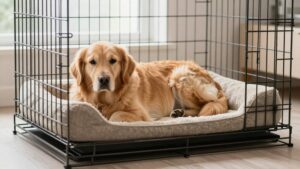
Crate Anxiety vs Separation Anxiety: How to Tell Which One Your Dog Has
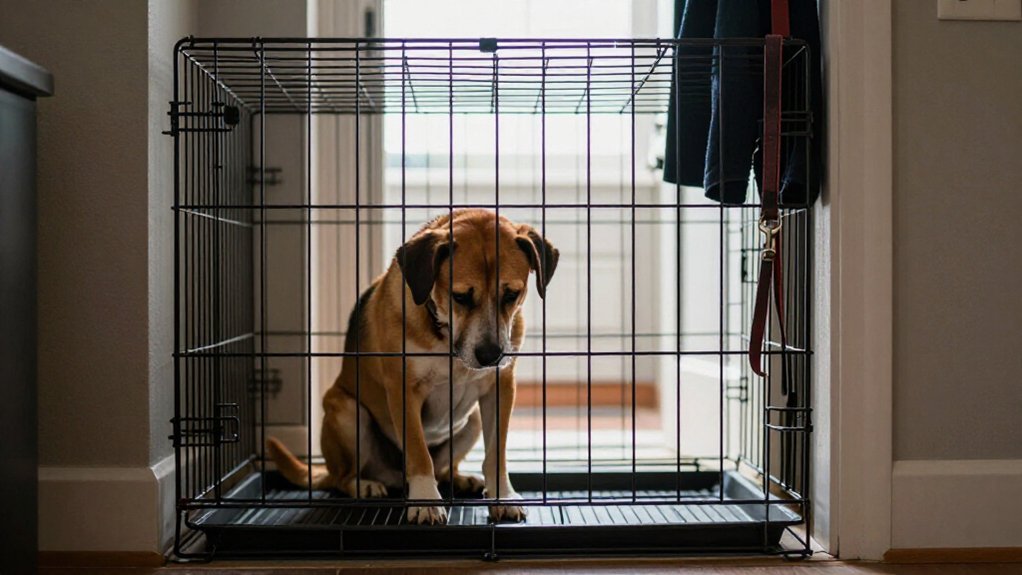
Watch your dog on video during a typical departure, crated and safely unconfined. If distress starts when the crate door closes but eases outside it, confinement anxiety may be more likely. If it begins when you leave in either setting, separation-related distress may be involved.
Panting, pacing, drooling, barking, or escape attempts matter; quietness alone doesn’t prove comfort.
Return before worry escalates, and seek veterinary help for injury or accidents. The clues ahead can help.
Behavioral Clues in Video
A camera can help you distinguish crate anxiety from separation anxiety by showing how your dog responds home alone in the crate and with more freedom. Compare settings during a typical departure, and stop a trial if worry rises. Distress in both may suggest separation-related distress; distress chiefly in the crate may indicate confinement anxiety. If your dog relaxes inside while you’re present but struggles after you leave, separation-related distress may be more likely. Both can occur together.
| What you observe | Possible clue |
|---|---|
| Distress in both settings | Separation-related concern |
| Distress mainly crated | Confinement concern |
| Panting or pacing early | Record timing carefully |
| Barking or escape attempts | End the trial |
Note entry, settling, and eating; food refusal in a closed crate can suggest stress before barking.
Signs of Crate Anxiety
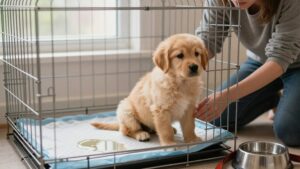
How can you tell if your dog is anxious in the crate? Look for signs that persist or intensify when you confine your dog. You may notice panting, drooling, pacing, trembling, or repeated yawning. Your dog might dig, bite the bars, chew bedding, or make frantic escape attempts. These efforts can break teeth, damage nails, or scrape paws.
Some dogs bark, howl, or soil the crate; others become unusually quiet or withdrawn. Stress may begin as soon as you close the door, or build over time. Refusing food or toys in the crate can also signal distress.
Brief whining that fades while your dog still accepts treats may reflect adjustment. But persistent or escalating distress deserves attention. These are signs your dog needs support.
Response to an Open Crate
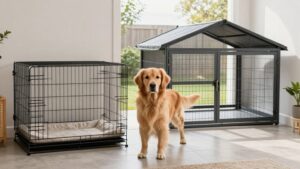
To distinguish crate anxiety from separation-related distress, notice whether your dog chooses to enter an open crate without prompting or a food lure. That choice offers a clue about comfort, not a diagnosis; observe calmly and let your dog set the pace.
- Napping inside suggests your dog may feel safe in that space.
- Taking snacks there can show comfort when the crate stays open.
- Playing with toys inside offers another sign of ease.
- Hesitation may reflect confinement anxiety or unfinished crate training.
- Entering freely with you present, then distress when you leave, may signal separation-related anxiety too.
Keep the door open and let your dog explore at their pace; never push or drag them inside when they resist strongly.
Recovery After Owner Returns
When you return, notice how quickly your dog settles and compare their behavior after crated and unconfined absences. Intense excitement may follow separation distress, particularly when signs began soon after you left. Compare what you observe on camera before and after your return with your dog’s behavior while you’re away; recovery makes the pattern clearer.
If your dog settles when unconfined but panics in a crate, confinement may be a major trigger. If distress continues after you return, don’t assume more crate time will help; panic can intensify, and escape attempts may cause injury. Keep greetings and releases calm. Open the crate door when your dog is calm, not while they’re jumping, pawing, or whining. This pattern can guide your next steps with care.
Daycare and Boarding Suitability
Daycare or a sitter’s home may help during separation-anxiety treatment if your dog stays calm and comfortable there.
Watch behavior; company won’t resolve fear. A dog distressed by your absence may settle when people stay nearby; confinement anxiety can persist even with staff present. Before booking, ask whether your dog must spend periods crated and whether staff can offer an unconfined room, exercise pen, or baby-gated area. Check for:
- Your dog relaxes rather than paces.
- Your dog eats instead of refusing food.
- Staff observe no panting or drooling.
- Your dog makes no escape attempts.
- Camera footage or staff reports show distress isn’t escalating.
If confinement triggers panic, choose another arrangement. You’re not failing treatment by preventing distress; match care to your dog’s limits.
Daily Crate Setup and Cleanup
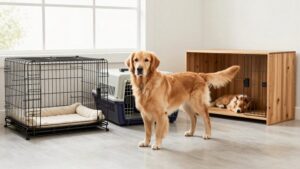
Set up the crate safely before each use: secure the door, remove your dog’s collar and harness, and check that the crate is clean and intact.
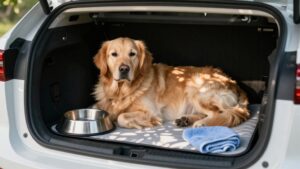
Correct assembly and a secure door help prevent paws or noses from getting caught, so make these checks part of your routine. Keep the space comfortable, and add bedding only if your dog leaves it undamaged. If your dog chews or may swallow fabric, remove blankets and clothing.
Offer water only when your dog can reach it safely without spills or other hazards. Introduce a crate cover while you’re present; some dogs feel trapped, and chewing fabric makes a cover unsuitable.
After each session, look for torn bedding or damaged crate parts, then clean urine or feces promptly. Notice how your dog responds to these changes; discomfort may signal that the setup needs adjustment, not deliberate misbehavior. Make changes as needed.
Crate Injury Warning
Watch for broken teeth, bloody gums, scraped paws, or torn nails after your dog tries to escape the crate. Chewing crate bars or digging at them can also cause injury; bent wires or torn bedding may signal dangerous escape behavior.
- Look for damage around your dog’s mouth, paws, and nails.
- Check the crate for bent wires or shredded bedding.
- Notice whether distress and damage happen only during confinement.
- Don’t force your dog back inside or upgrade to a stronger crate; these steps may intensify distress and risk further injury.
- If your dog is hurting themself, stop using the crate for alone time and contact your veterinarian or a qualified behavior professional.
Damage focused around the crate can point to confinement distress, not simply distress about your absence. These signs aren’t misbehavior; your dog may feel trapped and need a plan.
Comparing Video Monitoring Options
Choose a monitor that lets you compare your dog’s behavior crated and unconfined, and record your usual departure routine. Look for clear video, reliable live viewing, and a way to note when signs like pacing or panting begin. If you can watch in real time, you can return when worry rises and avoid letting distress escalate.
Features That Matter
A useful camera lets you observe a typical departure and the minutes afterward, when separation-related signs may begin. Focus on what your dog does, when it starts, and whether the crate changes the picture. Compare brief, safe observations in the crate and with more space, and note your dog’s response while you’re present versus after you leave. Watch for:
- Panting or drooling
- Repeated yawning
- Pacing or circling
- Distress only while confined
- Distress after you leave in either setting
If signs appear, return before worry escalates. A recording can help you spot the threshold and identify a gentler starting point for gradual training. Distress limited to the crate may suggest confinement anxiety; distress in both settings, especially after departure, may point to separation-related concerns too.
Choosing the Right Monitor
The right monitor helps you see when and where your dog’s distress begins. Choose a camera that lets you watch live when possible and record a typical departure. Signs can start within minutes, so checking only after you return may miss the change in behavior.
To distinguish crate-related distress from separation anxiety, compare recordings of your dog alone in the crate and alone while unconfined, but use the second setup only if it’s safe. Note when panting, drooling, pacing, barking, or escape attempts begin, and whether they appear in one setting or both. The timing and context matter more than a single behavior.
If distress escalates, return rather than letting it continue. Review the footage to find a shorter, calmer starting point for training. A monitor helps you observe; it doesn’t replace a gradual, behavior-focused plan tailored to your dog.
Audio Alerts During Absences
Set audio alerts on a camera to hear when your dog starts barking or howling after you leave, and compare recordings from crate and non-crate absences. Note whether vocalizing begins soon after departure or follows another trigger, and listen for crate-specific scratching, digging, or bar-biting. Alerts can help you return before distress escalates; check video too, since a quiet dog may still show stress through panting or pacing.
Set Up Absence Alerts
Use a camera or audio monitor to alert you to barking, howling, or other signs of distress while your dog is alone, and note when they begin. Watch a typical departure, including the routine your dog knows.
- Notice whether distress starts within minutes; this helps show how quickly solitude becomes difficult.
- Compare a loose-at-home absence with crate time: distress only in the crate may suggest confinement anxiety.
- If it occurs in both settings, separation anxiety may be involved.
- Save recordings to assess pacing, panting, drooling, escape attempts, or vocalizing you can’t see live.
- If an alert signals escalating distress, return and shorten the next practice absence; keep training below your dog’s anxiety threshold.
Use observations to guide humane training, not to diagnose your dog.
Track Vocalization Patterns
Once alerts are in place, listen for when your dog’s barking or howling begins during a typical absence and whether it continues, comes and goes, or stops. Use a camera or audio monitor, then compare recordings from crate absences with those when your dog has more freedom. If vocalizing starts when you leave and persists without a cause beyond separation, it may signal separation-related distress.
If it occurs mainly in the crate, confinement anxiety may matter; if it happens in both settings, separation anxiety may be more likely. Listen for panting, pacing, or escape attempts. If your dog’s vocalizing escalates or other distress signs appear, return rather than letting your dog panic. Use the recording to choose a calmer starting point for gradual training.
Distinguish Triggers From Distress
A camera or audio recording can help you tell whether your dog’s distress starts when you leave, when the crate door closes, or after an outside sound. Note the timing of barking, howling, panting, pacing, or escape attempts, then compare it with likely triggers.
- Leaving: Does distress begin as you walk out?
- Crating: Does it start when the door closes?
- Noise: Does vocalizing follow a slam or traffic?
- Compare recordings of your dog alone in the crate and unconfined.
- Distress in both may suggest separation-related anxiety; mainly in the crate may indicate confinement anxiety.
A sound-linked response may reflect that trigger, not fear of being alone or confined. Return before worry escalates; use recordings to find your dog’s calm starting point, not to permit repeated or prolonged distress.
Veterinary Medication Review
Before treating house-soiling as anxiety, ask your veterinarian to review your dog’s medications, since some can increase urination.
A veterinary assessment can also check for medical problems such as urinary incontinence before you begin behavior modification. Incontinence may cause your dog to soil without awareness; you might notice urine leaking during sleep. That kind of accident doesn’t necessarily signal distress about being alone or confined.
Share the timing and location of each accident with your veterinarian. Explain whether it happens only when your dog is alone or in a crate, or also when you’re home. These details help your veterinarian distinguish a medical cause from anxiety and guide the next steps. Then you can tailor behavior changes to your dog’s needs without overlooking health.
Conclusion
A video can help you see whether your dog struggles with confinement, separation, or both. Look for patterns: distress that continues with an open crate, slow recovery after you return, or injuries deserves prompt attention. Use monitoring tools to gather useful evidence, not to diagnose or punish. Share recordings and notes with your veterinarian or a qualified behavior professional. With their guidance, you can choose safer care, including daycare or boarding when appropriate, and support your dog’s comfort.
Furniture Crate Room-Fit Checker
Check if a furniture-style dog crate fits your wall space (with door clearance) and each dog, using the USDA minimum or your own buffer.
Crate Pad Size Finder
Enter your crate's interior length and width to get a target crate pad size and the closest pad size found in our dated shelf snapshot.