Are Ruff Land Kennels Worth It? Weight, Durability and Price Reality Check
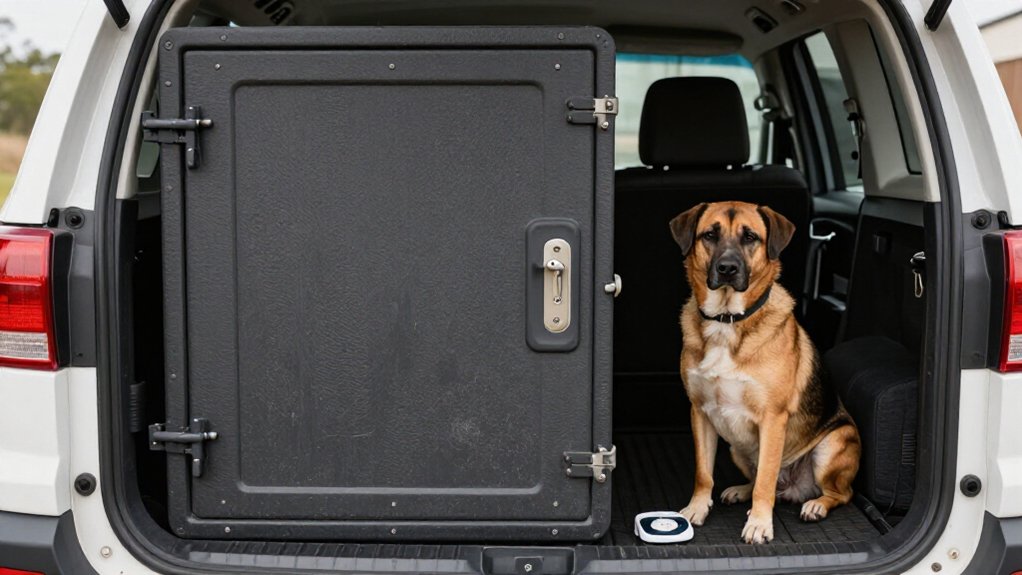
A Ruff Land kennel can be worth $350–$425 if you need a lighter, easier-to-transfer option: the Intermediate weighs about 20 pounds, versus roughly 48 pounds for a comparable Gunner. Its durable one-piece body has replaceable doors and latches, but the kennel isn’t crash-tested, and its lifetime warranty excludes doors and handles.
Check interior fit, vehicle anchors, ventilation, and your airline’s rules before buying; features and a lower price don’t guarantee safer travel or stronger resale value. The details can help you decide.
Ruff Land Weight Reality
At about 20 pounds, the Intermediate Ruff Land is far easier to move than a same-size Gunner, which weighs roughly 48 pounds.
You notice the difference when you transfer a crate among cars, hotels, and events, especially if you make frequent trips. Its more compact exterior can also fit sedans and smaller cargo areas where Gunner’s thicker, heavier build may feel cumbersome.
The one-piece body has finger holes for handling, but you’ll still need to judge whether it’s comfortable to carry. For a petite reviewer, carrying it felt awkward; optional top-mounted handles are designed to help.
That portability has limits. You can’t disassemble the kennel, so storage and transport remain dependent on its full shape. It hasn’t been crash tested, a safety limitation for you to weigh.
Match Kennel Size to Your Dog
To choose the right Ruff Land kennel, compare your dog’s measurements with the interior dimensions and consider how long your dog will stay inside.
The Intermediate measures 31 × 20 × 23 inches outside and about 30 × 19.5 × 22 inches inside, so check fit against interior dimensions. Measure your dog and allow room to move. Ruff Land doesn’t recommend sizes by breed; ask your veterinarian or trainer if you’re unsure.
The Intermediate may suit short trips or events, but you might prefer more room for all-day stays. For a larger dog in a smaller vehicle, its compact exterior can help, but confirm the interior offers enough room. Compare available kennel sizes with your dog’s measurements and your vehicle’s usable space before buying.
Door and Latch Design
Ruff Land lets you choose single- or double-door configurations, with rear or side access to suit your vehicle layout. You can also set either door to swing in the direction that works best beside your car or inside your home. That flexibility matters when a tailgate or nearby wall blocks the usual approach.
Easy-squeeze latches are straightforward for children to operate, yet the reviewer found them secure against a dog’s escape attempts. If a latch or door component gets damaged, replacement parts are available.
| Choice | Practical effect |
|---|---|
| Rear door | Standard access |
| Side door | Alternate route |
| Double doors | More entry options |
| Swing direction | Fits placement |
Unlike Gunner’s single lockable metal door, Ruff Land can give you another access route when your tailgate is blocked. Check door clearance where you park.
Option Packages and Upgrades
You can choose a Ruff Land base model with single or double doors, placed at the rear or side to fit your vehicle. Tie-down kits and other add-ons let you tailor the kennel, while door covers, liners, pads, and temperature-control options address specific needs. Expect to pay about $350–$425, depending on configuration and retailer, with package choices affecting the final price.
Base Model Features
The base Ruff Land kennel combines durable, flexible one-piece composite construction with single- or double-door options and door placements to fit different vehicle layouts. Its composite shell can flex under pressure while resisting the wear of regular travel, giving you a practical balance of durability and weight. You can tailor the setup with optional liners, door covers, pads, insulated covers, or a fan, depending on your climate and how you use the kennel.
Handles and tie-down kits are also available; threaded, pre-drilled holes accept optional handles. A top-mounted tray adds storage, and you can choose a model with built-in water storage. At purchase, compare accessory costs with your needs, since each add-on increases the total price and may require extra space in your vehicle.
Door Upgrade Options
Door configuration can be tailored to your vehicle and access needs, with single- or double-door models offering rear or side placement. Choose a layout that keeps the entrance clear when your vehicle is packed; doors swing either way, letting you fit the opening to available space. A second door can help if cargo blocks one side and may improve airflow.
Ruff Land offers composite and wire doors, plus covers and liners. Check options before ordering, since they affect price. You can buy replacement latches and door parts if damaged. Note the lifetime warranty covers the kennel body, not doors or handles. Weigh convenience against added cost. Confirm accessory fit before buying, and choose a material based on cleaning and visibility needs for your routine.
Tie-Down Add-Ons
A tie-down kit lets you secure your Ruff Land kennel in a vehicle, which can be useful when moving the roughly 20-pound Intermediate model between cars. If you switch vehicles, the add-on lets you anchor the kennel instead of relying on weight or placement. For smaller cars, its lighter, single-piece design is easier to handle.
Check that the hardware suits your vehicle; details on components and fit aren’t specified. Don’t mistake tie-downs for crash protection: Ruff Land hasn’t crash tested the kennel. The kennel body has a lifetime warranty, but accessories and hardware may not share that coverage. Confirm coverage with the seller before buying. Review installation guidance and your vehicle’s anchor points before travel, since the kit’s performance details aren’t publicly listed.
Package Price Differences
Depending on the door configuration and retailer, Ruff Land kennels cost about $350–$425 as of July 2026, with double doors typically adding cost in exchange for more flexible access and airflow.
Compare single- and double-door prices before you choose; the right layout depends on where you’ll place the kennel and how you’ll load your dog. Optional extras can widen the final bill: door covers, door liners, handle sets, replacement handles, tie-down kits, and pads. You can also buy top-mounted storage trays, including a version with built-in water storage, plus insulated covers and fans for temperature management.
Treat these as targeted upgrades, not necessities; add only what suits your vehicle, climate, and routine. The kennel body has a lifetime warranty, but doors and handles aren’t covered. Budget for possible replacement parts, too. Check which items come bundled before comparing retailer listings.
Airline Travel Restrictions
Ruff Land offers single- and double-door kennels, but you shouldn’t assume an airline will approve either for cabin or cargo travel. Check your airline’s current size limits and cargo-hold requirements, including rules for doors, latches, ventilation, and accessories. Measure your exact model before booking; the Intermediate kennel is 31 × 20 × 23 inches.
Airline Size Limits
Before booking, check your airline’s exact pet-carrier rules for your aircraft and route; limits vary, and the available information doesn’t confirm Ruff Land models’ airline dimensions or approval.
For your trip, verify the specific kennel and configuration directly with the carrier before you buy or book. Airline size limits can differ by carrier, aircraft, and route, so don’t assume an Intermediate kennel, about 31 × 20 × 23 inches, fits. Measure its outside dimensions, including handles and other attachments, then compare them with the airline’s published maximums.
Ruff Land’s customizable doors and vents don’t prove that a model qualifies as an approved pet carrier. Because these kennels are rigid and one-piece, ask the airline to confirm it’ll accept your exact kennel before travel, in writing.
Cargo Hold Requirements
For cargo travel, don’t assume a Ruff Land kennel meets airline requirements: rules may specify door, latch, ventilation, and handle designs. Ruff Land offers single- and double-door versions, but either may differ from an airline’s required construction. Check current cargo-crate specifications before booking, and compare them with your exact kennel.
The Intermediate model measures 31 × 20 × 23 inches externally; verify all dimensions against stated limits, including rules about protrusions or usable space. Its lightweight, one-piece build may ease handling, but doesn’t establish cargo eligibility. Because requirements can change, check the airline’s current instructions rather than relying on a kennel listing or older advice. Ask the airline to confirm your specific model and size in advance, and keep its response with your travel documents.
Carrier Approval Policies
Airline approval isn’t established by the information available, so check your carrier’s current rules before booking. Ruff Land doesn’t provide enough information to confirm that its kennels meet any airline’s requirements. Review the rules for kennel size limits, door and latch security, ventilation, and accepted materials, then ask the carrier to confirm whether the model is allowed on your route.
Don’t rely on crash testing or a lifetime warranty as proof of airline acceptance; those features don’t establish compliance with carrier policies. Also confirm whether the kennel’s door configuration and accessories, including covers, fans, or water-storage trays, are permitted. Policies can vary by airline and itinerary, so get guidance from the carrier before you buy or travel. Save a written response with your booking details.
Measure Before Booking
Measure the kennel’s exterior dimensions and compare them with your airline’s current crate limits and aircraft-specific restrictions before booking.
The Intermediate model’s standard dimensions are about 31 × 20 × 23 inches, but those figures don’t represent its full exterior size. Check the exact measurements for your chosen door configuration, then compare them with the aircraft’s cargo-door limits.
Airlines may also require your dog to stand, turn around, and lie down comfortably inside the kennel, so verify animal-fit rules alongside maximum dimensions. Optional Ruff Land doors and vents don’t guarantee acceptance.
Ask the airline to approve the exact kennel and setup in advance, and get its response in writing before you buy a ticket or travel to the airport. Aircraft cargo dimensions and airline policies can vary, so confirm each flight segment rather than relying on old approval or assumptions from another route.
Vehicle Tie-Down Compatibility
Before buying, check that Ruff Land’s optional tie-down kit matches your vehicle’s cargo-area anchors. Confirm the kennel and kit fit your anchor locations before ordering; anchor layouts and strap paths vary by vehicle.
The Intermediate model weighs about 20 lb., so you can position it for tie-downs more easily than the roughly 48 lb. Gunner. Gunner has four metal tie-down points, but the available information doesn’t specify Ruff Land’s point count or crash-test results for its restraint setup.
Ruff Land’s flexible, one-piece body and optional door configurations may help it fit your vehicle, but fit alone doesn’t prove crash-tested restraint performance. For either kennel, verify that your chosen straps or kit attach securely to your vehicle’s anchors and suit the kennel’s configuration as installed.
Resale Value Over Time
Ruff Land’s lower purchase price, about $350–$425 versus roughly $700 for a comparable Gunner, may limit how much you risk losing in dollars, but it doesn’t establish stronger resale value.
Your eventual return depends on condition, local demand, and whether buyers can get the configuration they want. Ruff Land provides no resale prices or depreciation data, so you can’t reliably estimate what you’ll recover. Its lifetime warranty on the kennel body may support long-term ownership value, but it excludes doors and handles.
Durable composite construction and replacement latches and doors can help you keep the kennel usable rather than replace it after wear. Still, warranty coverage doesn’t guarantee a buyer will pay more for a used unit. If resale matters, compare local listings, confirm the included parts, and keep records of condition and purchases. Treat any future sale price as uncertain, and choose Ruff Land primarily for its upfront cost and continued utility.
Improper Ventilation Openings
Although Ruff Land’s tapered walls help keep its ventilation openings clear when you place the kennel against a wall, airflow is lower than in a basic metal crate. That difference matters if your dog spends long periods indoors or your room runs warm. Check these options before buying:
- Adjust customizable vents for your setup; don’t expect metal-crate airflow.
- Use a second door only if you have room to open it.
- Add an optional fan to help manage heat.
- Try an insulated cover in cold conditions, while monitoring airflow.
At home, assess your dog’s ventilation needs, especially in warm rooms, rather than relying on the openings alone indoors.
Cleaning Muddy Kennel Floors
The raised interior floor channels mud, debris, and liquids away from your dog, but water can collect in the channel and be hard to drain. That design helps keep your dog above wet mess, but it adds a cleanup step after muddy outings. Use this routine:
- Remove your dog and loose debris before rinsing.
- Direct water through the channel, then check its full length for pooled runoff.
- Wipe muddy residue from the channel so it doesn’t stay trapped.
- Let the floor dry before bedding goes back in.
The reviewer suggested a drain plug or hole near the bottom to ease draining, but you’ll still need to wipe the channel clean. Until then, allow extra time after rinsing when mud settles into the floor groove.
Conclusion
Ruff Land kennels can be worth the price if you prioritize lighter weight, durable construction, and a fit that suits your dog and vehicle. Before buying, check the door, latch, ventilation, tie-down setup, and cleaning needs against your routine. Don’t assume every model or option meets airline rules; confirm requirements directly with your carrier.
Compare the total cost with alternatives, then consider resale value. If the kennel matches your real use, you’ll get more value from it over time.