Are Heavy-Duty Dog Crates Worth It? Who Really Needs One
Are Heavy-Duty Dog Crates Worth It? Who Really Needs One
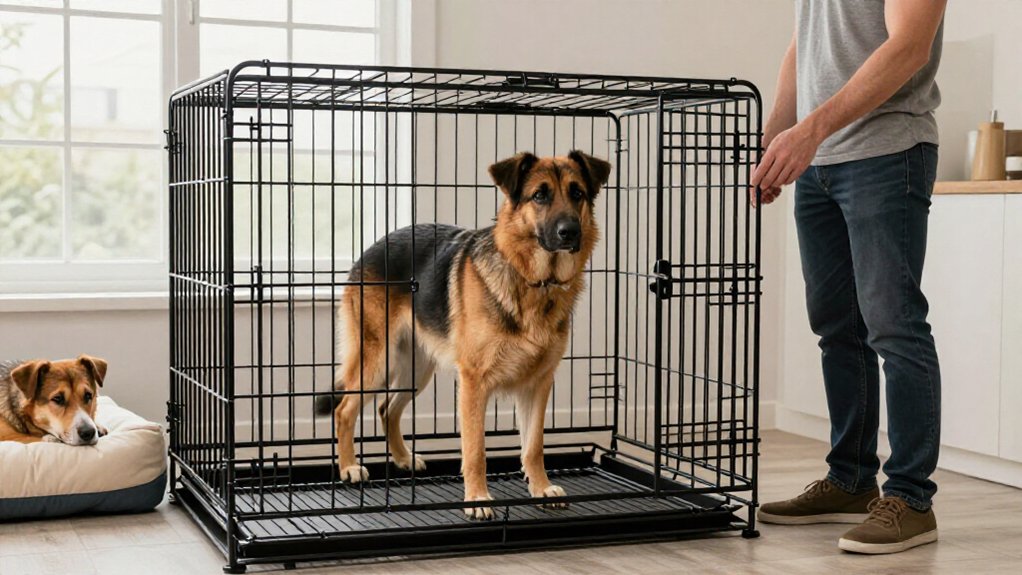
A heavy-duty dog crate may be worth it if your dog repeatedly bends, chews, or escapes standard crates, or if you need an enclosure for kennel, grooming, or breeding use. Choose reinforced frames, secure multi-point locks, and paw-safe openings, but remember that stronger hardware won’t treat separation anxiety or confinement distress.
For car travel, use a sized, crash-tested crate secured as directed. Compare warranty, replacement, and storage costs; details below can help you decide.
Dogs That Break Crates
If your dog bends wire, cracks plastic, or chews through a standard crate, a heavy-duty aluminum model may better resist damage. Choose a model with reinforced door frames and at least three locking points; a single latch can give a determined dog leverage to force the door. Some high-anxiety designs use aluminum panels up to 60% thicker than entry-level crates, along with smaller ventilation openings and escape-resistant hardware.
A dog-damage guarantee can limit replacement costs: the High Anxiety Crate, for example, includes a lifetime guarantee that replaces the crate at no cost if your dog breaks it. Check the guarantee’s terms before buying, and make sure the crate’s size and setup suit your dog. Inspect hinges and seams, since repeated impacts can loosen hardware over time.
Anxiety-Driven Escape Attempts
Even a crate that resists chewing may not be safe for a dog in severe confinement distress. Dogs with separation anxiety or confinement distress may bite, claw, or force their way out, making a flimsy enclosure an escape and injury risk. For an escape artist, choose a heavy-duty aluminum model with reinforced panels and a sturdy door frame to resist bending. Look for ventilation openings around half an inch wide; these can limit tooth engagement and reduce risks to teeth and nails.
Stronger hardware won’t treat anxiety. Excessive barking, pacing, panting, drooling, or elimination may mean crating alone worsens your dog’s distress. Seek veterinary or behavior guidance; don’t rely on crating alone to manage distress.
Crate Door Lock Types
Heavy-duty crates use butterfly or paddle latches, often with reinforced door frames that spread force. If your dog pushes, claws, or chews at the door, choose at least three locking points; one latch can leave leverage for a determined escape attempt. Multiple locks help, but the frame and overall construction matter too. Check each lock’s secure action and quick human release; for travel, choose a crash-tested crate, since a strong latch alone doesn’t establish crash protection.
| Lock feature | Practical check |
|---|---|
| Butterfly latch | Confirm it engages fully. |
| Paddle latch | Test smooth release. |
| Three locking points | Reduce door leverage. |
| Reinforced frame | Spreads pushing force. |
You should release locks without tools; pair secure hardware with gradual, positive crate training and supervision.
Aluminum Versus Steel Crates
When you compare aluminum and steel crates, consider weight, portability, strength, and how each material holds up to rust and cleaning. Steel can suit a sturdy, stationary setup, while some aluminum models weigh less and fold for storage or travel. Compare cost, construction, and locking points, too—your dog’s safety depends on the design, not just the material.
Weight And Portability
How often will you need to move the crate? If you’ll carry it between rooms, load it into a vehicle, or store it after use, weight matters. Aluminum models weigh less than comparable heavy-duty steel crates, so a large crate can be easier for you to handle. Some high-quality aluminum crates around 48 inches weigh substantially less than similar steel models. That difference can make repositioning easier, especially if you move the crate alone.
For travel or occasional use, a collapsible aluminum model folds flat without tools, simplifying transport and storage. Before buying, check the crate’s unfolded weight and folded dimensions. Confirm you can lift and fit it in your vehicle or storage area. Choose based on your actual moving and storage needs, not material alone.
Strength And Durability
Although both materials can make durable crates, aluminum and steel differ in how they handle force and daily use. With an anxious or persistent chewer, look beyond the label: thick-gauge or aircraft-grade aluminum can resist bending, denting, chewing, and escape attempts when its panels and frame are reinforced. Some high-anxiety models use panels up to 60% thicker than entry-level versions, while reinforced door frames spread force across locking points.
Steel offers a sturdy option, though welded construction can make it bulky. Compare panel thickness, frame strength, door reinforcement, locking hardware, and warranty coverage carefully before you buy. A lighter crate isn’t weaker, and a heavier one isn’t safer; match the build to your dog’s size, behavior, and escape risk.
Corrosion And Maintenance
For humid spaces or frequent cleaning, aluminum’s natural resistance to rust can be a practical advantage. Its smooth, nonporous surfaces are easy to sanitize, which may help you meet hygiene needs. That doesn’t mean aluminum is maintenance-free: follow the manufacturer’s care instructions and check for damage.
Steel can also serve well, but comparable steel crates may weigh more, making them harder for you to move during cleaning or storage. For either material, inspect doors, frames, and fasteners regularly, and watch for worn finishes or loose hardware. Corrosion resistance alone won’t tell you how long a crate will hold up; construction quality and the condition of its components matter, too. Keep your dog’s comfort and safety in view as you clean and maintain the crate.
Cost And Best Uses
A heavy-duty aluminum crate can cost $400–$800 or more, compared with about $60–$150 for a large-dog wire crate. Replacing cheaper crates after escape attempts can make aluminum a better long-term value. Its lower weight than comparable steel can ease moving and travel, but check the crate’s weight and folded dimensions; some models collapse flat.
You’ll get the most from aluminum if your dog escapes, chews heavily, is anxious, or travels. Groomers, kennels, and breeders may need durable, sanitizable equipment for repeated use.
For a calm dog in a low-stress setting, or a puppy who needs a divider, a quality wire or plastic crate may meet your needs for less. Compare total ownership costs, including warranty and dog-damage coverage. Some aluminum models include lifetime protection; others charge extra.
Travel and Vehicle Setup
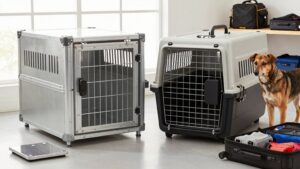
For car trips, secure your dog in a properly sized, crash-tested crate; ordinary wire or plastic crates may fail in a collision. Choose vehicle-ready features such as bolt-down points, reinforced construction, secure doors, and impact-absorbing zones, and check the crate’s weight and folded dimensions if portability matters. Pack water, familiar bedding, a favorite toy, and a first-aid kit to make travel safer and more comfortable.
Secure Vehicle Placement
Secure the travel crate in a stable spot and use its bolt-down points, if available, to help keep it from shifting during a sudden stop or crash. Choose a position where the crate fits without blocking your view, controls, or access to exits. Check the fit before you leave; a tight, level placement helps you secure it without bending or obstructing ventilation. Don’t assume a home wire or plastic crate can handle vehicle movement: it may break, collapse, or become a hazard if thrown around the car.
Keep airflow clear, and don’t add straps or coverings that compromise the crate’s structure.
Make the trip more comfortable by packing water and a travel bowl, a familiar blanket or pad, a favorite toy, and a first-aid kit. Give your dog room to settle, and check the setup again after loading luggage. Secure loose items so they won’t slide into the crate during travel.
Crash-Tested Protection
In a crash, an unrestrained 60-pound dog can exert about 2,700 pounds of force at 35 mph, putting both your pet and passengers at risk. Standard wire and plastic crates are built for home use, not impact; they may break, collapse, or fly forward during a sudden stop. A crash-tested crate is engineered for vehicle forces, often with reinforced aluminum or steel, secure locking doors, deformation zones, and bolt-down points.
Anchor it securely so it stays in place, while its reinforced shell helps contain your dog and manage impact forces. This protection can be useful if you travel with a large dog, a restless or anxious companion, or a puppy or older dog. Choose tested restraint over assuming a sturdy-looking crate is safe.
Proper Crate Sizing
How should you size a crate for travel? Choose one that lets your dog stand without ducking, turn around, and lie down comfortably. If you’re unsure between sizes, size up, provided the crate fits your vehicle and can be secured for safety.
For a growing puppy, use the adult-size crate recommended by the Sizing Genius tool, then adjust the usable space with a puppy divider. Before buying, check the crate’s unfolded weight and folded dimensions against your vehicle’s available space and your ability to load and store it. For car trips, choose a model designed and crash-tested for vehicle use; a standard home crate isn’t proven collision protection. Use its bolt-down points when available, and confirm the crate fits your vehicle setup before travel.
Travel-Friendly Setup
For regular car travel, choose a crate designed and crash-tested for vehicle use; standard wire and plastic home crates aren’t proven to protect your dog and may break or shift in a sudden stop.
Look for reinforced construction, secure locks, and bolt-down capability; these can help keep the crate in place and contain your dog in a collision. Secure it as instructed; a home crate isn’t crash protection. A tested model may suit frequent travelers and large, energetic, puppy, or older dogs.
Aluminum weighs less than comparable steel, and some collapsible models fold flat without tools. Check folded dimensions and unfolded weight before buying. Pack a travel water bowl, familiar blanket or crate pad, favorite toy, and first-aid kit for comfort and care.
Paw-Safe Bar Spacing
Choose a crate with bar or ventilation-opening gaps too small for your dog’s paws, nails, or teeth to slip into. Check the door and every panel, not just the main walls: a caught paw can cause injury wherever a gap appears.
Your dog’s behavior can guide your choice. Standard openings may suit a calm dog, while a dog that repeatedly bites or claws at the crate may do better with smaller apertures. Some heavy-duty models use openings around ½ inch, which can limit tooth engagement and help reduce the risk of dental fractures and nail injuries.
Smaller gaps don’t have to make the crate stuffy. Look for ventilation holes distributed across multiple panels so air can circulate while paws and teeth stay clear of openings. Choose spacing that fits your dog’s habits and body size.
Cleaning and Replacement Parts
If you clean your crate often, aluminum’s smooth, nonporous surfaces are easier to sanitize than porous materials, and its rust-proof construction stands up to repeated washing without corrosion. That durability can matter if you manage a kennel, groom dogs, or breed them, where cleaning happens often. Still, choose a crate you can clean safely and comfortably, and let surfaces dry before your dog returns.
Before buying, check whether the manufacturer sells replacement doors, latches, panels, or other hardware. A damaged part may not require replacing the whole crate if you can get a compatible replacement. If you’re considering a collapsible model, confirm that it folds without tools and fits your storage space; easier handling can simplify cleaning and transport for busy daily routines.
Warranty Coverage Gaps
Although a standard warranty typically covers defects in materials or workmanship, it may not cover damage caused by chewing, clawing, or escape attempts. Coverage depends on the model, so read the terms before you choose:
- The High Anxiety Crate includes a lifetime dog-damage guarantee.
- Collapsible and Stationary models lack automatic dog-damage coverage; you can add optional lifetime protection at checkout.
- Impact crates carry a Lifetime Manufacturer Warranty, but that isn’t the return policy.
- Their 30-day trial requires like-new condition and original packaging, plus a $50 return shipping/restocking fee.
Ask what damage qualifies, which exclusions apply, and whether the maker repairs or replaces the crate. Don’t assume the build guarantees coverage; clear terms help you plan a humane response to damage. Ask the maker directly.
Long-Term Cost Assessment
A heavy-duty crate costs more upfront, but its long-term value depends on how often your dog damages standard crates and what replacement—or escape—might cost. Compare typical prices before deciding: a large wire crate runs $60–$150; comparable heavy-duty aluminum models cost $400–$800 or more.
- If your dog has wrecked two to four wire crates, replacement costs may narrow or erase the price gap.
- Check whether the lifetime warranty covers defects; it won’t necessarily cover chewing, though some brands include or sell dog-damage protection.
- Include possible escape injuries, swallowed unsafe items, and vet bills; these can exceed the purchase-price difference.
- Choose heavy-duty for escape-prone or destructive dogs, or frequent professional use; for calm dogs crated briefly, quality wire may cost less.
Choose based on risk.
Conclusion
Heavy-duty crates are worth the cost when your dog has repeatedly damaged crates or faces an escape risk, especially during travel. They’re not a fix for anxiety: pair confinement with veterinary guidance and gradual behavior work, and never leave a distressed dog to struggle. Choose a crate with secure, paw-safe spacing, suitable vehicle anchoring, replaceable parts, and warranty terms. If your dog settles safely in a standard crate, you likely don’t need to upgrade.
Dog Crate Size Calculator
Turn your dog's nose-to-tail-base length and standing head height into a nominal crate size (24–48 in), with a weight cross-check.
Furniture Crate Room-Fit Checker
Check if a furniture-style dog crate fits your wall space (with door clearance) and each dog, using the USDA minimum or your own buffer.
Wire Crate Size Lookup & Divider Setter
Compare your dog's weight with maker-stated ranges for each wire crate size, and work out puppy divider spacing from your crate's interior length.
Dog Crate Price Estimator by Size and Type
Look up the median listing price, price range and sample size for dog crates by type and inch length, from a dated Amazon shelf snapshot.
Crate Pad Size Finder
Enter your crate's interior length and width to get a target crate pad size and the closest pad size found in our dated shelf snapshot.