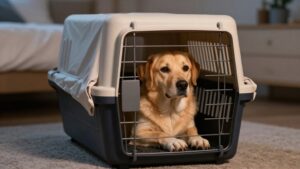
Should You Leave Water in Your Dog’s Crate? Puppies vs Adult Dogs
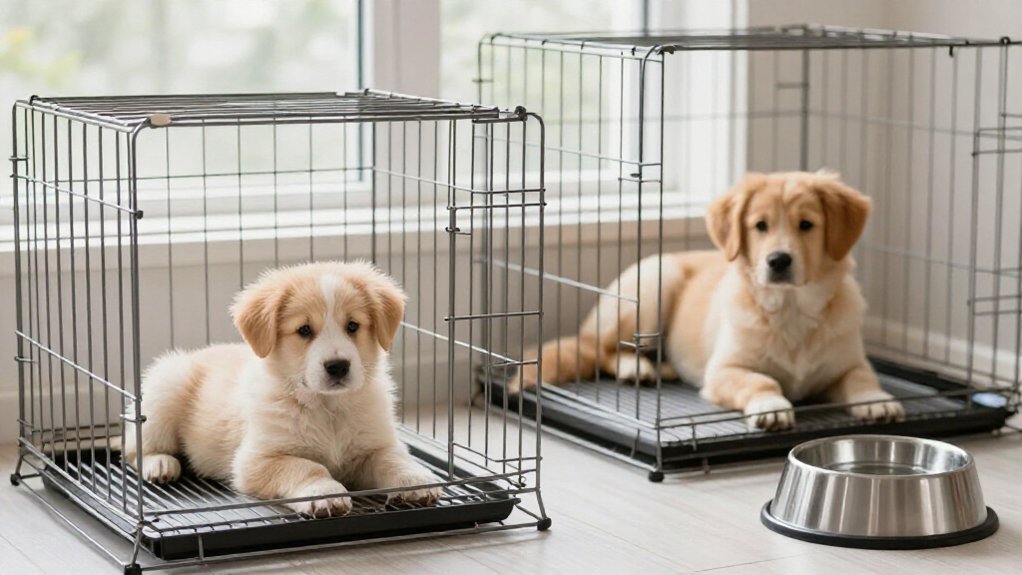
For a healthy adult dog, you can usually leave water outside the crate during a short stay or overnight if they’ve had free access to fresh water and can drink before and after.
Puppies need more frequent access, so offer water and a potty break before crating, then provide regular opportunities, about every two hours. Never restrict water to prevent accidents.
Heat, activity, health conditions, and medications can change your dog’s needs; the guidance below can help you choose a safer routine.
Age-Based Crate Water
Because dogs’ hydration and bladder control change with age, crate-water needs depend on both life stage and how long your dog is confined.
For healthy adults, you can usually omit crate water for short stays or overnight if your dog drinks freely during the day and before and after crating. Beyond three or four hours, attach a secure bowl and arrange an exercise and toileting break.
Puppies need frequent access to fresh water, but crate water can lead to drinking beyond bladder capacity and accidents. Never restrict water for housetraining.
Take puppies out every few hours overnight, gradually lengthening intervals as they grow. Holding-time estimates vary: one guideline suggests an hour per month of age; another adds an hour. Give your dog regular chances to drink, go outside, walk, and play throughout the day.
Puppies’ Smaller Water Reserves
Puppies need steady access to fresh water as they grow, but their small bladders may not keep up if they drink in the crate. Don’t withhold water to prevent accidents; hydration supports growth and health. Instead, plan drinking and potty breaks around crate time. Offer your puppy water and a bathroom trip before you close the door.
Since a young puppy has limited bladder capacity, drinking inside may trigger repeated accidents, discomfort, and stress, and can slow housetraining. Give your puppy opportunities at least every two hours to drink, go outside, walk, and play. Keep fresh water available between planned breaks for comfort and hydration. Adjust the routine to your puppy’s age and signals. If you’re unsure about their needs because of age or health, ask your veterinarian for guidance.
Overnight Hydration Needs
Overnight water needs depend on your dog’s age and health. For a healthy adult dog, you can usually leave water out of the crate overnight if they’ve had steady access to fresh water during the day, unless your veterinarian recommends a different routine.
Puppies need more frequent drinks and bathroom trips. While you’re housetraining, don’t leave water in the crate overnight; a puppy may drink more than their small bladder can hold. Never withhold water to speed training. Offer a drink and a bathroom break before bed, then take your puppy out every few hours overnight, gradually lengthening intervals as they mature.
In extreme heat or with an illness that increases thirst, consult your veterinarian about overnight access and keep the sleeping area cool.
Spill-Proof Crate Water Bowls
To reduce spills, you can attach a bowl to the crate or choose a no-splash design, but check the attachment for leaks. A heavy, secured stainless-steel bowl can resist tipping and is a safer choice than plastic if your dog chews. Clean up spills promptly so your dog’s bedding and crate floor stay dry and comfortable.
Bowl Attachment Options
Because a loose bowl can tip during drinking, clip-on or side-attached bowls are often a steadier choice for crates. Clip-on bowls fit many crate designs and are harder to tip than freestanding dishes, so your dog can drink with less shifting. Side-attached options offer stability and can help limit spills as your dog drinks. Choose a sturdy model that mounts securely and suits your dog’s size and chewing habits.
If your dog chews, stainless steel is a safer choice than plastic; swallowed plastic can injure the gastrointestinal tract. A no-splash travel bowl may also reduce splashes, helping keep bedding dry and the floor comfortable. Even with an attached bowl, check the crate for spills and clean them promptly. This helps prevent soggy bedding and unsanitary conditions.
Leak Prevention Features
For fewer spills, choose a bowl designed to stay steady as your dog drinks. Clip-on or side-attached bowls fasten to crate bars, so your dog’s nudges are less likely to tip them. A no-splash travel bowl can also limit water tossed while your dog drinks.
| Feature | How it helps |
|---|---|
| Clip-on bowl | Resists tipping |
| No-splash design | Limits splashes |
| Heavy bowl | Stays put better |
These options can help, but none guarantees dry bedding. A secured stainless-steel pail or tip-resistant Torus bowl may stay put better than a light, freestanding dish. If you use a mounted water bottle, check it regularly for leaks and drips; even a slow leak can soak bedding.
Clean up spilled water promptly to keep the crate floor comfortable and sanitary. Stay observant.
Safe Bowl Materials
When choosing a spill-resistant crate bowl, consider both how it attaches and what it’s made of. A crate-mounted or clip-on bowl can reduce tipping and keep water from soaking your dog’s bedding. If your dog shifts around, a no-splash travel bowl may help contain water, though no design is completely spill-proof.
Material matters, too. If your dog chews bowls, choose stainless steel rather than plastic: swallowed plastic pieces can injure the digestive tract.
Whatever style you select, check that it’s firmly attached and doesn’t leak; a mounted bottle can drip. Inspect the crate, and wipe up spills promptly. Dry bedding helps keep the crate sanitary. If your dog tends to chew or has health needs, ask your veterinarian which bowl setup is safest.
Activity and Room Temperature
Your dog may need more water after activity, so plan a break for drinking, exercise, and a bathroom trip rather than extending crate time. In hot weather, keep the crate in a cool area and don’t leave your dog crated alone for long, since water can run out and overheating can cause serious illness. Watch for signs of dehydration, and ask your vet about a tailored routine if your dog’s health affects thirst or urination.
Adjust Water For Activity
In a cool room, a healthy adult dog can usually go without water in the crate for one or two hours if fresh water is available before and afterward.
After exercise, your dog may need more frequent access. Don’t solve longer confinement by simply adding water or extending crate time; plan a break.
Puppies need a chance to drink, go outside, walk, and play within two hours. In extreme heat, keep water in the crate and move it to a cool area. Never leave your dog crated alone for long in hot weather: water can run out, and overheating can cause heat-related illness.
| Situation | Water need | Your next step |
|---|---|---|
| Resting | Usual access | Offer before and after |
| Active | May increase | Provide a break |
| Health concern | Varies | Ask your vet |
Consider Room Temperature
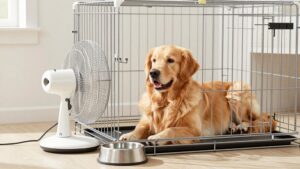
Room temperature also affects how safely your dog can stay in a crate. In extreme heat, leave water available even if your dog will be confined only briefly, and move the crate to a cool area. Keep it out of direct sunlight and away from draughts, which can make conditions uncomfortable. A shaded, well-ventilated spot helps you maintain a steadier environment.
If the room is hot, choose a securely attached bowl or bottle to limit spills, then check that water remains accessible. Don’t leave your dog crated alone for long in hot weather: the supply could run out, and overheating can cause heat-related illness. When temperatures rise, shorten crate time and supervise your dog closely. Your dog’s age and activity matter, but safe temperatures and reliable access to water should guide your setup for your dog, too.
Watch For Dehydration
How long your dog can safely go without crate water depends on age, activity, health, and temperature.
Healthy adult dogs may go without crate water for one or two hours if they drink before and after. Longer stretches call for a break and may warrant a secured bowl. Puppies need chances to drink, go outside, walk, and play; don’t crate them longer than about two hours without a break.
Extreme heat: keep water available even for short periods, and move the crate to a cool area. Never leave your dog crated long in hot weather; water can run out, and heat illness can develop. Activity, warm rooms, diabetes, or Cushing’s disease may increase thirst. Ask your veterinarian about safe water access.
Cleaning Crate Water Bowls
Clean and refill your dog’s crate water bowl regularly to keep the water fresh and hygienic. Rinse the bowl, wash it with dish soap, and remove any residue before adding clean water. A fresh refill matters, but a quick rinse alone may not clear grime that clings to the surface.
Follow the bowl maker’s care instructions, and let it dry or rinse it thoroughly so soap doesn’t remain.
During crate breaks, check the bowl and nearby bedding for splashes or messes, especially if your dog tips the bowl or paws at the water. Wipe spills promptly; soggy bedding can feel cold and uncomfortable. A securely attached bowl can limit tipping and reduce cleanup, helping you keep your dog’s space dry and comfortable.
Check again after refilling to make sure the bowl sits firmly and water hasn’t spilled onto surrounding bedding.
Medical Conditions and Medications
A clean, securely attached bowl helps keep crate water hygienic, but some health conditions also affect how much your dog drinks and urinates. Diabetes, Cushing’s disease, and other thirst-related conditions can increase urination, so your dog may need to go more often while crated. With diabetes, accidents aren’t simply the result of drinking extra water: the kidneys remove excess sugar, increasing urine output and prompting the body to draw more water from the intestines. This can worsen dehydration as well as urgency.
Don’t limit water to prevent accidents if your dog has a condition affecting thirst or hydration; needs vary with health. Medications may also change drinking or urination. Ask your veterinarian whether your dog should have water in the crate, considering the diagnosis, prescribed medications, and time spent crated. Your vet can help balance hydration needs with practical crate arrangements and advise you about any changes to monitor.
Punishing Crate Accidents
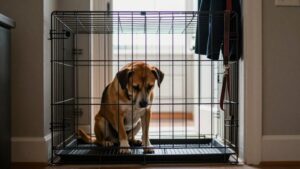
If your dog has an accident in the crate, don’t punish them; it can make the crate feel frightening instead of safe.
- Treat an accident as information: your routine may need adjusting.
- Offer water and a bathroom break before crating; give puppies frequent outdoor chances.
- Puppies generally need a chance to drink, go outside, walk, and play within two hours.
- Clean wet bedding promptly to keep the crate comfortable and sanitary.
Don’t withhold water as housetraining punishment. Keep daytime water available, and ask your veterinarian about your dog’s health or individual crating needs. If accidents continue, consider whether your dog needs an earlier bathroom break or more frequent outings.
Respond calmly, clean the area, and use the pattern to guide practical changes—not blame.
Build Crate Time Gradually
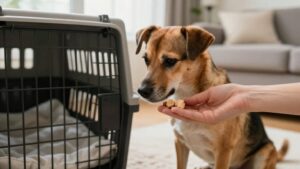
Build your dog’s comfort with the crate in small, positive steps. Secure the door open, then reward your dog for approaching and entering. Keep early sessions to about three minutes, and move forward at your dog’s pace; that may take minutes or days.
When your dog enters comfortably, close the door during meals and open it when eating ends. Gradually extend crate time to about 10 minutes after meals. For alone-time practice, stay nearby at first, then step away briefly and slowly increase your absence, working toward half an hour without distress.
Watch your dog’s body language. Whining, panting, excessive barking, cowering, or aggression can signal that you’ve moved too quickly. Make the next session easier, and wait for a brief quiet pause before opening the door. Don’t force progress.
Conclusion
Whether you leave water in your dog’s crate depends on age, health, activity, and room temperature, not a one-size-fits-all rule. Puppies may need more frequent access because they’re still growing and have smaller reserves; adult dogs may manage overnight without a bowl, but individual needs vary. Use a secure, clean, spill-proof bowl when appropriate, and ask your veterinarian about medical conditions or medications.
Build crate time gradually, offer water and bathroom breaks, and never punish accidents. Your dog’s comfort and safety come first.
Furniture Crate Room-Fit Checker
Check if a furniture-style dog crate fits your wall space (with door clearance) and each dog, using the USDA minimum or your own buffer.
Dog Crate Price Estimator by Size and Type
Look up the median listing price, price range and sample size for dog crates by type and inch length, from a dated Amazon shelf snapshot.