How to Calm a Dog in a Crate: Sound, Scent and Routine That Work
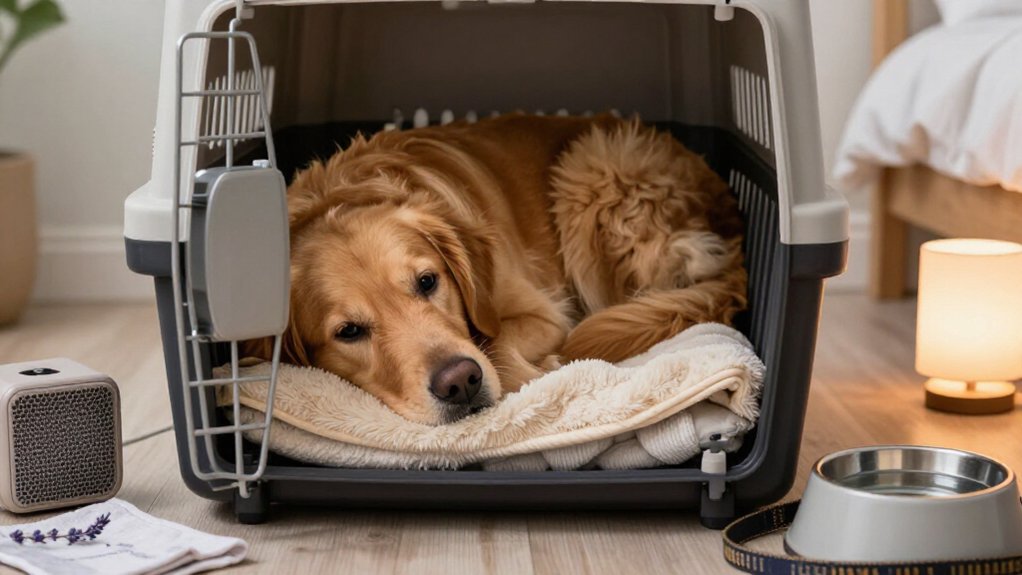
To calm your dog in a crate, keep the space well ventilated, comfortable, and supplied with fresh water. Add a familiar scent, such as a T-shirt your dog won’t chew, and try quiet classical music, rain, or white noise.
Build a predictable routine and use treats to reward voluntary entry. Increase closed-door time gradually, watching for signs of stress.
If your dog remains distressed, slow down and consult your veterinarian. The steps below can help you adjust the setup and pace.
Choose Crate-Calming Music
Music can provide a calm backdrop for crate time. Choose slow, string-heavy classical pieces or gentle rain, ocean, or white-noise soundscapes. Keep the volume low, and use the same calming playlist consistently so your dog can associate it with relaxed crate sessions.
Introduce the sound during brief, positive practice sessions, pairing it with a supervised chew or frozen treat. A shelter-dog study found that dogs exposed to classical music rested more and barked less than dogs exposed to other sounds. That finding suggests classical music may help, but your dog’s response matters most. Watch for signs of increased stress, such as restlessness or vocalizing, and adjust the sound or volume if needed. If music seems unsettling, turn it off and try a gentler option later.
Check Crate Ventilation
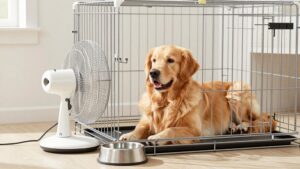
A calm playlist can support crate time, but your dog also needs cool, freely circulating air. Choose a well-ventilated crate so your dog can breathe comfortably and heat won’t build up. Then check the setup:
- Keep every vent clear; don’t drape fabric over the crate.
- If you use a blanket, cover only part and confirm air moves freely.
- Place the crate away from excessive heat, and watch for panting or other signs of overheating.
- Arrange bedding and comfort items so they don’t block vents or restrict airflow.
If your dog pants, seems distressed, or the space feels warm, adjust the location and remove anything obstructing circulation. Recheck regularly; comfortable airflow supports safer, calmer crate time, while your dog still needs room to rest naturally.
Step 1: Introduce a Familiar Scent
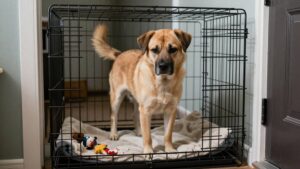
To make the crate feel more reassuring, place a familiar-scented item, such as an old T-shirt that smells like you, beside your dog’s bed or blanket. Add the item inside the crate, where your dog can investigate it without losing room to stand, turn around, and lie down.
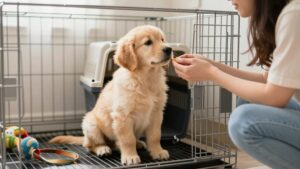
Let your dog approach both the fabric and crate at their own pace; don’t push, shut the door, or insist on contact. When your dog shows calm curiosity, offer a treat or quiet praise. This helps make the experience positive without forcing closeness.
Before leaving it in place, check that the fabric is safe: if your dog chews or may swallow it, choose another option and supervise. Keep the crate a calm, positive place, never punishment.
Step 2: Place Water Within Reach
Keep fresh water within reach by placing a stable, crate-safe bowl where your dog can drink without tipping it over. Check that the bowl leaves enough room for your dog to stand, turn around, and lie down comfortably; access to water shouldn’t make the crate feel cramped.
Keep water available during crate time, especially in warm weather or after exercise, and inspect it regularly to confirm it remains clean and within reach. If your dog knocks bowls over, use a securely attached crate bowl, then confirm your dog can drink from it easily.
Don’t withhold water to stop whining. Your dog may be thirsty or need a break, so check those needs rather than treating vocalizing as misbehavior. This protects comfort and health, too.
Step 3: Start a Crate-Calming Routine
Build a predictable routine by using the crate for meals, naps, and enrichment, while keeping feeding, exercise, play, and sleep schedules consistent. Start with the door open in a quiet, comfortable spot. Let your dog explore voluntarily; place treats, toys, or meals inside, and never force entry.
When your dog enters readily, close the door for 15–30 seconds while you stay nearby. Reward calm behavior, then increase the time gradually. Pair each brief session with the same soft classical music, rain, or ocean sounds at low volume. Add a familiar blanket or a T-shirt carrying your scent, and offer a food puzzle if it’s safe for your dog. Predictability and gradual practice can help your dog feel secure, but let their comfort guide the pace.
Step 4: Offer a Long-Lasting Chew
Offer a favorite chew or stuffed toy in the crate to make the space more rewarding and give your dog something to do. Choose a chew that holds your dog’s interest without being too difficult, and match it to their age, size, and chewing style. When you’re introducing a new item, stay nearby and watch how your dog uses it; stick with chews you know are safe. For time alone, choose only toys or chews specifically designed for unsupervised crate use, and ask your veterinarian if you’re unsure.
Pair the chew with brief, positive crate sessions, then gradually extend them as your dog remains comfortable. Keep each experience calm, and let your dog enjoy the reward at their own pace without rushing your dog.
Step 5: Track Your Dog’s Settling Time
A chew can make crate time more rewarding, and tracking how quickly your dog settles can show whether the routine is helping. After each crate entry, note the minutes until your dog lies down, along with any restlessness, whining, or barking. Record the session’s length and context, including time of day, exercise beforehand, and whether you used calming music or a familiar scent. These details reveal patterns.
Compare settling times, and increase crate time gradually only when your dog settles comfortably. If settling takes longer or stress signs worsen, make the next session shorter. Check whether your dog needs a potty break, exercise, or a calmer setup. If distress persists or intensifies, share your notes with your veterinarian or a qualified behavior professional.
Step 6: Wipe Up Spilled Water
After your dog drinks, check the blanket, bed, and crate floor for spills. Even a small amount of water can leave bedding damp, making the crate less comfortable and harder for your dog to settle in. Blot wet areas promptly with a towel, and remove any soaked bedding rather than leaving it in place.
Before the next crate session, make sure the blanket and bed are dry, or replace them with clean, dry items. A comfortable resting space supports a more positive crate experience; it doesn’t require special products. You can choose a stable water bowl designed to fit your crate, which may help prevent tipping and reduce mess. Keep water available as appropriate for your dog, and check beneath the bowl, too.
Log Crate-Calming Signals
To see what helps your dog settle, keep a brief log of each crate session. Note the time, duration, sounds or scents you used, and whether your dog settled. Record observable signals: lying down, resting, breathing slowly, or choosing to enter the crate.
Also note stress signs, such as panting, pacing, whining, or trembling; these tell you the setup may feel difficult. Include what happened before and during each session: exercise, meals, toys, music, white noise, or familiar scents. Compare sessions for patterns. Track how long your dog stays calm, and add crate time gradually only while your dog remains comfortable.
If distress continues or worsens, share your notes with your veterinarian or a qualified behavior professional to plan next steps.
Crate-Door Resistance Fixes
Your session log can reveal whether the crate door is the sticking point. Keep it open first, rewarding each voluntary approach or entry with treats and praise. Feed meals or offer a supervised favorite chew inside to build trust before practicing closure.
When your dog relaxes inside, close the door for just five to ten seconds, then open it and reward calm behavior. Increase time gradually, staying nearby during early closures. Step away briefly only after your dog feels comfortable.
| Moment | Your response | What it builds |
|---|---|---|
| Approaches | Reward gently | Hope |
| Settles inside | Offer chew | Safety |
| Whines or panics | Pause; check needs | Trust |
Check for potty breaks, hunger, boredom, or anxiety; don’t force longer sessions. Slower steps can help your dog feel secure and willing.
Schedule a Veterinary Check-in
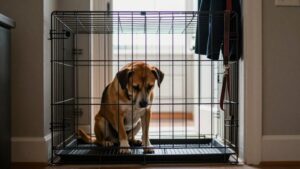
If your dog’s crate distress persists or worsens, schedule a veterinary check-in. Persistent barking, whining, panting, pacing, or escape attempts deserve attention; they aren’t signs you should simply wait out.
Before the visit, note when symptoms start, how long they last, and whether they occur with crating, separation, or particular noises. Ask whether pain, your dog’s health history, or another medical factor could contribute. Check with your veterinarian before offering calming supplements or chews; safety and suitability depend on your dog’s age, breed, weight, and health.
If distress continues, ask for a referral to a veterinary behaviorist or qualified professional. They can guide behavior modification and discuss whether medication may help. You’ll give your dog support tailored to the cause, not just the crate.
Conclusion
With sound, a familiar scent, good airflow, reachable water, and a steady routine, you can help your dog feel safer in the crate. Watch for signs of settling or distress, clean spills promptly, and never force your dog through escalating fear. If crate-door resistance persists or your dog shows signs of illness, check in with your veterinarian. Small, consistent adjustments often help, but your dog’s comfort and safety should guide every step.