
Are Furniture-Style Dog Crates Worth It? Style vs Chew-Resistance
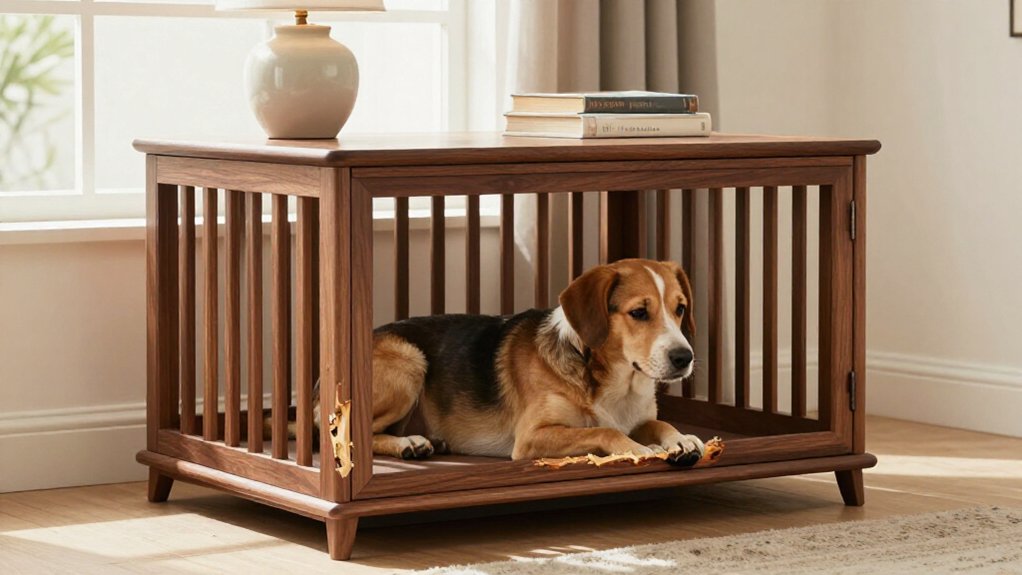
Furniture-style crates can suit your décor, but they’re worthwhile only if your dog won’t chew persistently. Thin MDF or particleboard may fail quickly, and attractive finishes don’t guarantee safety.
If your dog has damaged crates before, choose solid construction, reinforced framing, tight metal latches, and pet-safe sealed finishes.
Metal may resist gnawing better, but inspect it for bends or rust.
The checks below can help you weigh fit, cleaning, rounded edges, and safe chewing choices.
Style vs. Chew Resistance
Although a furniture-style dog crate can blend into your décor, its appearance doesn’t make it chew-proof. Furniture-style models often use wood or sturdy panels to avoid the wire look, but attractive finishes don’t guarantee safe construction. If you need a crate for a strong chewer, choose a reinforced frame and solid wood rather than thin MDF or particle board; cheaper units have reportedly been chewed through in under a month.
Inspect the latch and door hardware. A determined dog may exploit weak fittings, even when the cabinet looks sturdy.
Choose non-toxic, durable finishes, since chipped paint or poor-quality coatings can expose harmful materials and invite chewing. Confirm that the design provides airflow and spaced slots; excessive confinement can contribute to stress and destructive behavior.
Assess Chewing Habits
Before choosing a furniture-style crate, look for signs of how your dog chews: frayed edges, loose panels, or scratched corners can reveal weak points. A dog who’s persistent may target hinges, latches, and door edges, as well as gaps near the floor or corners where leverage can widen damage. If your dog destroyed a previous crate in under a month, treat that history as a serious warning, not a training failure.
Thin furniture-style panels may give way quickly under aggressive chewing. Check whether your dog gnaws only when alone or also during supervised downtime; note triggers and how long chewing lasts. Inspect chipped finishes and confirm ventilation so damage doesn’t expose unsafe surfaces. If you’re unsure, monitor your dog and seek professional guidance.
Chew-Resistant Material Choices
Choose solid wood or thicker panels over thin MDF or particle board, which can fail quickly when a dog chews persistently. Prefer pet-safe, non-toxic finishes; chipped paint can expose coatings or materials your dog might swallow. Reinforced frames and heavy-duty hinges and latches matter, too: a dog chewing to escape may target door edges and hardware.
Avoid flimsy doors or warped latches, since small gaps offer leverage. If your crate has an enclosed floor, pick a waterproof, washable surface so you can remove residue promptly and limit odors that may encourage repeat chewing. Inspect doors and latches for fresh damage.
| Feature | Check | Why |
|---|---|---|
| Panels | Solid wood; thick | Resist persistent gnawing |
| Finish | Pet-safe, non-toxic | Reduces ingestion risks |
| Door/floor | Secure hardware; washable | Limits gaps, residue, odor |
Wood Versus Metal Builds
Wood crates can blend with your furnishings and offer a calmer, den-like feel, but their chew resistance depends on solid construction and secure hardware. Metal crates are often lighter, yet bars can bend or corrode and create sharp edges if your dog chews or paws at them.
To choose a durable, safe build, consider your dog’s chewing habits, ventilation needs, and how easily you can clean the crate.
Wood’s Style Advantage
A solid-wood crate can feel more like part of your living room than a metal kennel, with a warmer look that blends naturally into your décor. That appearance can make the crate feel less like equipment and more like a piece of furniture you’re comfortable keeping in a shared space.
A well-built wood frame also tends to stay steady and furniture-like, while metal frames may rattle or develop sharp edges if bent. Slats or ventilation openings let air circulate, and the design can conceal bars and wiring, giving your room a softer visual impression without closing off airflow.
For everyday use, choose solid wood over thin MDF or particle board, especially if your dog is large, and compare construction quality and dimensions before buying.
Metal’s Chew Resistance
If your dog chews, metal wire usually holds up better than a furniture-style crate: it’s harder to destroy than wood panels, especially thin MDF or particle board, which can splinter or crumble. Still, inspect the wire: persistent chewing can bend it, opening gaps your dog may exploit. Bent strands can also leave sharp edges that may scratch paws, so stop using a damaged crate and arrange repair or replacement.
With wood, solid framing generally resists scratching better than thin composite panels, but check door frames, latches, and corner joints; weak fasteners can expose seams to chewing. Look closely at paint or clear coat, too. If the finish chips, your dog could contact or ingest the exposed material.
Choose a crate suited to your dog’s behavior, and supervise early use. Chewing can signal stress or frustration, not misbehavior; offer safe chew options and seek qualified help if it persists when choosing a crate for a persistent chewer.
Strength And Durability
For long-term strength, compare construction rather than appearance: solid-wood or thick-composite furniture crates are generally sturdier than flimsy wire models, which can dent, warp, or rust. Repeated pawing can bend exposed bars, and a damaged wire frame may leave sharp edges that could hurt your dog.
With a wood build, you’ll get less bar-to-paw contact, while solid wood or thick composite resists deformation better than thin panels. Still, material alone doesn’t guarantee durability. Check whether the frame is reinforced and whether the door and latch secure; pressure from a large, determined dog can loosen weak hardware. Properly finished wood with non-toxic coatings tends to hold up better than budget furniture crates that chip under heavy wear. You want a crate that stays stable without creating hazards.
Choosing The Right Build
When choosing between wood and metal, focus on how the crate handles chewing and daily strain, not just how it looks.
Solid wood is a better furniture-style choice than thin MDF or particle board. Repeated chewing can swell or chip those materials, while hinge loads may make them fail.
Check for non-toxic, dog-safe finishes; “painted” alone doesn’t tell you whether chipped coatings or lingering fumes could expose your dog.
Choose metal wire only if it’s sturdy and safe. Wire can bend, rattle, or rust, and aggressive pawing or chewing may reveal sharp edges.
Whichever build you choose, look for support rails, stable legs, secure latches, reinforced hinges, and a well-fitted door. These help prevent racking and loosening when your dog shifts, turns, or pushes.
Best for Persistent Chewers
If your dog chews persistently, choose a crate with reinforced metal bars, solid wood, and chew-resistant finishes rather than thin board. Check that latches, doors, and seams stay secure under pawing, especially if your dog tends to escape.
If your dog destroys crates quickly, match the build to their chewing habits and prioritize durable containment over looks.
Reinforced Metal Bars
Choose a furniture-style crate with reinforced metal bars if your dog chews persistently; thin slats can bend or flex under repeated bites. Check that bar spacing keeps your dog’s teeth and paws inside without blocking visibility or airflow. Wide gaps can give a determined chewer leverage and create a weak point.
Look for steel or metal bracing around the door and corners, where chewing pressure can warp the frame first. Heavy-duty hinges and secure latches matter, too: worn or misaligned hardware can let your dog pry open the door. If the crate has a door, choose one with metal reinforcement rather than relying mainly on particle board or MDF, which can chip or crumble when targeted.
These details won’t guarantee safety, but they can help you choose a sturdier enclosure and reduce predictable failure points.
Chew-Resistant Materials
For a persistent chewer, prioritize a solid wood frame over thin MDF or particle board, which can crack or crumble under repeated gnawing.
Look for a finish labeled non-toxic and chew-safe; properly cured paint or sealant can reduce the chance that chips expose materials your dog might ingest. Still inspect the surface regularly, because even durable coatings can wear with persistent chewing.
Choose a crate with waterproof or sealed flooring and an interior you can clean easily. Saliva and spills can soak into lower-quality materials, encouraging deterioration and making cleanup harder. If your dog keeps chewing, don’t treat furniture-style construction as proof of safety. Supervise use, offer appropriate chew outlets, and ask your veterinarian or a qualified trainer for help if the behavior persists.
Secure Latches And Seams
Even a sturdy frame won’t help much if your dog can pry open the door or seams.
Look for heavy-duty metal latches, tight door panels, and precise alignment; flimsy catches and small gaps can give persistent chewers an easy starting point. Choose a door with a primary latch plus a secondary lock or robust hinge-side hardware to resist levering. Check that seams use reinforced construction, such as solid wood framing with fewer gaps than particle-board designs.
Covered edges around the door and panel joints leave fewer places for teeth or claws to catch.
Make sure hinges and latches attach to the frame, not just thin panels, and can handle frequent use. Weak mountings may loosen over time, creating new escape routes. Inspect hardware regularly.
Match Crate To Chewing Style
A persistent chewer needs more than a furniture-style look: match the crate’s construction to how your dog chews. For a large dog, choose a solid-wood or otherwise chew-resistant frame, not thin MDF or particleboard; non-toxic finishes help prevent worn spots from exposing harmful materials. Reinforced hardware and a secure latch-style door matter because determined dogs often target edges and latches.
If your dog tries to escape, seek tight seams, a stable frame, and a door that won’t flex under pressure. Keep airflow and visibility in mind, too: airy sides or slats may ease stress that can trigger gnawing in anxious or overstimulated dogs. If a model is damaged quickly, treat it as a construction mismatch; upgrade strength and thickness instead of buying a weaker crate.
Breed-Specific Crate Dimensions
How do you choose a crate that fits your dog rather than just their breed label? Measure your dog’s height from floor to shoulder, length from nose to tail base, and usual sleeping position. Then check interior dimensions, not “Large” or “XL” labels: furniture crates vary, and usable floor space must suit your dog’s proportions. Your dog should stand, turn, and lie down comfortably.
Breed can flag likely needs, but measurements decide. Great Danes and Saint Bernards need more height than large furniture models offer; Bulldogs may need extra length to avoid curling. Golden Retrievers, German Shepherds, and Huskies typically need room to stretch beyond what weight-based sizing suggests. Choose larger only if your dog still feels secure; excess space may unsettle den-loving dogs.
Maintenance and Resale Potential
Once the crate fits your dog, assess how it’ll hold up to daily use, and whether you could resell it later.
Furniture-style crates can retain value better than temporary kennels because solid wood and non-toxic finishes look at home in shared spaces. Still, upkeep matters. Choose wipeable, waterproof flooring and removable trays or panels so you can clean accidents promptly.
Thin MDF or particle board may swell, stain, or crack, making resale harder. Use gentle, non-abrasive cleaners to protect the finish, and prioritize stable joinery and durable, non-toxic coatings.
If your dog chews, chipped paint or exposed material can permanently lower the crate’s appeal; no finish can guarantee against damage. Good ventilation helps prevent trapped moisture and odors from degrading surfaces. Keep bedding that complements the finish, and respond quickly to messes. These habits can preserve appearance and give a buyer more reason to consider it.
Inspect Weak Door Latches
Because a strong dog can focus considerable force on a door seam, inspect the latch and its attachment, not just the crate’s overall construction.
Before you buy, examine the hardware closely. Choose solid metal over plastic or thin stamped parts, which may fail where a dog concentrates chewing and impact. Check:
- Push the door seam side to side. It shouldn’t wiggle or leave a gap your dog could work with a paw.
- Favor a catch that fully engages, such as a multipoint or reinforced lock, over one small, pryable hook.
- Confirm sturdy screws anchor the latch to reinforced framing, not just MDF or particleboard.
Open and close the door 10–20 times. If the latch drifts, loosens, or misaligns, skip that crate; reliable closure protects your dog.
Prioritize Rounded Interior Edges
Even with a secure latch, your dog may chew or paw at the crate’s interior corners and door frame. Choose a model with rounded interior edges: dogs often target high-contact junctions, where sharp seams can weaken. Rounded corners can also limit splinter exposure if your dog damages trim; crisp right angles may chip into snag-prone edges.
- Look for smooth, continuous surfaces, such as rounded slats or sealed panels, not visible gaps between board pieces.
- Check rounded door-frame and latch-zone edges; your dog may test the perimeter and bite exposed hardware.
- Run a hand over the interior and confirm its coating is non-toxic, sealed, and smooth.
If you spot rough seams or flaking, choose another crate rather than relying on appearance alone.
Conclusion
Furniture-style crates can make your home feel cohesive, but looks shouldn’t outweigh safety. Match the crate to your dog’s chewing habits, size, and strength; persistent chewers usually need sturdy, simple metal rather than decorative wood. Check latches, rounded edges, and wear regularly, and choose a fit that lets your dog stand, turn, and lie comfortably.
If you’re unsure, prioritize secure containment first. You can add style around a crate without asking it to withstand chewing.
