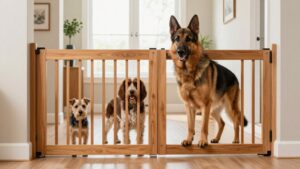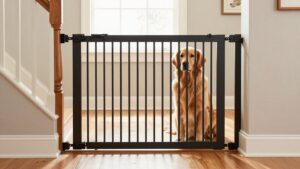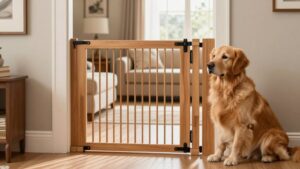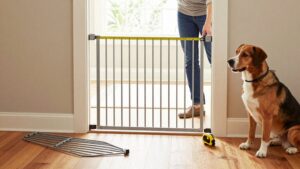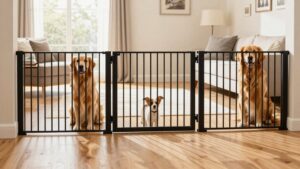
Hardware-Mounted vs Pressure-Mounted Dog Gates: Which Is Safer Where?
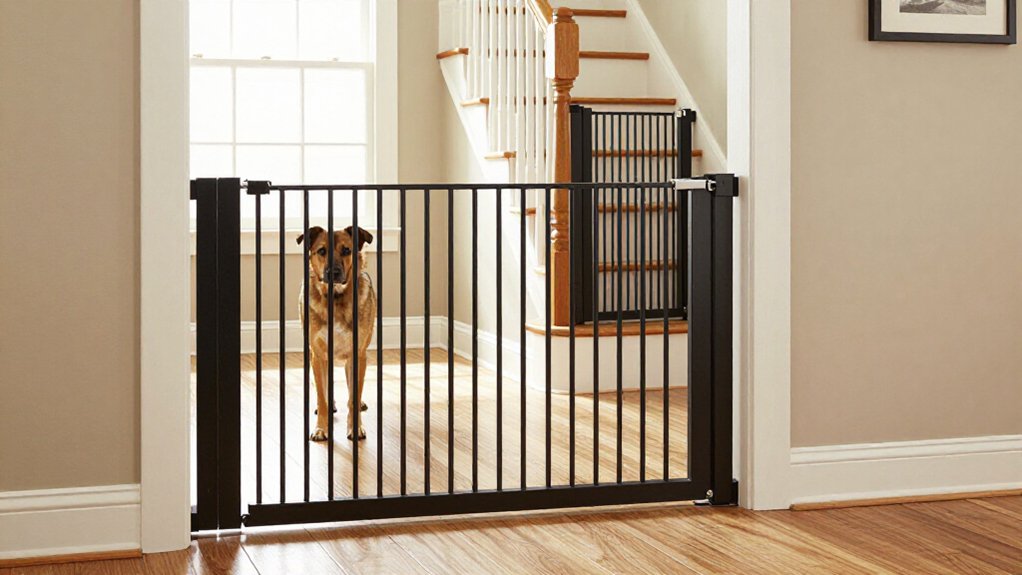
You’ll get the safest fit by matching the mount to the location and your dog. At stair tops or for permanent containment, choose a hardware-mounted gate anchored into studs or solid framing—not drywall alone.
Use a pressure-mounted gate only between flat, sturdy surfaces, and test it for movement. Consider height, strength, jumping, and pushing; no gate suits every dog.
Check the latch and fit routinely. The sections ahead explain how to match your setup.
Dog Gate Material Safety
Dog gate material affects how well it holds up to chewing and pressure: choose metal for a persistent chewer, and check that any wood gate has a pet-safe finish your dog can’t ingest by chewing.
Plastic gates feel light and cost less, but may not withstand a large or determined dog. Choose height for your dog’s ability: about 20 inches suits puppies and small breeds; bigger dogs and jumpers need at least 30 inches. Measure the opening, confirm the gate’s adjustable range, and stay within its stated weight limit.
Compare the feel and risk before you buy.
| Material | Picture | Safety check |
|---|---|---|
| Metal | Solid barrier | Best for persistent chewers |
| Wood or plastic | Warm grain or light panel | Check finish; assess strength |
Gate Frame and Latch Design
Because gate stability depends on how it attaches, choose a hardware-mounted model with brackets or bolts for a more secure frame; pressure-mounted gates rely on adjustable tension and rubber contact pads or wall cups to stay in place. Wall cups can be screwed into a wall or doorframe, but the gate still fits by pressure. Follow the maker’s instructions and inspect the frame after installation.
Choose a reliable latch: dual-action designs add security, while one-handed operation helps when you’re carrying supplies. Auto-close can reduce the chance you leave the gate open. Look for a clear click or indicator confirming full engagement, and test the latch after installation. At stairs, use a hardware-mounted swing gate without a bottom threshold bar to reduce dislodging and tripping risks.
Pressure Stability on Uneven Floors
Even with a secure latch, a pressure-mounted gate can shift if the floor or opposing walls aren’t flat. Pressure-mounted gates depend on tension between opposing surfaces, so an uneven floor can leave the frame tilted and reduce contact. If the pads don’t sit flush, the gate may slide or loosen; baseboards and molding can create that gap.
Slippery flooring adds risk by reducing the pads’ grip. Check that the floor and walls are flat and sturdy. Follow the manufacturer’s fitting instructions, then test the frame for movement.
Recheck its tension regularly, since it can loosen with time. If you can’t achieve a firm fit on an uneven or slick surface, choose a gate designed for that location instead of relying on pressure alone.
Dog Pushing and Jumping
When a dog pushes hard against a gate, hardware-mounted models offer a more secure barrier because brackets or bolts anchor them to the wall or doorframe.
Pressure-mounted gates depend on tension, so a persistent dog may shove one out of position. Use them only in lower-risk areas, and don’t treat a loose or shifting gate as a reliable restraint during busy household periods.
For large or energetic dogs, choose a securely installed gate; freestanding models can tip when a motivated dog knocks them. Metal gates resist chewing and can better withstand persistent use.
Jumping brings a separate risk: choose a gate at least 30 inches tall for a bigger breed. Check nearby furniture, too; your dog could use it as a step to climb over.
Opening Width and Mounting Surfaces
Measure the opening before you buy a gate, then check that its width falls within the model’s adjustment range; many pressure-mounted gates fit openings about 28–40 inches wide. For a broader span, choose an extra-wide model or approved extensions; some safety gates reach 62 inches. Before relying on pressure, inspect both sides and the floor:
- A flat, sturdy wall opposite a smooth jamb gives pads firm contact.
- A projecting baseboard or molding can leave gaps and reduce pressure.
- An uneven wall or slippery floor can let the gate loosen or slide.
If either surface won’t hold tension securely, don’t force a pressure-mounted fit. Choose a hardware-mounted gate instead, fastening its brackets or bolts into studs or other solid framing—not drywall or plaster alone.
Measuring Your Dog’s Jump Height
Watch your dog clear a low obstacle to estimate its jump height, then choose a gate taller than that. Observe a few attempts on a safe, stable obstacle, and judge the highest point your dog clears—not just its usual leap. For puppies and small breeds, a gate around 20 inches may be sufficient.
Bigger breeds and determined jumpers generally need one at least 30 inches tall. Also look for nearby furniture or other surfaces your dog could use to gain height; account for that boost when selecting a gate. For a large dog or high jumper, a 39-inch extra-tall option, such as the Midwest Steel Pet Gate, may be appropriate. Before buying, check the listed height and confirm the gate’s fit suits your dog’s size and jumping ability. A taller gate reduces escape risk, but no height guarantees containment.
Wall and Trim Damage
Because hardware-mounted gates need drilled holes, they can leave permanent marks in walls or doorframes that you may need to fill and repaint. Pressure-mounted gates avoid drilling, so you can remove them without holes, useful in rentals or temporary setups.
Still, their pads may scuff paint, and excessive tightening can dent drywall or plaster. Protect surfaces and reduce slippage by checking these points:
- Place pads against a flat, sturdy wall, not over baseboards or molding.
- Tighten only as directed in the manufacturer’s instructions; don’t force the fit.
- Before use, check that pads sit evenly and the gate stays secure without shifting.
A fit can damage trim and let the gate slip, creating a safety hazard. Consider whether small, repairable holes are preferable to ongoing pressure marks.
Gate Material Safety
Choose metal if your dog chews persistently; it’s durable and chew-resistant. A wood gate can work if you verify its finish is pet-safe. Whatever the material, make sure it can withstand your dog’s chewing, leaning, and pushing; lightweight plastic may not suit a large or determined dog.
Chew-Resistant Gate Materials
Metal gates resist chewing and suit dogs that persistently gnaw, while wood gates can work if their finishes are labeled safe for pets. Match the gate to your dog’s size and behavior; lighter construction may be easier to damage. You can picture the options this way:
- A sturdy metal frame stands between a determined chewer and the room.
- A wood gate provides a solid barrier when you choose an appropriate product.
- A light plastic panel may bend or break under chewing or force from a large, determined dog.
If your dog tests barriers, prioritize durable construction over weight or price, and replace a damaged gate rather than relying on it. Check the gate regularly; chew marks can weaken its barrier or leave sharp edges.
Pet-Safe Finishes and Coatings
Durability matters, but a gate’s finish matters too if your dog chews or licks it. If you choose wood, look for a pet-safe coating to reduce your dog’s exposure when they mouth the surface. Don’t assume “non-toxic” claims cover every use; check the manufacturer’s information about the finish before installation, especially if your dog chews regularly.
Metal gates are durable and chew-resistant, making them practical for persistent chewers. Plastic gates cost less and weigh less, but their lighter construction may not withstand a large or determined dog. Match the gate to your dog’s behavior and size, and inspect the finish and surface periodically. If you find damaged coating, limit access and contact the manufacturer for guidance before continued use at home.
Gates for Room Layouts
Your layout determines whether a pressure-mounted gate, hardware-mounted gate, or temporary barrier will fit safely. For narrow doorways on level floors, a pressure-mounted gate offers a movable, tool-free option; at stairs, secure a hardware-mounted gate to the wall or frame. In open-plan spaces and wide room dividers, measure the opening and check that extensions fit, then choose a gate your dog can’t push over or jump.
Open-Plan Spaces
In an open-plan home, choose an extra-wide gate or one with extensions for broad openings, and check that the opening falls within the model’s stated fit range. Measure before buying; a gate that barely spans the space or exceeds its range won’t provide a reliable barrier. For level-floor areas, pressure-mounted models install without drilling and can move as your layout changes, but inspect the contact points:
- Set mounts against flat, sturdy surfaces; molding, baseboards, slippery floors, or weak walls can loosen their grip.
- Test the gate for shifting after installation and recheck it routinely.
- Use a freestanding enclosure only as a temporary zone in broad or irregular spaces; a large or determined dog may knock it over.
Don’t rely on retractable mesh to stop a fall: its lower strength suits separation, not fall protection. Where failure could cause injury, choose a more secure barrier. Keep the barrier stable as your arrangement evolves.
Narrow Doorways
For a narrow doorway, measure the opening and confirm it falls within the gate’s adjustable range before buying; many pressure-mounted models fit widths of about 28–40 inches. On a level floor, a pressure-mounted gate is practical: it needs no drilling, and you can remove or reposition it. Check that its contact points press against flat, sturdy surfaces.
Molding, weak walls, or uneven flooring can reduce grip, so don’t rely on pressure mounting when those conditions undermine a secure fit.
If the doorway sits at the top of stairs or needs a permanent barrier, choose a hardware-mounted gate. Fasten its brackets to the doorframe or wall studs, not drywall alone. Check the gate’s swing and bottom bar; either could obstruct the route or create a trip hazard.
Wide Room Dividers
Open layouts need a gate sized for the full span: measure the opening and check the model’s stated width range, adding extensions or choosing a wider gate if needed. Some pressure-mounted models fit about 28–40 inches; larger gaps need wider models or extensions. For an installation-free divider, a freestanding panel can shape your room, but a large or determined dog may topple it. Consider:
- A four-panel Richell Deluxe spans up to 90.2 inches and has rubber feet.
- Choose height and strength suited to your dog.
- For firmer containment, bolt a hardware-mounted gate into framing; drilling makes relocation less convenient.
Don’t rely on drywall or plaster alone, and confirm brackets hold securely before letting your dog approach the divider.
Choosing Gates by Dog Size
Choose a gate your dog can’t jump over or climb, and account for nearby furniture that could provide a boost. For puppies and small breeds, a gate about 20 inches tall may be sufficient. Bigger breeds and dogs that jump typically need one at least 30 inches tall; choose a barrier your dog can’t scale.
Size also affects mounting choice. If you have a large, energetic, or determined dog, a hardware-mounted gate provides a secure barrier compared with a pressure-mounted model. Persistent chewers may do better with durable, chew-resistant metal than lightweight plastic. Before buying, measure the opening and confirm the gate’s adjustable width range and listed weight limits. Follow installation instructions, since a sized gate won’t protect your dog if it’s unstable.
Conclusion
Choose the mounting style that matches your layout and your dog’s behavior. Use a hardware-mounted gate at stairs or wherever a strong push could dislodge it; use pressure-mounted models only across level openings where you can secure all contact points. Check the latch, frame, and wall fit before buying, then test the gate firmly after installation. Recheck it regularly, and never leave a child or dog relying on a loose or damaged gate when unsupervised.
Dog Gate Opening Calculator with Extension Finder
Enter your opening width to see which dog gates cover it as stated, how many inches of extension you need, and how many extension kits that takes.