Do Crate Covers Help With Separation Anxiety? What Trainers Say
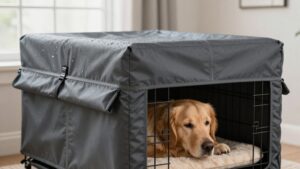
A crate cover may help your dog settle by blocking movement or household activity, but it won’t treat separation anxiety on its own. If your dog relaxes in the crate yet reacts to visual triggers, try breathable, partial coverage and introduce it gradually.
Keep airflow clear, supervise, and remove the cover if panting, drooling, chewing, or escape attempts appear. Trainers distinguish distress about confinement from distress after you leave. Those signs guide your next steps.
Crate Covers and Separation Anxiety
A breathable crate cover may block visual triggers and help some dogs feel more secure, but it won’t treat separation anxiety—and it can distress others.
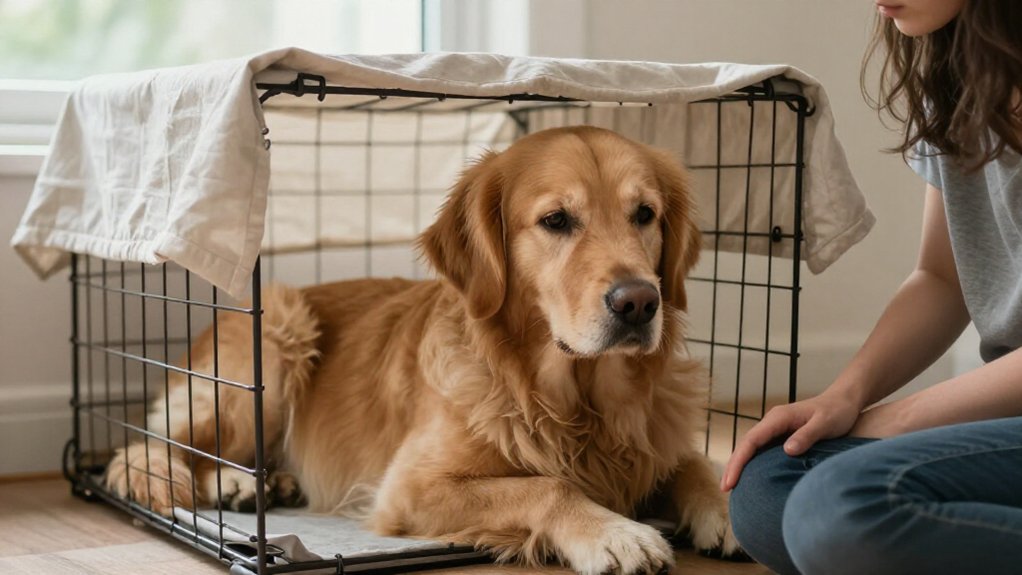
Introduce a cover gradually: start with fabric over the top and sides open. Stop if your dog shows distress, chews it, or tries to escape. Never cover the crate completely; maintain airflow, watch for overheating, and keep chewable fabric out of reach.
Use a camera to note when distress begins. Panic after the door closes may indicate confinement anxiety; distress linked to your departure may suggest separation-related concerns. If your dog pants, drools, paces, or tries to break out, don’t rely on a cover. Ask a behavior professional or veterinarian to assess the cause and plan support.
Separating Anxiety From Boredom
Boredom alone doesn’t mean your dog has separation anxiety: watch whether distress occurs when they’re alone outside the crate as well as when they’re confined.
Separation anxiety is distress about being alone; confinement anxiety stems from being shut in a crate or other small space. Your dog may experience either or both, so don’t assume restlessness means simple boredom—or that a crate cover will solve it. Use a camera during an ordinary departure to learn when distress begins. If it starts as soon as the door closes, confinement may be the issue; if it follows your departure in different settings, being alone may matter more.
You can also check whether your dog eats a snack in the closed crate while you’re present. If distress appears, return and stop the test. Don’t repeat departures in a way that lets worry build; seek help if you’re unsure about next steps.
Trainer-Observed Stress Signals
To tell whether confinement is causing distress, watch your dog’s behavior after the crate door closes. Trainers note early signs such as panting, drooling, yawning, circling, or pacing. More serious reactions may include biting or digging at the bars, trying to escape, or soiling the crate despite being house-trained.
Pay attention to timing. If these behaviors start soon after the door shuts, confinement anxiety may be involved. You can offer food in the closed crate: a dog who ignores it but eats after release may feel uneasy being confined.
During a normal departure, use a camera to see when stress begins. If distress appears, return and end the session rather than making your dog endure it. Seek guidance.
Mesh Versus Opaque Covers
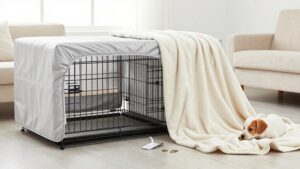
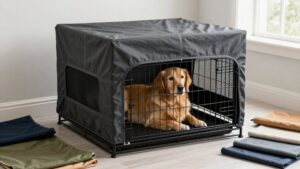
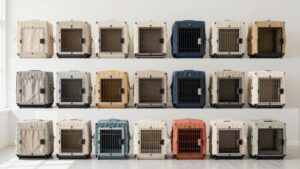
Mesh keeps airflow and visibility open, but it may not block sights that trigger your dog. A breathable opaque cover can reduce light and visual distractions, though some dogs feel uneasy when they can’t see out. Watch your dog’s response, keep part of the crate open if needed, and never seal it completely.
Visibility And Airflow
How much of the crate you cover can affect both your dog’s comfort and airflow. Choose breathable fabric, and never cover the crate completely: blocked air can cause overheating or distress. Adjustable panels let you balance privacy with visibility; dogs may prefer only the top or a few sides covered.
| Cover choice | What to watch |
|---|---|
| Mesh | Keeps airflow open; preserves visibility |
| Opaque | Limits movement views; may feel confining |
| Partial | Lets you adjust privacy and sightlines |
| Any cover | Secure fabric; prevent chewing or pulling |
Introduce coverage gradually, starting with the top and sides uncovered. Watch for panting, drooling, or escape attempts; these can signal discomfort. Check temperature, particularly in summer and for short-nosed breeds. If your dog seems uneasy, uncover more. Let your dog’s response guide you.
Light Blocking Effects
Light can shape what your dog notices in the crate: an opaque cover blocks more light and movement, which may help some dogs settle, while mesh preserves more visibility. Activity outside the crate catches your dog’s attention. An opaque panel can reduce stimulation, but it isn’t an aid for separation-related distress.
Mesh or adjustable panels offer a compromise: you can limit light while keeping the space less enclosed. Start with partial coverage, such as covering the top and leaving the sides open, rather than darkening the crate. Keep airflow clear with either material, and watch for overheating in warm or humid conditions. If a cover appears to increase fear or distress, remove it; your dog shouldn’t have to remain under it.
Your Dog’s Response
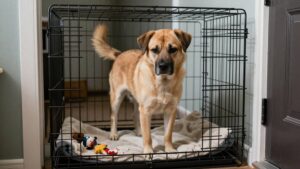
The right cover depends on how your dog responds: an open-wire crate may feel exposed, while an opaque cover can block visual distractions and help some dogs settle. Your dog may prefer partial coverage, so let their behavior guide you; blocked visibility can make another dog more fearful or distressed.
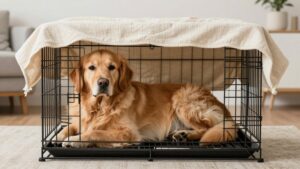
Introduce an opaque cover gradually. Start by placing it over the top while leaving the sides open, then cover one side at a time only while your dog stays comfortable.
Choose breathable fabric, keep airflow openings clear, and never enclose the crate completely. Watch for overheating. If your dog chews or tears the cover, pants, drools, or tries to escape, remove it and reassess; less visibility isn’t always helpful. These signs deserve careful attention.
Crate Placement Effects
Choose a quiet room where your dog won’t face constant household activity, which can trigger barking or pacing. A bedroom may feel reassuring if your dog’s comfortable near you, while a sturdy crate tucked beside a wall or in a corner can feel less exposed. Use a camera to check how your dog responds, and adjust the location if you see signs of stress.
Room Location
Where your dog rests can affect how settled they feel in the crate, but no single room works for every dog. Choose a place where your dog can rest comfortably; a bedroom may suit some dogs. If movement or other pets prompt barking or pacing, try a quieter spot with fewer visual distractions. A cover can limit what your dog sees, but keep the front uncovered and maintain good airflow.
Placing the crate near a wall or in a corner may help your dog feel more sheltered.
Don’t let the crate signal that you’re leaving. Include calm crate time while you’re home, not only overnight or before departures. Use a camera to see how your dog responds in the chosen room. Panting, pacing, or escape attempts suggest you should adjust the setup and seek guidance if needed.
Household Activity Levels
In a busy or multi-pet home, a crate cover may block visual activity that prompts barking or pacing and give your dog a quieter place to rest.
A cover may help when household movement keeps your dog alert, but it won’t treat separation anxiety on its own. Observe whether your dog settles or instead shows fear, distress, or attempts to escape. If you notice discomfort, remove the cover and leave the crate open to view; your dog’s response matters more than creating a secluded setup.
Introduce coverage gradually. Start by draping breathable fabric over the top while leaving the sides open. If your dog remains relaxed, add coverage in small steps and keep checking for signs of comfort. Never cover the crate completely: leave room for airflow and prevent overheating. This adjustment can reduce visual stimulation for some dogs, while an uncovered crate may be the kinder choice for others.
Proximity to Family
Place the crate near family activity so your dog feels connected, but choose a calm spot where they can rest. A bedroom can work if it’s quiet and keeps your dog close during ordinary household activity, supporting calm rest. If movement around the home prompts barking or scanning, try partial crate coverage to limit visual distractions. Keep the opening clear enough for visibility and make sure airflow stays unrestricted.
Then watch your dog’s response: settling, relaxed posture, and resting suggest the arrangement may suit them. Don’t assume a cover will help every dog; some feel more confined or stressed. If you see panting, drooling, or escape attempts, reassess the location and setup. Family proximity can support comfort, but it won’t by itself resolve separation anxiety.
Covering Crates During Departures
A crate cover may block visual triggers, such as movement outside, that prompt barking or excitement when you leave, but it won’t treat separation anxiety on its own.
If you want to try one, introduce coverage gradually: cover the top first, then add one side at a time. Reward calm, voluntary crate use so the space stays positive. Choose breathable fabric, preserve airflow, and watch for signs your dog’s overheating.
Never cover the crate completely. At first, supervise and secure the cover if your dog chews, so they can’t pull fabric inside or ingest pieces. Use a camera to see how your dog responds after you leave. If the cover increases distress, uncover the crate and return before stress escalates as you assess comfort.
Escape Attempts Can Cause Injury
Dogs with severe separation or confinement anxiety may claw at a crate or bite its bars in a desperate attempt to escape, risking injury.
A cover can’t make a panicked dog safe; determined dogs may dig, bite bars, or force weak closures, causing broken nails, mouth injuries, or worse. One newly adopted rescue dog unzipped a sturdy mesh crate and escaped twice, showing that mesh and zippers may fail under pressure. Choose a well-built metal or hard-plastic crate with secure latches, and consider hardware clips or carabiners at corners and closures.
Watch your dog’s response rather than assuming a cover will prevent escape. Panting, drooling, pacing, or circling can signal distress. If your dog panics or repeatedly tries to get out, use a camera to observe and contact your veterinarian or a qualified behavior professional. You’re not failing your dog; prioritize safety and seek help early.
Overlooking Pre-Departure Practice
Even with a secure crate, a cover won’t ease distress that starts when you prepare to leave. If your dog relaxes in the crate while you’re home but worries when you go, focus on departure cues rather than adding more cover. Pick up your keys, put on your coat, then stay home. Repeat these actions so they predict less reliably that separation is coming. Go at your dog’s pace.
- Check whether unease begins with the crate, your departure, or both.
- Build crate comfort with the door open and voluntary entry; see whether your dog stays after treats end.
- If departures trigger worry, practice brief, low-stress exits separately from crate training.
A cover can’t replace gradual, compassionate practice.
Record a Departure Video
What happens after you leave may reveal whether the crate or separation is driving your dog’s distress. Set up a camera during your departure, including your usual leaving routine. Note how soon after you close the crate or leave home your dog starts panting, drooling, pacing, or trying to escape.
Compare this footage with how your dog behaves in a closed crate while you’re present. Will they take treats or use enrichment, or do they eat only after you release them? Calm behavior with you nearby but distress when you leave may point toward separation-related distress; stress in the crate even with you present may suggest confinement anxiety. If the video shows distress, return then. Don’t prolong the departure as a test; repeated distress can reinforce anxiety.
Conclusion
A crate cover may soften visual distractions, but it won’t treat separation anxiety. If your dog pants, whines, drools, or tries to escape, record a departure and talk with your veterinarian or a qualified trainer. Try mesh or partial coverage, and place the crate where your dog settles best. Practice brief departures gradually; don’t leave your dog confined if panic or escape attempts risk injury. With training and professional guidance, you can build safer departures.