What Size Crate for a Great Dane? Puppy to Adult Sizing Guide
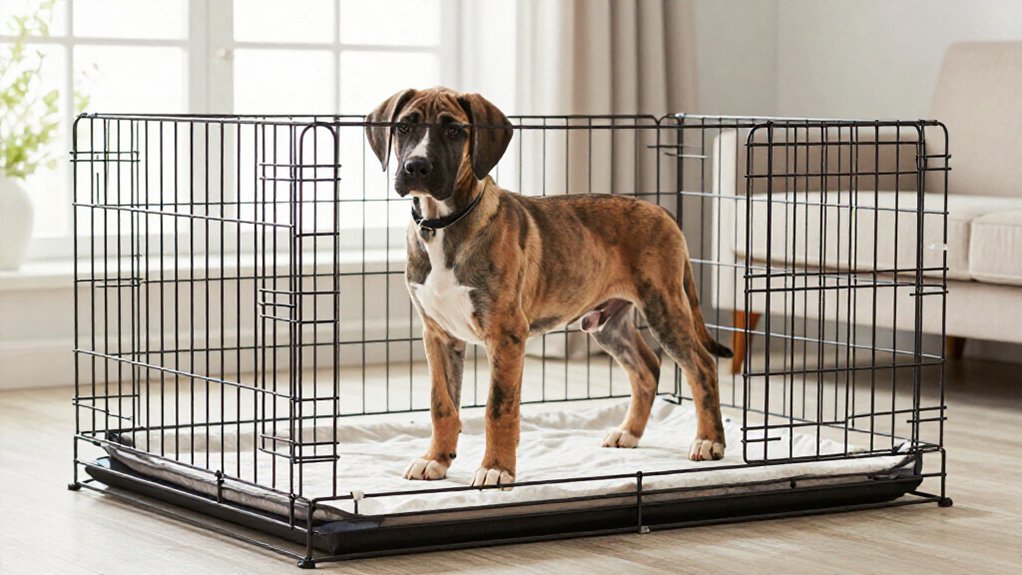
For a Great Dane, choose a crate for projected adult size, not today’s puppy measurements. Measure standing height and nose-to-tail-base length, then add 3–4 inches to each for usable interior dimensions. Your dog should stand without hunching, turn around, and lie comfortably.
Check doorway clearance separately; frame rails can reduce opening height. Use a secure divider to limit puppy space, adjusting it as your Dane grows. The guide covers travel, flooring, and safe crate routines.
Great Dane Puppy-to-Adult Sizing
Because Great Danes grow quickly, plan for the adult dog rather than choosing a crate based on your puppy’s current size. Ask your breeder or rescue about both parents’ height and weight to estimate your Dane’s adult build; labels like “large” or “extra-large” aren’t reliable sizing guides. Measure your puppy’s height and length, then add about 3–4 inches to each measurement when checking crate dimensions.
Choose a model that fits those projected adult measurements, since many Great Danes need the biggest crate available.
An adult-size crate can serve from puppyhood through adulthood. Fit an adjustable divider to limit the usable space while your puppy is small, then move it as your dog grows. Introduce the crate, and make its interior comfortable with suitable bedding.
Great Dane Size-by-Age Chart
Great Danes grow rapidly during their first year, so an age-by-age chart can only offer a rough guide to their size. Ask your breeder or rescue for both parents’ height and weight; their measurements can help you estimate your puppy’s adult size, but won’t guarantee it.
| Age | Expected size guide | Crate-sizing check |
|---|---|---|
| Puppy | Size varies | Measure your dog |
| 6–12 months | Rapidly changing | Recheck fit often |
| Adult female | At least 28 in; preferably 30 | Fit to measurements |
| Adult male | At least 30 in; preferably 32 | Fit to measurements |
AKC standard sets shoulder-height minimums of 28 inches for females and 30 for males, preferring 30 and 32 inches, respectively. It doesn’t set a weight requirement; adults weigh 110–175 pounds. Choose a crate from your dog’s measurements, not age or breed alone.
Great Dane Growth Stages
Your Great Dane’s size changes quickly during the first year, with much of its adult growth reached by around 12 months. That rapid development makes puppy crate sizing temporary: a space that fits today may soon feel cramped. Ask your breeder or rescue about both parents’ height and weight to help estimate your puppy’s likely adult size.
For context, the AKC breed standard calls for adult males to stand at least 30 inches at the shoulder, preferably 32 inches or taller; females should reach at least 28 inches, preferably 30 inches or taller. Typical adult weights run about 110 to 175 pounds, though the standard sets no weight requirement. These figures help you plan for a genuinely large breed, but individual growth varies. Choose a crate that can serve your dog into adulthood, rather than repeatedly buying larger models.
Divider Panel Setup
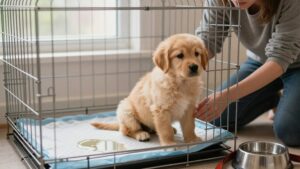
Measure your Great Dane’s height and length, then add about 3–4 inches to plan the adult crate size. Set the divider so your puppy can stand, turn, and lie down comfortably without enough space to toilet at one end; secure it to prevent gaps or shifting. Move it back as your puppy grows, then remove it when your dog can use the full crate comfortably.
Measure Before Adjusting
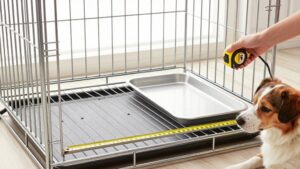
Before setting the divider, measure your Great Dane from the floor to the top of the head or ears and from the nose to the base of the tail. Use a surface and have your puppy stand; don’t compress the coat or stretch the body. Add about 3–4 inches to both measurements to estimate the minimum interior crate height and length.
That clearance helps your Dane stand without hunching, turn around, and lie down comfortably as the puppy grows. Check the crate’s usable interior dimensions rather than relying on its size label, which can vary by brand. Because Great Danes grow rapidly and become tall and long, also consider expected adult measurements before choosing a crate. Record your puppy’s figures, then remeasure regularly to track growth.
Set The Divider
Once you’ve checked the crate’s interior dimensions, set the divider to give your Great Dane puppy enough room to stand without hunching, turn around, and lie down comfortably—but not enough to use a far end as a bathroom.
Use your puppy’s current height and body length to place the panel: allow about 3–4 inches beyond each measurement when checking clearance. For a giant-breed puppy, don’t judge fit by weight alone; Great Danes can vary, so ask the breeder or rescue about the parents’ size to help estimate adult dimensions.
Secure the panel according to the crate maker’s instructions, with no gap wide enough for your puppy to squeeze behind it or get trapped. After positioning it, watch your puppy stand, turn, and lie down. If any movement looks restricted, shift the panel until those three actions are comfortable. Keep the usable area modest enough to discourage toileting at the far end. This setup gives your puppy a comfortable resting space from the start.
Leave Room To Grow
Choose a crate that fits your Great Dane’s expected adult size, then use the divider to limit your puppy’s space. Great Danes grow into tall, heavy dogs, so don’t choose a crate by a “large” or “extra-large” label alone. Ask your breeder or rescue about the sire’s and dam’s height and weight; their size offers the best available clue to your puppy’s adult measurements.
Set the panel so your puppy can stand without hunching, turn around, and lie down comfortably. Keep the space compact enough that your puppy can’t use a distant end as a bathroom. As your Dane grows, expand the usable area gradually, using regular measurements to guide the fit. This approach accommodates adult size while keeping the crate practical during puppyhood.
Reposition As Needed
As your Great Dane grows, move the divider outward to give them more room without replacing the crate. Choose a crate based on expected adult measurements, then use the panel to manage your puppy’s space. Set it so your Dane can stand without hunching, turn around, and lie down comfortably, while leaving too little room to toilet at one end.
Check your dog’s height and length regularly, and add about 3–4 inches to each measurement when evaluating fit. Shift the divider gradually as those measurements change, increasing usable space while keeping the area appropriately sized. If the adult-size crate feels too open for a young puppy, add bedding to make it cozier; keep the divider responsible for limiting the space your puppy can use.
Remove For Adulthood
Keep moving the divider outward as your Great Dane grows, using height and length—not age or weight alone—to check the fit. An adult-size crate can last through growth, but limit your puppy’s space during housetraining. Set the panel to allow standing without hunching, turning, and lying comfortably. Your puppy should still be able to turn around and lie down comfortably.
Measure your Dane’s height and length to guide adjustments. Great Danes grow quickly, reaching much of their adult size in the first year, so check fit regularly—not by age or weight alone. Remove the divider when your Dane can use the full crate without extra space that may encourage accidents. Make sure the adult crate allows standing, turning, and stretching out fully.
Choosing a Crate for Travel
A travel crate must fit your Great Dane and meet the carrier’s rules.
Measure your Dane’s height and length, then compare those figures with the crate’s interior dimensions; an “XL” label doesn’t guarantee enough room for a giant breed. Your dog should be able to stand, turn around, and lie down comfortably.
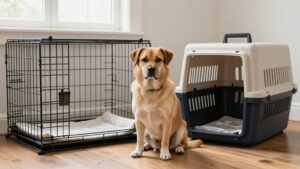
Before you buy, check the exact dimensions against your airline’s or carrier’s requirements, since limits differ by route and transport method. Airline-style plastic crates can be heavy and may provide poorer ventilation at Great Dane sizes, so assess the model’s airflow and handling for your trip. Some carriers require short-nosed breeds traveling as cargo to use a crate one size larger; check whether any special rule applies to your dog and journey.
Safe Crating Time Limits
There’s no universal safe crating limit for a Great Dane; your dog’s age, health, and needs matter.
Puppies need breaks more often than adults, so plan crate periods around your puppy’s toileting and stretching needs. Give your dog regular chances to leave the crate for bathroom breaks, movement, water, and interaction. Don’t treat the crate as an all-day holding place; watch for restlessness, discomfort, or changes in toileting needs and adjust the schedule.
Because Great Danes are prone to bloat, don’t crate your dog immediately after meals. Allow rest after eating, and follow your veterinarian’s advice if you’re unsure how to time activity and confinement. If your Dane has a health or mobility concern, ask your vet to recommend a safe schedule tailored to your dog.
Great Dane Crate Doorway Clearance
Check the door opening itself, not just the crate’s overall height, to make sure your Great Dane can enter and exit without ducking or scraping its head. Measure your Dane from floor to top of head or ears, then add 3–4 inches to estimate minimum interior doorway clearance. But assess the actual opening: frame rails, latches, and thresholds can reduce usable height, even when the crate’s listed dimensions seem adequate. For a Dane around 32 inches tall, look for a door roughly 35–36 inches high or more, allowing a natural passage without crouching or head contact.
You should recheck a growing puppy regularly; Great Danes grow rapidly during their first year, so today’s comfortable doorway may soon be too low. Choose a taller door.
Preventing Crate-Tipping Accidents
Because a Great Dane can put substantial force against a crate’s sides or door, choose a heavy-duty model designed to resist flexing, such as welded aluminum, and set it on a level, nonslip surface.
Then check that its latches, hinges, and joints stay secure; inspect them regularly for looseness or damage that could let the crate shift. Size it to your Dane’s measurements, allowing standing, turning, and lying down without excessive spare space for forceful movement. For a puppy, choose an adult-sized crate and use its divider to limit usable space as your dog grows.
Before use:
- Test stability after assembly.
- Recheck fasteners after moving the crate.
- Keep the door fully latched during use.
- Replace damaged components promptly.
Non-Slip Crate Flooring
Choose a durable, supportive non-slip crate pad or vinyl liner that covers the floor without bunching or blocking the door. For a Great Dane, the surface must stay stable under a dog weighing 100 pounds or more. A footing can help your Dane stand, turn, and lie down without sliding; supportive padding may benefit dogs with joint concerns, including hip-dysplasia risk.
Before use, check these four details:
- Fit: The liner covers the crate floor and leaves the doorway clear.
- Grip: It stays flat when your Dane shifts position.
- Support: The pad feels durable beneath a large dog’s weight.
- Condition: Clean it regularly and replace it if torn, slick, or uneven.
Recheck fit after washing or repositioning, since loose flooring can bunch and undermine stability.
Conclusion
Choose a crate that lets your Great Dane stand without crouching, turn around, and lie down comfortably. Use a divider as your puppy grows, and measure your dog rather than relying on age alone. For travel, secure the crate and allow enough doorway clearance for safe entry.
Keep crating periods age-appropriate, add nonslip flooring, and anchor the crate to prevent tipping. With the right fit and setup, you can support your Dane’s comfort and safety from puppyhood through adulthood.