Wire vs Plastic Dog Crate: Which Is Better for Your Dog and Home?
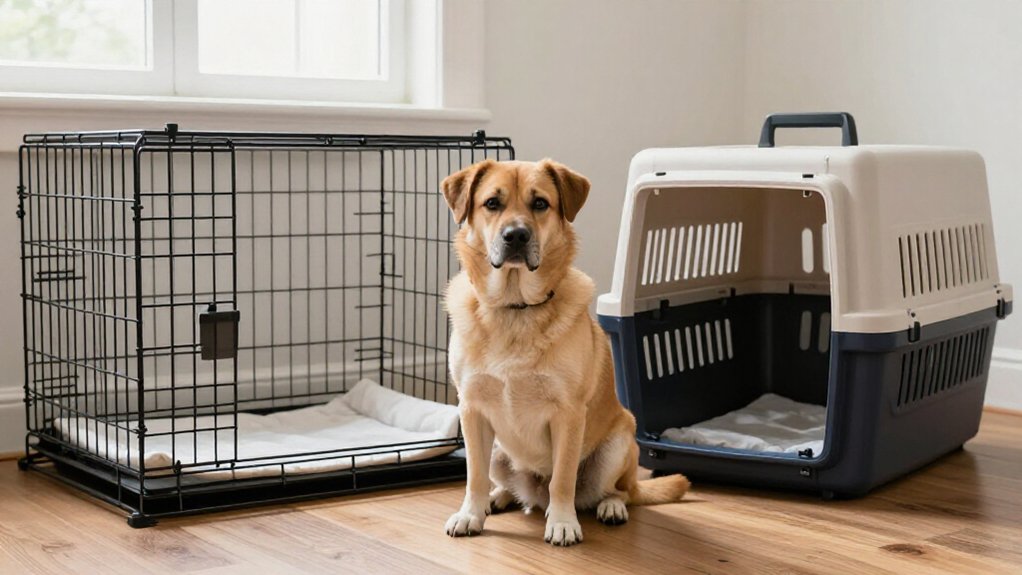
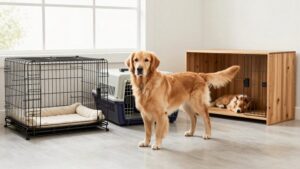
Choose the crate that matches your dog’s behavior and home. Wire crates offer airflow and visibility, and many fold for storage, but activity, drafts, or rattling may disrupt rest.
Plastic crates provide more privacy and weigh less, though they can limit airflow and take more storage space. Check door security, fit, and condition before use; supervise settling and avoid confinement during marked distress. Your dog’s needs, travel plans, and home setup can guide your choice.
Ventilation and Visibility
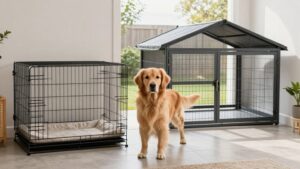
Wire crates provide excellent airflow and a clear view of the surroundings, which may suit dogs that feel more comfortable seeing what’s happening nearby.
Plastic crates use solid walls, so you’ll generally get less airflow and visibility. If nearby activity overstimulates your dog, that enclosure may help; if limited sight makes your dog uneasy, wire may feel more comfortable.
| Crate | Airflow | Visibility |
|---|---|---|
| Wire | High | Open view |
| Plastic | Lower | Enclosed view |
| Covered wire | Preserve airflow | Leave sides open |
Choose based on your dog’s response in a supervised setting. Observe whether your dog settles, pants or scans; these behaviors can guide the choice but don’t establish a diagnosis. If you cover wire sides, leave one or two open to maintain airflow. Monitor comfort and breathing during use.
Crate Door Design
Door design affects how securely a crate contains your dog.
Wire crate doors rely on one or more latches. Before choosing one, inspect the door and its corners; a dog can push through a weak corner. A center clasp can leave the edges vulnerable, so check that the door stays firmly closed when latched.
Plastic doors use a rod that anchors corners at several points, helping secure the opening. This design provides restraint at multiple points, but you should test the latch rather than assume it can’t fail.
With either crate type, close the door and confirm your dog can’t force it open. If you’re choosing for a puppy or an escape-prone dog, prioritize a door and secure latches over convenience features.
Noise and Draft Exposure
Beyond containment, crate design affects your dog’s exposure to drafts and noise. Wire crates allow strong airflow, but open sides leave your dog more exposed to moving air and nearby sounds. Their frames can also rattle, particularly in busy locations or on hardwood floors, adding noise for your dog and household.
Plastic crates have solid walls that can limit some drafts and muffle surrounding sounds, creating a more sheltered, den-like space. Consider your dog’s sensitivity when choosing a style and placement; neither design eliminates environmental noise or drafts. If you use a cover on a wire crate, leave at least one side open to maintain airflow. Check that the crate remains stable and that your dog can breathe comfortably, especially in warm conditions.
Cleaning and Odor Control
When accidents happen, prompt cleanup helps limit stains and odor buildup in either crate. Remove waste promptly and use a pet-safe cleaner, following its label directions. Plastic crates have smooth, nonporous surfaces, so you can wipe spills and accidents away.
Wire crates allow airflow that can help odors dissipate, but you’ll need to clean the tray and wire surfaces regularly. Whichever style you choose, wash crate pads or mats frequently; fabric can retain moisture and odors. After cleaning, dry parts completely.
This reduces lingering smells and helps prevent rust on wire crates. Check that surfaces are dry before replacing bedding, and keep cleaning products out of your dog’s reach. Care supports an enclosure without fragrance to mask odors.
Breed and Temperament Fit
Your dog’s temperament may matter more than breed when choosing a crate. Shy or anxious dogs may settle in plastic crates, whose solid walls create a den-like space and reduce outside stimuli. Dogs that prefer monitoring their surroundings may prefer wire crates, which provide greater visibility and airflow.
Active or larger dogs may suit a sturdy wire crate, but check that door corners and latches remain secure if your dog attempts to escape. Puppies may benefit from wire crates with divider panels to adjust space as they grow; an anxious puppy may prefer plastic for privacy.
Choose by carefully observing your dog’s response to each crate, not by breed alone. An open wire crate may feel exposing, while some dogs dislike plastic’s limited visibility.
Assembly and Storage
How easily you can store a crate depends on its design: wire models often collapse flat but may be heavy to carry, while plastic models are lightweight and portable but take up more space because their rigid halves don’t fold. Before buying, compare each option’s folded and assembled dimensions with your available storage area. Check product instructions to confirm how the crate folds or separates, and whether you’ll need room to keep detachable parts together.
If you move the crate, consider the weight you’ll lift and its stored footprint; portability and compact storage aren’t the same feature. Choose a setup you can handle without straining, and follow the manufacturer’s assembly and storage directions so the crate remains correctly configured when you use it.
Escape and Injury Hazards
Crate escape risks depend on construction and your dog’s behavior. Choose a sturdy wire crate with secure corners, especially around the door. Your dog may fit its nose through a gap, then push past a weak corner.
Check latches and corners; a single center clasp may leave door corners vulnerable. Secure them as the manufacturer directs.
A plastic kennel’s latched door rod anchors its corners, but inspect the door and edges for damage that could allow escape or cause cuts. Strong or anxious dogs may chew plastic or damage the door; supervise them and switch setups if they try to escape.
Match the crate to your dog’s size and behavior. Don’t confine a highly stressed dog; repeated escape attempts can lead to injury.
Material-Specific Durability and Weight
When you compare crate durability, consider your dog’s size and chewing behavior: wire crates are often sturdier, while strong or anxious dogs may damage plastic doors or walls. Wire durability also depends on construction and coating, since poorly coated metal can rust outdoors. Plastic crates are generally lighter to carry, while wire models are heavier but often fold flat for storage.
Durability by Material
Although material affects weight and upkeep, durability depends on construction and your dog’s behavior. Wire crates withstand use by larger or active dogs, but inspect joints and corners, particularly around the door, for weak points. A poor coating or outdoor exposure can lead to rust; keep the crate dry and check its finish.
Plastic kennels have surfaces you can wipe clean, but strong or anxious dogs may chew parts or damage the door. Examine these areas for wear, and confirm that latches remain secure. When latched, the door rod helps anchor a plastic kennel’s corners, so verify that it engages before use. Neither material guarantees containment: choose construction that fits your dog’s behavior, and replace damaged parts or the crate.
Crate Weight and Portability
If you’ll move a crate often, its weight and dimensions matter as much as its durability.
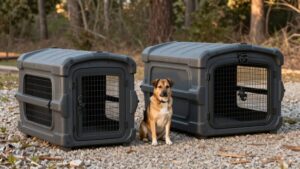
Plastic crates are generally lightweight and easy to carry, so they’re practical for car trips and air travel. Their solid panels wipe clean, but a dog that chews may damage the material or edges. Wire crates typically weigh more and take up more space; many fold flat for storage and transport. Sturdy wire models can suit larger or stronger dogs, though frequent relocation may become less convenient.
Before choosing, compare:
- Check the crate’s weight against how often you’ll carry it.
- Measure folded dimensions for storage and vehicle space before travel.
- For air travel, confirm carrier requirements before departure.
- Secure the crate during transport to limit shifting and injury.
Travel, Training, and Home Use
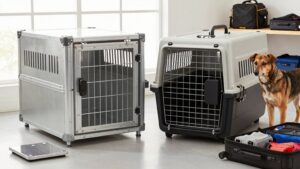
For frequent car or air travel, you may find a lightweight, wipe-clean plastic crate practical, but check that the model meets your airline’s requirements. At home, a wire crate’s adjustable divider can support puppy training, while your dog’s preference for visibility or a quieter, enclosed space can guide your choice. Whichever style you choose, make sure your dog can stand, turn, and lie down comfortably, and provide breaks rather than leaving them confined for extended periods.
Travel-Friendly Features
When travel is frequent, a lightweight plastic crate can provide an enclosed space, and many models are designed to meet airline requirements; check the carrier’s current rules before flying. Before departure, confirm the crate fits your dog and is accepted for the specific route; airline approval can vary by carrier and aircraft.
- Plastic’s solid walls may help a nervous dog feel sheltered, but secure ventilation and fit remain essential.
- A lightweight plastic model is usually easier for you to carry between car, terminal, and destination.
- Foldable wire crates collapse flat for storage, though heavier frames can make them cumbersome to transport.
- At home, wire sides provide airflow and visibility; you can choose separate crates for travel and home.
Match crate choice to each setting.
Training and Crate Comfort
A crate can support training and rest when it fits your dog and you introduce it gradually with positive reinforcement.
Wire crates can help with puppy training: divider panels let you adjust space as your dog grows, and open sides provide airflow and visibility. Plastic crates offer a more enclosed, den-like setting that may suit a shy or anxious dog. Choose a size that lets your dog stand without ducking, turn around, and lie stretched out.
A washable mat and quiet, consistent placement can support rest. Reward voluntary entry; don’t force confinement if your dog shows marked distress, and provide breaks rather than leaving your dog crated for extended periods. Watch for escalating stress, and consult a veterinarian or qualified trainer when distress persists consistently.
Everyday Home Use
Beyond training and rest, crate design affects comfort and convenience at home and on trips.
For everyday home use, compare airflow, privacy, portability, and fit.
- Wire crates provide excellent airflow and visibility; a cover can add privacy if your dog needs it.
- Plastic crates offer a more enclosed, den-like setting that may suit shy or anxious dogs.
- Divider panels let you adjust many wire crates as your puppy grows, supporting training.
- Lightweight plastic models wipe clean easily and can simplify car travel; some are airline-approved.
Wire models may fold flat for storage, but often weigh more and can rattle on hard floors. Whichever style you choose, make sure your dog can stand without ducking, turn around, and lie down comfortably. Measure carefully before you buy.
Choosing by Household Needs
Your dog’s behavior and your household setup can guide your choice. Choose a wire crate when your dog needs airflow, visibility, or an adjustable divider that accommodates growth. Its open design can suit home use, but may expose your dog to activity in busy or noisy rooms. Place it in a quieter area if stimulation appears to interfere with settling.
Choose a plastic crate if your dog settles better in a more enclosed, den-like space with less visual stimulation. Consider your available storage: a foldable wire crate can collapse flat, while plastic kennels typically take more room.
Whichever style you select, match it to your dog’s behavior and your home’s space. Check that your dog can stand, turn around, and lie down comfortably at home.
Conclusion
Choose the crate that fits your dog’s behavior and your household, not just your décor. A wire crate offers airflow, visibility, and folding convenience, but can expose your dog to drafts and noise. A plastic crate may feel enclosed and travel-ready, yet limits ventilation and visibility. Check latches, sizing, and condition before use; supervise sessions and remove collars that could snag. If your dog chews, panics, or escapes, ask your veterinarian or a trainer for guidance.