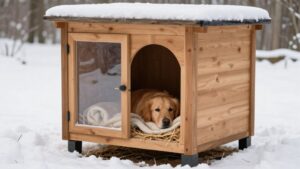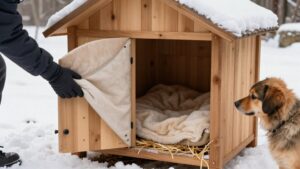
What to Put in a Dog House for Winter: Straw, Beds or Blankets?
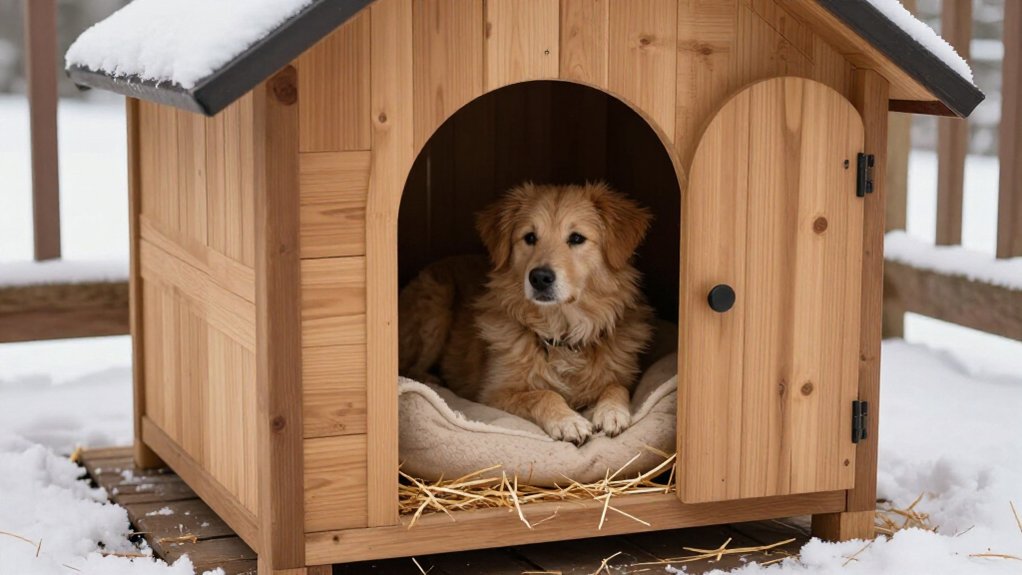
For winter dog houses, choose clean, dry straw over cotton blankets: its hollow stems let your dog burrow and hold warmth, while damp fabric can turn cold.
Put a layer over a raised floor or bed, and replace it whenever it’s wet, dirty, or musty. Add a foam topper in severe cold, but match padding to your dog’s coat and age.
Keep the shelter draft-free, check bedding weekly, and learn more about care after storms.
Winter Bedding Verdict
For most outdoor dog houses, straw is the best winter bedding: it insulates while letting moisture drain, unlike hay. Choose clean straw, and replace it completely every couple of weeks, or sooner if it feels damp or smells musty. Your dog also needs a dry, supportive place to rest. A heavy-duty raised mesh bed can lift them off the floor; add an insulated foam topper during the coldest weather.
Skip cotton blankets and towels outdoors when possible, since they can hold moisture and turn cold. If you use either, inspect it daily and bring it inside at night. Check the sleeping area, and wash or replace any bedding promptly when it becomes damp or musty. These checks help your dog stay comfortable, too.
Straw’s Moisture Resistance
Because straw resists moisture better than hay, it’s less likely to stay damp in a winter dog house.
That advantage can help you maintain a more comfortable resting place, but straw isn’t waterproof and won’t stay dry indefinitely. Check the bedding regularly, using your hands to feel beneath the surface where moisture may collect. If you find damp straw, replace it promptly; wet bedding can draw warmth from your dog and leave them chilled.
Even when it looks clean, replace all the straw every couple of weeks to limit moisture buildup and sanitation problems. Keep the shelter dry, and make bedding checks part of your routine. Your dog depends on you to notice when the material no longer feels dry and springy. Straw offers useful outdoor bedding, but regular replacement—not its moisture resistance alone—helps protect your dog’s comfort and health.
After a Wet Snowfall
Straw’s moisture resistance helps, but wet snow can still leave the dog house damp. Check the shelter and bedding promptly after a storm: damp material can turn cold and support mold and bacteria. Inspect the floor, corners, and space beneath the bed for moisture or leaks, then fix the source before your dog settles in.
Replace wet straw completely, and refresh it at least every couple of weeks, even during winter. If you use a water-resistant mat with a removable cover, take it out to dry and wash the cover; keep a clean spare ready while it dries. Don’t leave wet cotton blankets or towels inside, since they hold moisture and can chill your dog. Restore dry bedding before your companion rests there again.
Straw, Beds, and Blankets
Choose clean straw—not hay—for warmth, and replace it every couple of weeks or sooner if it gets damp. A raised bed keeps your dog off the cold ground; add an insulated topper when temperatures drop sharply. Cotton blankets and towels can hold moisture and turn cold, so use them outdoors only with daily checks and bring them inside at night.
Straw for Winter Warmth
Dry straw, not hay, makes practical outdoor winter bedding because it insulates without holding as much moisture. Spread a generous, loose layer across the sleeping area so your dog can nestle into it; don’t pack it tightly, because trapped dampness undermines warmth.
Check the straw often, and replace all of it every couple of weeks—or sooner if it feels wet, smells musty, or looks dirty. A dry, clean bed helps protect your dog from chill and skin irritation.
Skip cotton blankets and towels outdoors: they can trap moisture and become cold. If you use them, check them daily and bring them indoors each night. In a sheltered dog house, a water-resistant mat with a removable, washable cover is an alternative too. Keep a spare available while the other is washed.
Raised Beds for Comfort
Because a raised bed keeps your dog off cold, damp ground, it can make a comfortable place to rest. Choose a sturdy aluminum-framed mesh bed for a large dog; it won’t sag under their weight. Add an insulated foam topper in winter for warmth. In milder weather, leave the mesh uncovered so air can circulate beneath your heavy-coated dog.
| Choice | Practical care |
|---|---|
| Large dog | Pick sturdy aluminum framing |
| Cold weather | Add insulated foam |
| Mild weather | Let air circulate below |
| Straw outdoors | Replace every couple of weeks, or sooner if damp |
A raised bed can complement straw. If you use cotton bedding outdoors, check it daily and bring it inside at night. Your dog’s comfort depends on keeping the sleeping area dry and suited to the weather.
Why Blankets Fall Short
Although a blanket may seem cozy, cotton towels and blankets can trap moisture outdoors, leaving your dog’s bedding cold. If you use a blanket, check it daily for dampness and bring it indoors at night. Don’t leave wet fabric in the house; dry bedding matters more than a soft feel.
For a fully sheltered dog house, choose a washable, water-resistant outdoor mat with a removable cover. You can clean it and keep the sleeping surface dry. Straw is another option: use straw, not hay; replace damp straw immediately, and replace it completely every couple of weeks. If your dog sleeps on a raised mesh bed in severe winter, add an insulated foam topper. Remove it in summer so air can circulate underneath.
Dog’s Coat and Age
If your dog has a short or thin coat, add an insulated bed topper or dry straw, replacing it when damp. Senior dogs and puppies lose heat easily, so bring them indoors during severe cold and watch for shivering or unusual lethargy. Thick-coated dogs may need less bedding, but check their comfort and keep any outdoor bedding dry.
Match Bedding to Coat
Match your dog’s bedding to its coat, age, and health. Thick-coated dogs can overheat on heavily padded bedding, even in winter. A raised, breathable mesh bed keeps your dog off cold, damp ground while allowing air to circulate. If your dog still needs more warmth, add an insulated foam topper.
Thin-coated dogs generally need more insulation. Choose a warm, dry bed or use straw to help your dog stay comfortable. Whatever bedding you choose, check it regularly to verify it remains dry.
Avoid leaving cotton blankets or towels outdoors: they can hold moisture and become cold. If you use them, check them daily and bring them inside at night. Puppies and dogs who are sick or injured need extra warmth; bring them indoors during severe cold.
Support Senior Dogs
Age can make it harder for senior dogs to regulate their body temperature, so bring yours indoors during freezing weather.
If yours must rest in a doghouse, provide a supportive raised bed with an insulated foam topper. Keep it dry; damp bedding loses insulating value and can chill your dog. For a thin-coated senior, add pet-safe foam board beneath the bedding for extra insulation instead of relying on a blanket.
Cotton blankets and towels can become damp and cold outdoors, so don’t leave them in the doghouse. Check bedding daily, and bring any cotton items indoors at night if you use them.
Watch for shivering, unusual lethargy, or whining at the door. These signs may mean your dog’s too cold; bring them inside promptly.
Protect Puppies From Cold
Puppies lose heat faster than healthy adult dogs, so bring yours indoors during freezing weather rather than relying on a doghouse or bedding alone.
Your puppy’s coat and age matter: a thin- or short-coated puppy needs extra protection even when you provide shelter. Choose a dry, insulated doghouse and add warm bedding, such as straw, a bed, or blankets. Check the bedding every day and replace it if it’s damp. Wet material can feel cold and lose insulating value, leaving your puppy less protected.
Still, don’t treat a well-insulated shelter as a substitute for indoor warmth in freezing conditions. Check your puppy for shivering, unusual lethargy, or persistent whining. If you notice any of these signs, move your puppy to a warm indoor space.
Elevated Straw Bedding Setup
Because warmth matters most when your dog is resting, cover the raised floor with a deep layer of clean, dry straw—not hay—so your dog can nest in its hollow stems. The raised base keeps your dog off damp ground, and straw holds warmth while your dog rests. Spread enough to let your dog burrow and settle, but keep the house dry and check that rain or snow isn’t getting inside.
Inspect beneath and around the bedding each week for moisture or leaks, and remove wet straw promptly. Replace the layer every couple of weeks, or sooner if it becomes damp, dirty, or musty. Skip cotton blankets and towels outdoors; they can hold moisture and feel cold against your dog.
Straw Mold and Allergies
Even clean straw can become a problem if it gets damp: moisture encourages mold, which may irritate your dog. Use clean straw, not hay, and inspect the bedding regularly. Check corners and beneath the layer each week for dampness or visible mold; remove wet or musty material promptly.
Replace all straw every couple of weeks, or sooner if it gets damp. Before you reuse the shelter, replace any affected bedding completely. Keep the dog house dry and raised off the ground to limit moisture and reduce conditions that support mold growth.
Watch for possible allergy signs, such as itching, sneezing, or irritated skin. These symptoms can have several causes, so don’t assume straw is responsible.
If symptoms appear to worsen around the bedding, remove the straw and ask your veterinarian about a suitable alternative. Checking helps protect your dog’s comfort through cold weather.
Draft-Free Doorway Placement
Place the dog house entrance away from prevailing winter winds to limit drafts where your dog rests. A sheltered doorway helps keep cold air from sweeping across the sleeping area, but your dog still needs an easy, safe way in and out.
Use these practical steps:
- Add a thick, flexible vinyl flap; it should block wind without making your dog struggle to pass.
- Keep the doorway and flap clear of snow, debris, and bedding so entry stays unobstructed.
- Place the house where you can inspect the entrance and reposition it if changing winds expose it.
After storms or wind shifts, check for unexpected entrance drafts. If cold air reaches your dog, adjust the house or flap promptly to keep the shelter comfortable. Your dog matters, too.
Schedule Weekly Bedding Checks
Check your dog’s bedding once a week to catch dampness, leaks, or mold before they make the sleeping area uncomfortable. Shake it out, then look underneath and into the corners, where moisture and mold can go unnoticed.
Check the dog house for leaks, too, and wipe the interior walls with pet-safe, unscented wipes.
Replace straw completely every couple of weeks, or sooner if it gets damp. Moist bedding can feel cold and may develop a musty smell, so wash or replace anything that smells stale rather than leaving it in the house.
If you use removable bedding covers, wash them regularly. Keep a spare mat ready so your dog has a dry place to rest while the other one is being cleaned. These simple checks help maintain a cleaner, more comfortable winter shelter.
Conclusion
Choose clean, dry straw for your dog’s winter house, and raise it above the floor so dampness can drain away. Blankets and plush beds may feel cozy, but they can hold moisture and chill your dog when wet. After snow or rain, check and replace bedding; inspect it weekly for mold, pests, or musty smells.
Keep the doorway out of drafts, and consider your dog’s coat, age, and health. If your dog seems cold or uncomfortable, bring them indoors.