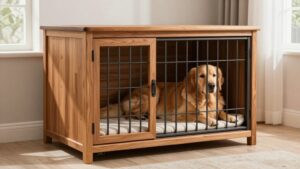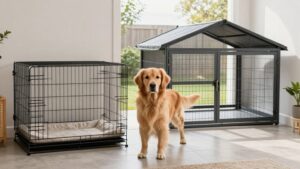
Should You Point a Fan at Your Dog’s Crate? Safe Cooling Setups
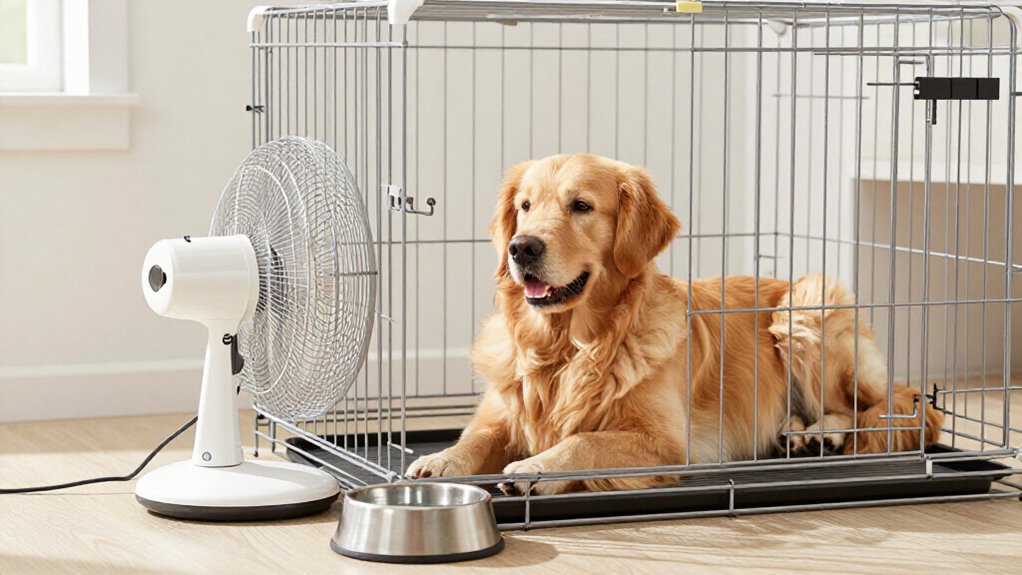
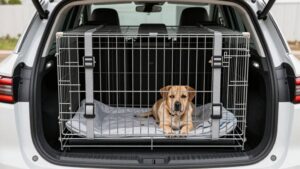
You can use a fan to cool your dog’s crate, but aim it through the vents rather than directly at your dog. Angled airflow helps move air, while your dog can step away if the breeze bothers them.
Keep the fan guarded and mounted outside the crate, with cords and loose parts out of reach.
Provide shade, water, and supervision; a fan can’t lower the surrounding temperature. Watch for heat-stress signs and act promptly. Continue for setup tips.
Indirect Airflow Setup
To improve airflow without blowing directly on your dog, aim a small fan toward the crate’s open ventilation area and let your dog move away if they choose. Keep the fan, its cord, batteries, straps, and mounting hardware outside the crate and beyond your dog’s reach. Secure the unit so it can’t shift or tip.
Don’t drape heavy bedding or fabric over the crate; blocked openings can trap warm air and weaken ventilation. For a room or van, place a fan farther back to circulate air through the space, bring cooler air in, and let warmer air escape. A fan only moves air; it doesn’t lower the surrounding temperature. Pair it with shade, ventilation, water, and supervision, and respond if your dog seems distressed.
Why Angle the Fan?
Why Angle the Fan?
Angling the fan near the crate, rather than blasting your dog directly, helps move stagnant air through the ventilation openings and supports cooling through panting. Airflow can help your dog lose heat while panting, but a fan doesn’t cool it. Aim it toward the crate, not at your dog; a stream may bother them or blow hot air onto them.
Keep the fan clear of openings, and let your dog retreat from the breeze. Choose a small fan for targeted airflow by the door, or set a larger one farther back to circulate the room. Neither replaces shade, ventilation, water, or air conditioning hot weather.
| Setup | Picture |
|---|---|
| Small fan | Gentle door breeze |
| Large fan | Room circulation |
| Direct blast | Uncomfortable, ineffective |
| Hot day | Add cooling |
Crate Door Airflow Check
Once you’ve aimed the fan toward the crate, check that air can pass through the door and other vents without a cover or nearby object blocking it. Keep the doorway and ventilation openings clear, and make sure the breeze reaches inside rather than circulating against a blanket or obstruction. You can hold a light tissue near the entrance to notice airflow, but don’t place anything where your dog could chew or swallow it.
Position the fan near the opening so it moves air through the crate, not straight at your dog. Before you rely on the setup, check that blades and cords stay out of reach and listen for noise or vibration; watch for shifting or loosening, and supervise with regular rechecks. A fan won’t cool the room itself, so provide shade, ventilation, and water, and check your dog for signs of heat stress.
Clip-On Fan Mounting Options
You can clip a guarded fan to the crate door or an open ventilation area, aiming airflow inside without blocking vents or access. Keep the fan, cords, and mounting hardware beyond your dog’s reach. Check the mount regularly for shifting, looseness, noise, or vibration, especially after travel.
Secure Clip-On Placement
A clip-on fan can direct airflow into your dog’s crate when you secure it to the door or near an open ventilation area without blocking the door or vents.
Use a secure spring clamp, reusable zip ties, or Velcro straps. Check the mount regularly: clamps and fan legs can shift or loosen, especially during travel. For rough vehicle trips, bolt-style mounts with wing nuts generally hold more securely than hanging brackets or spring clamps.
Keep loose mounting parts outside the crate. Supervise the setup and watch for movement, excessive noise, or vibration. If the fan shifts or interferes with the door or ventilation, turn it off and reposition it. A stable mount helps airflow reach your dog while preserving access and ventilation, supporting comfort.
Keep Blades Out of Reach
To keep curious paws and tails away from moving blades, mount the clip-on fan outside the crate and aim it through a ventilation opening.
Choose a model with a small-gap blade guard; it can reduce the chance that your dog’s paws or tail reach the blades. Attach the fan to the crate door with a strong spring clamp, reusable zip ties, or Velcro straps.
Keep flexible legs, straps, cords, batteries, and other mounting parts outside the crate and beyond your dog’s reach. A USB clip-on fan offers a compact option, but its guard and placement still matter. Supervise your dog around the setup, especially if they’re curious or likely to investigate. If your dog shows interest in the fan, pause use and reposition it farther away.
Check Mount Stability
Secure the clip-on fan to a sturdy crate door or frame, then check that its clamp won’t slip or loosen when the crate moves. Spring clamps attach quickly, but they can work loose, especially during rough vehicle travel. For vehicle travel, U-bolts with wing nuts generally provide a more secure mount.
For a small fan, use reusable zip ties or Velcro straps, fastening them firmly without blocking the door or ventilation openings. Keep flexible legs, straps, ties, cords, and mounting hardware outside your dog’s reach to prevent chewing or entanglement. Supervise your dog and regularly check for shifting, vibration, loose parts, or access to the blades. If the mount moves or your dog can reach the fan, turn it off and reposition it before use.
Humidity and Coat Density
In humid air, your dog’s panting cools less effectively, so a fan may offer only limited relief. Dense or double coats can hold heat, making close monitoring and a cool, well-ventilated space especially important. Adjust airflow to the conditions, but remember that a fan moves air: it doesn’t lower its temperature.
Humidity Limits Evaporative Cooling
Humidity can limit how much cooling evaporation provides: panting, cooling vests, and misting fans may work less effectively in moist air. When air holds more moisture, your dog’s panting releases less heat, and an evaporative vest or misting fan may offer limited relief. A fan only moves air; it doesn’t lower its temperature, so hot airflow may do little or increase heat exposure.
Use it alongside shade, ventilation, and fresh water, not instead of a cool environment. Check your dog often, especially if they’re short-snouted or struggle in warm, humid weather. Heavy panting, excessive drooling, restlessness, weakness, or confusion can signal distress. If you notice these signs, move your dog to a cooler place and contact your veterinarian immediately for urgent next steps.
Dense Coats Trap Heat
A thick, double, or matted coat can trap heat and make it harder for your dog to cool down. Dense coats retain warmth, so your dog may overheat sooner than you expect. Humidity adds challenge: moisture in the air slows evaporation, limiting the cooling your dog gets from panting.
Misting also works less effectively when humidity is high. A fan can move air, but it won’t lower the temperature or make a hot, humid space safe. Give your dog shade, ventilation, fresh water, and supervision; don’t rely on a fan alone, especially with a thick or tangled coat.
Watch for heavy panting, excessive drooling, restlessness, weakness, or stumbling. If you notice these signs, move your dog to a cool place and contact a veterinarian.
Adjust Airflow to Conditions
Because humidity and coat density affect how well dogs cool themselves, adjust airflow to the conditions rather than simply turning up a fan. In warm, humid weather, aim a fan near the crate or through its vents to move stagnant air. Humidity slows evaporation, limiting panting’s cooling effect.
If air exceeds your dog’s temperature, direct airflow may add heat; choose shade, ventilation, and cooler air over higher fan speed. In dry conditions, a misting fan may cool air by several degrees through evaporation. Use it in an open, well-ventilated area, and keep bedding dry.
Thick or double coats make heat shedding harder, so check crate temperature and offer shade and water. Don’t rely on a fan alone; let your dog move away if airflow or mist bothers them.
Cooling After Outdoor Play
After outdoor play, guide your dog to a shaded, cool, well-ventilated spot and offer fresh water. Keep activity quiet while your dog recovers; avoid restarting play until they seem comfortable and breathing has settled. A nearby fan can circulate air, but let your dog choose whether to rest in its airflow; don’t aim a forceful blast at them.
A cooling mat or damp towel may offer a cooler surface. Check that your dog appears comfortable and can move away whenever they want.
Watch for heavy panting, excessive drooling, restlessness, or reluctance to continue; these signs mean your dog needs rest and closer attention. If they become weak, confused, unsteady, vomit, or don’t recover promptly, move them somewhere cool and contact your veterinarian for guidance.
Fan Safety and Cord Placement
Keep every fan part your dog could chew or reach—including its blades, cords, batteries, straps, and mounting hardware—outside the crate.
Secure the fan with reusable zip ties, Velcro straps, or a stable mount, then check often for shifting, loosened fasteners, or parts that could come free. Avoid loose bungees, flexible fan legs, and dangling cords; your dog could chew them or become entangled. Keep cords and charging connections away from water bowls, damp bedding, and mist, and use only a power connection suited to the fan.
Supervise your dog, and confirm the guard blocks access to the blades; small gaps help reduce the chance that paws or tails get caught. These checks take little time and help you provide airflow without adding avoidable hazards.
Overlooking Heatstroke Warning Signs
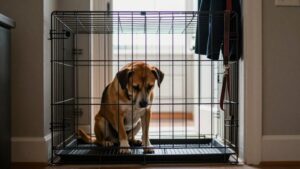
A fan can make your dog’s crate feel more comfortable, but it won’t lower the surrounding temperature or prevent heatstroke. Watch your dog closely; early heat stress can look subtle, and you shouldn’t wait for collapse before acting. Signs include:
- Heavy panting, excessive drooling, restlessness, or whining.
- Seeking shade or reluctance to keep moving.
- Weakness, vomiting, diarrhea, confusion, stumbling, collapse, or abnormal gum color.
These serious signs need urgent veterinary attention. A dog’s normal temperature is about 100.5–102.5°F, and heatstroke can begin only a few degrees above that range. If you suspect heat stress, move your dog to a cool environment and contact a veterinarian promptly. Don’t assume airflow means safety: a fan moves air but doesn’t cool the surroundings. Stay attentive; act early.
Refresh the Water Bowl
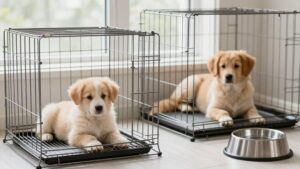
Since a fan can’t prevent heat stress, make sure your dog can always reach cool, fresh water. Use a crate-designed, no-spill bowl, and keep it filled so your dog can drink whenever needed. In warm weather, check and refill it often; dehydration can raise heat-related risks.
Make sure the bowl stays upright and within easy reach. Position it so it doesn’t block the crate door or restrict airflow. If your dog enjoys ice cubes, you can add a few, but confirm there’s still water available as they melt.
Refresh the bowl during regular checks on your dog and the crate’s conditions. Look for signs that water has spilled, become warm, or picked up debris, and replace it promptly. Your dog’s comfort matters, but fresh water supports safety too.
Conclusion
You can use a fan to help cool your dog’s crate, but aim airflow across—not directly at—your dog, and secure the fan and cord out of reach. Check that air moves through the crate, offer fresh water, and pay extra attention after outdoor play or in humid weather.
A fan can’t treat overheating. If your dog is panting heavily, weak, confused, or vomiting, move them to a cooler place and contact a veterinarian promptly.
Wire Crate Size Lookup & Divider Setter
Compare your dog's weight with maker-stated ranges for each wire crate size, and work out puppy divider spacing from your crate's interior length.