Why Is My Puppy Peeing in His Crate? Common Causes and Quick Fixes
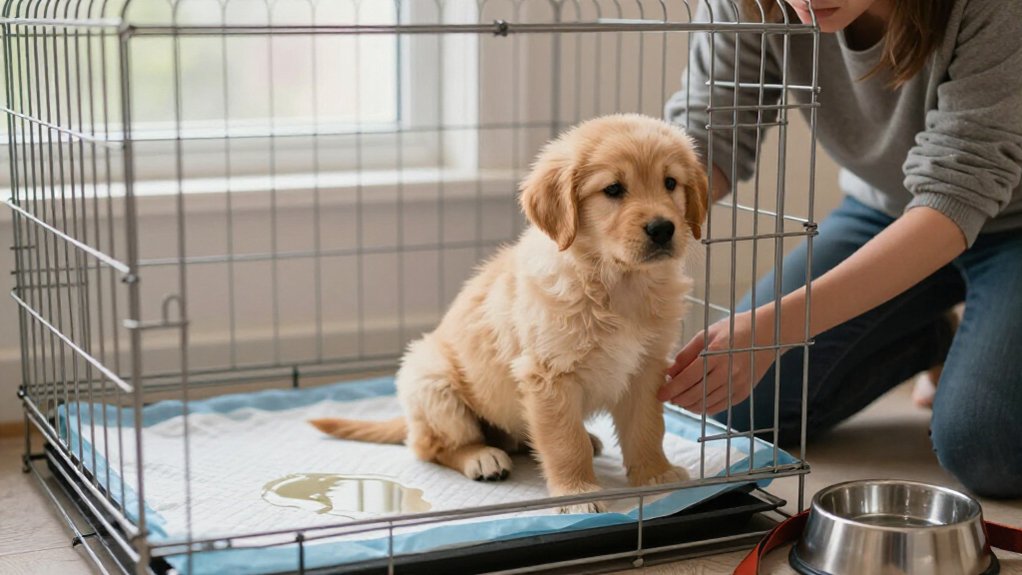
Your puppy may pee in the crate because their bladder isn’t mature, the crate is too roomy, or stress makes settling difficult. Overnight accidents are common at 11 weeks, so take your puppy out before bed, during the night, and first thing in the morning.
Keep water available, clean accidents with an enzymatic cleaner, and check crate fit. Frequent, painful, or sudden urination warrants a vet call.
These changes can help you pinpoint the cause.
Puppy Crate Peeing Causes
Puppy crate accidents can happen for several reasons, and they don’t mean your puppy is being spiteful or that you’ve failed at training. A crate that’s too large may let your puppy sleep at one end and pee at the other; one that’s too small may feel uncomfortable. Health issues, including urinary tract infections, digestive problems, or other illnesses, can also cause accidents.
Some medications increase thirst and urination, so tell your veterinarian when accidents begin or change. Fear, separation stress, or a bad experience with the crate may trigger soiling. Your puppy may also have learned to eliminate where it sleeps after living in a soiled enclosure or using pee pads. Track when accidents happen, check crate fit, and contact your vet for persistent accidents or signs of illness. Don’t scold; it may worsen fear and delay training.
Bladder Control Limits
At 11 weeks, your puppy has limited bladder control and may need a potty break every few hours, even if he doesn’t whine.
A common guideline estimates that puppies can hold urine for about their age in months plus one hour; a 3-month-old may manage roughly four hours at most. But this is only an estimate, and your puppy may need more frequent breaks, especially if he’s having accidents during the day. Take him outside before you crate him and as soon as he wakes.
Track when and how much he drinks and urinates to spot patterns and build a workable schedule. Once he’s succeeding, gradually extend the time between breaks. If accidents continue, shorten the interval rather than expecting him to hold it longer.
Overnight Crate Accidents
Even with a good bedtime routine, an 11-week-old puppy may not stay dry all night.
At this age, your puppy may hold urine for roughly his age in months plus one hour, so an overnight potty break may be necessary. Take your puppy out immediately before bed and as soon as you wake. Set an alarm for a planned outing instead of waiting for whining; your puppy may not signal in time.
If accidents continue, shorten the gap between outings. When your puppy stays dry, gradually extend it. Clean urine thoroughly with an enzymatic cleaner to remove odors that could encourage repeat accidents. Contact your veterinarian about frequent or sudden accidents, especially with unusually frequent urination, diarrhea, or lethargy. Don’t assume accidents are behavioral.
Crate Size and Stress
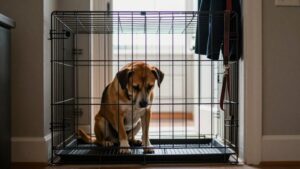
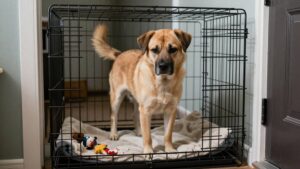
Choose a crate that lets your puppy stand, turn around, and lie down, but not pee in a separate corner; use a divider and adjust it as he grows. If he seems anxious, introduce the crate gradually with treats, meals, or a stuffed toy, and never force him inside. A calm, positive routine can help, but if stress or accidents persist, ask your vet or a qualified trainer for guidance.
Choose the Right Crate Size
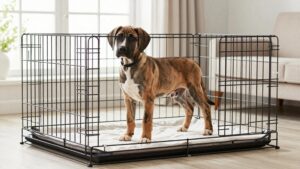
A crate that’s too large or too small can make your puppy uncomfortable and contribute to accidents. Choose a size that lets your puppy stand, turn around, and lie down comfortably, with little extra room. If the crate has too much space, your puppy may pee in one corner and sleep in another, which can make accidents more likely.
An adjustable crate or divider lets you reduce the available area now and expand it as your puppy grows. Don’t make the space so tight that your puppy feels cramped; a poor fit can add discomfort and stress. If your puppy keeps having accidents, check the crate’s dimensions and reposition the divider before assuming he’s misbehaving. A proper fit supports cleaner habits and comfortable rest.
Reduce Crate-Related Stress
If your puppy feels cramped or has too much room, the crate can add stress and make accidents more likely. Choose a space where he can stand, turn around, and lie down comfortably, without extra room to toilet in one corner and sleep in another. An adjustable divider lets you expand the area as he grows; check that it doesn’t restrict movement or feel uncomfortable.
Keep crate periods suited to his age and needs, because holding urine too long can lead to accidents and distress. If he becomes fearful or keeps peeing despite appropriate sizing and breaks, don’t force longer stays. Use a supervised playpen or gated area. If the problem persists, ask your veterinarian or a qualified trainer.
Build Positive Crate Associations
Once the crate fits well, help your puppy see it as a safe, comfortable place—not a punishment. Introduce it gradually, leave the door open, and reward him whenever he chooses to go inside. Offer meals or a treat-stuffed toy there, so he can build positive associations at his own pace.
Don’t push or force him in; frightening experiences can increase stress and may contribute to crate accidents.
Check the size too: he should be able to stand, turn around, and lie down comfortably, but shouldn’t have enough room to toilet in a separate corner. Use the divider in an adjustable crate as he grows. If he keeps soiling soft bedding, temporarily remove it and clean the crate thoroughly with an enzymatic, pet-safe cleaner carefully.
Diet and Water Timing
A consistent meal schedule, often three meals a day for young puppies, can help you predict when your puppy needs to pee. Don’t restrict water, even before bed; instead, track your puppy’s drinking and bathroom habits so you can time breaks. If thirst or urination suddenly increases or stays unusually high, contact your veterinarian.
Meal Timing
Consistent meal and potty schedules can make crate accidents easier to prevent. Feed your puppy at steady times; most puppies eat three times daily. A predictable routine can help you anticipate when he’ll need to go, though puppies vary, so watch his cues instead of relying on the clock.
Track how much he drinks and how often he urinates. Notes reveal patterns and help you schedule potty breaks. Take him out after meals and drinks, and give him time to pee before you put him in his crate. If he has accidents, adjust the timing of breaks—not his water supply. Puppies need adequate water, and you should ask your veterinarian before changing his diet or water access. Accidents aren’t a sign of failure; routines take practice.
Water Before Bed
Should you limit your puppy’s water before bed? Usually, you don’t need to restrict it. Keep your puppy hydrated throughout the day, and don’t withhold water unless your veterinarian recommends it. Dehydration isn’t a safe fix for crate accidents, and young puppies have small bladders that may not last all night.
Instead, take your puppy outside immediately before bedtime and wait until he urinates before settling him in the crate. He may still need an overnight potty break; an 11-week-old puppy often can’t stay dry through the night, so plan a timely trip.
If your puppy suddenly seems thirstier or urinates frequently, or these changes persist, contact your veterinarian. Illness or medication can affect thirst and urination, and your vet can identify the cause.
Monitor Intake
If your puppy is having crate accidents, tracking his meals, treats, and water can help reveal a pattern.
Keep meals on a regular schedule, and jot down what he eats, including treats and any recent food changes. Note how much he drinks and when, along with how often he urinates and roughly how much.
Use these notes to arrange extra potty breaks after drinking and right before crate time.
Ensure access to fresh water; don’t limit it to prevent accidents, since puppies need hydration. If you’re worried about intake, ask your veterinarian for guidance.
A sudden rise in thirst or urination can point to a health problem, not a training setback. Contact your veterinarian if you notice this change and describe your tracking notes.
Cleaning Accidents Thoroughly
When accidents happen, clean them promptly with a pet-safe enzymatic cleaner, which breaks down urine odors that may draw your puppy back to the same spot. Wash soiled bedding; urine smells can linger even when you can’t detect them. If the crate has a removable tray, clean it, then wipe the floor and corners carefully, where residue can remain and make the space seem like a toileting area.
Use enough cleaner to reach affected surfaces, but don’t mix it with other products unless the label says to. Stay calm and matter-of-fact while you clean. Scolding won’t remove the odor and can make an accident more stressful for both of you. A thorough cleanup helps prevent repeat marking and keeps your puppy’s resting space fresh.
Urinary Tract Infection Signs
Even with thorough cleaning, repeated crate accidents may point to a health issue rather than a training setback.
A UTI can make your puppy urinate more often, struggle to hold urine, or feel pain while peeing. Watch for small, frequent amounts, especially if this pattern differs from your puppy’s usual routine. These signs can be worrying, but they don’t confirm an infection: increased drinking or urination may have other causes, too.
Track how often your puppy urinates and roughly how much comes out, then share those notes with your veterinarian. Contact your vet if you suspect a UTI or crate accidents persist. Only a veterinarian can assess and safely diagnose the cause. Don’t assume an infection or try to treat it without veterinary advice.
Pee Pads in Crates
Pee pads can seem like a practical fix for crate accidents, but they may confuse your puppy if you’re teaching them to potty outdoors. That doesn’t mean you’re doing anything wrong; it means your puppy needs a clear, consistent message.
If outdoor potty training is your goal, keep the crate for resting and take your puppy outside on a regular schedule. Use these steps:
- Skip pads in the crate, since they can teach your puppy that eliminating there is acceptable.
- Reward outdoor pottying promptly so your puppy connects the right place with success.
- If you need an indoor option, set pads in a playpen instead; keep sleeping space separate.
- Choose pad training only when indoor elimination is your intended goal, and stay consistent daily.
Consult a Behaviorist
If your puppy still pees in the crate despite regular potty breaks, a properly sized crate, and consistent training, consult a qualified animal behaviorist.
A behaviorist can help identify whether fear, anxiety, a negative experience with the crate, or another behavioral factor is driving the accidents. Before assuming the cause is behavioral, ask your veterinarian to rule out medical problems, including a urinary tract infection. Keep a brief log of accidents, potty breaks, time in the crate, and routine changes. This record can reveal patterns and give the professional useful context.
In the meantime, don’t punish your puppy; punishment may increase anxiety and make crate time harder. Follow the behaviorist’s plan for gradual, positive crate training, adjusting the pace to your puppy’s comfort. You’re not failing. Persistent accidents can have several causes, and thoughtful support can help you address the right one with calm, informed, practical next steps.
Conclusion
Crate accidents can frustrate you, but they’re common while your puppy learns and develops bladder control. Take your puppy out regularly, especially after sleep, meals, and play, and keep the crate appropriately sized. Clean accidents with an enzymatic cleaner, and track changes in drinking or urination. If your puppy strains, urinates frequently, or suddenly starts having accidents, contact your veterinarian to check for a medical cause. If stress persists, a qualified behaviorist can help you adjust your approach.